The French Dickens

Alphonse Daudet (1840 – 1897) was a French naturalist novelist, often called the French Dickens. This title is also attributed to Hugo and Balzac. A man dogged through life by misfortune and failure. Alphonse, amid much truancy, had a depressing boyhood. In 1856 he left Lyon, where his schooldays had been mainly spent, and began life as a schoolteacher at Alès, Gard, in the south of France. The position proved to be intolerable. As Dickens declared that all through his prosperous career he was haunted in dreams by the miseries of his apprenticeship to the blacking business, so Daudet says that for months after leaving Alès he would wake with horror thinking he was still among his unruly pupils.

Though Daudet defended himself from the charge of imitating Dickens, it is difficult altogether to believe that so many similarities of spirit and manner were quite unsought. What, however, was purely his own was his style. It is a style that may rightly be called “impressionist,” full of light and colour, not descriptive after the old fashion, but flashing its intended effect by a masterly juxtaposition of words that are like pigments. Nor does it convey, like the style of the Goncourts, for example, a constant feeling of effort. It is full of felicity and charm, “un charmeur” Zola called him. An intimate friend of Edmond de Goncourt (who died in his house), of Flaubert, of Zola, Daudet belonged essentially to the naturalist school.

The naturalists delighted in description of vice and disease, the dram shop, the hospital and the brothel.

Derrida on Youtube

Padraig points us in the direction of some wonderful Youtube footage of/on Derrida. I especially enjoyed this clip about a visit Derrida paid to Prague, and was framed by the police on account of drug charges. He felt as if the spirit of Kafka had come back to haunt him. Padraig’s post is appropriately tagged hauntology, this moment’s buzzword. In French a ghost is called a revenant, someone who comes back.

A revenant in the Middle Ages was an animate corpse which rose from the grave to haunt the living. Many stories were documented by English historians in the Middle Ages, as examplified by William of Newburgh who wrote in the 1190s “one would not easily believe that corpses come out of their graves and wander around, animated by I don’t know what spirit, to terrorize or harm the living, unless there were many cases in our times, supported by ample testimony”. Stories of revenants were very personal, always about a specific individual who had recently died (unlike the anonymous zombie depicted in modern popular culture such as Night of the Living Dead), and had a number of common features.

Christmas exchange game

K___, M______ and I play a Christmas exchange game. Each has to lend the other a DVD, book or other artifact, which is to be returned after Christmas.

K____ exchanges an original video of Ilsa: She-Wolf of the SS, and a copy of the original Mummy and the The Devil Thumbs a Ride; The Norton Anthology of English Literature and Tony Hillerman’s People of Darkness.

I offer K___ Le Sexe qui parle and Astrid Lindgren’s My Nightingale Is Singing (1984). For M_____ it was Serge Gainsbourg‘s CD compilation Du Jazz dans le ravin (1996).

As she stalks through the night …

Ascenseur pour l’échafaud (1958) – Louis Malle
[Amazon.com]
[FR] [DE] [UK]

As she stalks through the night, she is a vision of tortured heartbreak, her woeful eyes and lush, sensuous lips illuminated by neon signs and baleful streetlamps.

I watched Ascenseur pour l’échafaud with G___. This 1958 French film stars Jeanne Moreau and is directed by Louis Malle. The score is by Miles Davis and the film belongs to the film noir category. The film is about a woman who cheats on her husband and persuades her lover to kill him. Like in Fargo, things go horribly wrong. Other comparisons to be made are The Postman Always Rings Twice (lover-husband-murder theme) and Scorsese’s 1985 After Hours (its unity of time is constrained: the action takes place within 24 hours or so). The film is a celebration of fifties modernism with scenes playing in a motel, on a motorway and in a modern office building. Two cars are featured: a Cadillac and a Mercedes 300SL.

New figurative art

By new figurative art I mean art since about the 1980s which depicts people in a realistic/fantastic way. Another term for this kind of painting might be “new pictorality” (see below), examples of which are John Currin, Lisa Yuskavage and Odd Nerdrum. The term figurative art was coined after the acceptance of abstract art in the early to mid twentieth century. Before that, all painting was figurative (notable exceptions by Whistler and near-abstract work by Turner notwithstanding). I think I first became aware of the power of allegory by seeing — at Art Brussels — a painting of a man in a trench coat weeping: out of his handkerchief came tears, these tears formed a puddle at his feet, which subsequently became a brook, a river and finally to the right of him: a waterfall. A terribly funny picture. Humor is one of the things I appreciate most in contemporary art. It’s wonderful when a painting has the power to make you laugh out loud.

What follows is a review by Matthew Rose of a travelling exhibition (Paris, Vienna, Frankfurt) entitled “Dear Painter, Paint Me…”. The superscripted links are image links.

The age-old profession of applying paint on canvas may have simply been overshadowed by the plethora of art strategies begun as early as 1917, with Duchamp’s “Fountain,” the overturned urinal signed “R. Mutt.” Interestingly enough, Duchamp’s very good friend, Francis Picabia, was a tried and true painter, although his approach to the canvas was anything but conventional. The flamboyant French artist (1879-1959), immensely talented and outrageously brazen, mapped out a world of tongue-in-cheek kitsch works in a prolific explosion that spanned the middle parts of the 20th century.

Picabia’s late work from the 1940s [1] [2], the fulcrum of this exhibit, borrowed generously from soft-core pornography and other photographic sources, and does more than inform the direction these artists have taken. Combining the comic, kitsch, popular culture and adding a jigger or two of surrealism, Picabia undoubtedly had a great deal more influence on pictorial subject and style than he’d ever dreamed.

“Dear Painter, Paint Me…”, (the title taken from Martin Kippenberger’s 1980s series) is a travelling exhibition (Paris, Vienna, Frankfurt) turns the spotlight on contemporary figurative painting since the Frenchman’s heyday painting pin ups in the 1940s.

Among the 18 artists in this expansive show, modern figurative masters such as Alex Katz, Luc Tuymans and even the droll French outcast Bernard Buffet, are complemented by the sexy and often grotesque contemporary worlds of John Currin, the surreal pop worlds of , and the dreamy romantic ones of Elizabeth Peyton. Kippenberger [1, nsfw], a strong influence on the group, is well represented, as are a handful of single-minded, dyed-in-the-wool painters of a younger set: Kai Althoff, Glenn Brown, Brian Calvin and Peter Doig. Sigmar Polke, perhaps the most Picabian of the group, appears with several mid-1960s masterpieces, works that are funny, skilful and acid, laying bare the bones of 20th century man (and woman). –Matthew Rose via http://www.art-themagazine.com/pages/paris14.htm [Dec 2006]

American art critic Craig Owens (1950 – 1990) and new pictorality:

One of the key texts about this new pictorality of pictures was Craig Owens‘ ‘The Allegorical Impulse’ published in 1980, then propagated in the central organ of postmodern esthetics, the ‘October’, founded in 1976. Owens is offering six notions, to catch on to the new complexity of pictures, which, following the then rather trendy Walter Benjamin, he summarizes in the title ‘allegorical’, (the only one outdated notion in Owens’ conceptuality is, accordingly, this collective term). –THE PICTORIAL IMPULSE Rainer Metzger, 2004 via http://www.maderthaner.cc/maderthaner.texte/pictorial_impulse.htm [Dec 2006]

Quotes from The Allegorical Impulse:

“This deconstructive impulse is characteristic of postmodernist art in general and must be distinguished from the self-critical tendency of modernism. Modernist theory presupposes that mimesis, the adequation of an image to a referent, can be bracketed or suspended … When the postmodernist work speaks of itself, it is no longer to proclaim its autonomy, its self-sufficiency, its transcendence; rather, it is to narrate its own contingency, insufficiency, lack of transcendence.”
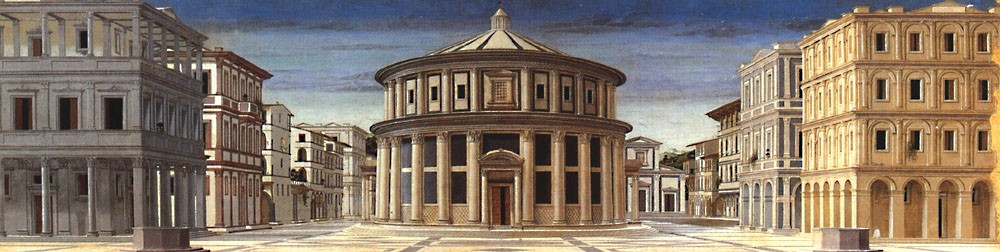
Visual culture

Click the pictures

Geltenbachfall im Winter (1778) – Caspar Wolf

Le jeu des vagues (1883) – Arnold Böcklin

Grotesque Head [detail] (1878) – from “Magazine of Art Illustrated”

Ruhender weiblicher Akt (1886 – 1887) – Lovis Corinth

The Lair of the Sea Serpent by Elihu Vedder

The Lair of the Sea Serpent () – Elihu Vedder

The American artist Elihu Vedder (1836-1923) is little known in contemporary art circles, although one of his paintings, The Questioner of the Sphinx (1863), has entered the late-20th-century image bank via a parody by Mark Tansey. His other best-known images depict such fantastic scenes as The Lair of the Sea Serpent (two versions, 1863 and 1889), in which a giant serpent lies coiled along an otherwise unremarkable stretch of beach, and The Roc’s Egg (1868), a scene that could have furnished Ray Harryhausen with inspiration for The Seventh Voyage of Sinbad. Such images were Vedder’s most peculiar and establish him as something of an eccentric in 19th-century art, but his present obscurity has more do with the fact that, as modernism swept through galleries and exhibitions at the turn of the century, Vedder’s allegorical subjects and Italian landscapes were old-fashioned the day he painted them. –March, 1999 by Charles Dee Mitchell

Let’s Kill All The Uglies (1948) – Boris Vian

Et on tuera tous les affreux (1948) – Boris Vian

Et on tuera tous les affreux [Eng: Let’s Kill All The Uglies] is a French detective novel by Vernon Sullivan, the pseudonym of Boris Vian, first published in 1948 by Scorpion. The novel, like many others (the most famous of which is I Spit On Your Grave), was supposedly written by a certain American writer called Vernon Sullivan, of which Boris Vian pretended to be the translator. [Dec 2006]

I know only a little bit about Vian. He was one of those infinitely connected nodes. Amazing how much we know about Jamaican Culture in Britain but how little about that of our (extremely wonderful and interesting neighbours). If I was the editor of The Wire I’d look into things like this. Vian was the dude who fixed up all the Jazz for Paris in the 40s and 50s. He brought Ellington over to France … He’s the early reincarnation of that perennial French figure, the Afro-American culture importer. In the late 60s we have Daniel Caux bringing over the Free crew for the Shandar stuff [and also here] and in the 90s we have Laurent Garnier getting the Detroit lot over. — Woebot on Vian [2003].

See also: Boris Vian

Padre Padrone (1977) – Taviani brothers

This is the scene where Gavino is hauled away from school at the age of 7, and wets his pants.

I watched the 1977 Padre Padrone on Canvas last night. This slow and surreal Italian art film is typical of 1970s government-funded cinematic modernism, with its emphasis on alienation, sordidness and loneliness. Although not without its merits the film is an unpleasant viewing experience. Some of the highlights included talking sheep, swelling music, on screen text, boys molesting animals and weird sound effects. For a similar but more enjoyable portrayal of Italian rural backwardness, check Christ Stopped at Eboli.

See also: patronage