Category Archives: Uncategorized

A summary of Roland Topor’s ‘Joko’s Anniversary’

Much like Gregor Samsa in Kafka’s The Metamorphosis, Joko of Roland Topor’s novel/play Joko’s Anniversary is the breadwinner of a family. Gregor Samsa is a travelling salesman, Joko works at the ‘Reservoir’ and his family consists of a mother, a father (who collects advertisements and is invalid) and two sisters.

“the old fellow got nimbly to his feet and leapt back on his shoulders”

One day, en route to work, Joko is jumped by a man who wants to piggyback Joko as if he were a taxi. This is his first encounter with seven otherworldly characters who are visiting his town for a convention. Joko and his colleagues at the Reservoir start to transport Wanda, Sir Barnett, Pozzi, Professor Krank, Pan Ton, Gunnar Ader and Doctor Fersen around the city and they are handsomely rewarded for their carrying services with gold coins.

One afternoon, while Joko is being straddled by Sir Barnett, he faints and falls. When he wakes up he finds that he has ‘fused‘ with Sir Barnett at his back, as if they were glued together. Their skins have been grafted together where they touch when piggybacking. Joko takes Sir Barnett home to his room. One by one, Wanda, Pozzi, Professor Krank, Pan Ton, Gunnar Ader and Doctor Fersen come to his room and they all fuse to the body of Joko. Meanwhile, Joko, is being maltreated by his ‘parasites‘ and they proceed by killing his two sisters, his mother and father. Before they die however, his mother and father succeed in killing all of the seven parasites with an axe.

When Joko wakes up he finds that the seven have disappeared and that his wounds have healed. However, it appears that the creatures have found a place inside his body. He is the host to the seven bodies who each in turn commit terrible atrocities when being in control of his body. Joko decides to kill himself, without success however and while he and his body survive, the parasites inside him die and start to spread a stench after a week or so. Exactly one year after the parasites’ death, a bus of tourists stops in front of Joko’s door, saying in unison: “Congratulations Joko!”

See also: http://jahsonic.tumblr.com/post/49805144480/joko-viert-zijn-verjaardag-1969-by-roland-topor

We who cannot

Last weekend, I bought Joko’s Anniversary (1969) by Roland Topor.

Reading the opening pages, it dawned on me that Topor’s novel starts where Baudelaire’s “To Every Man His Chimera” (1869) left off, exactly one hundred years earlier.

A good illustration with regards to Joko’s misfortunes: “You who cannot” (1799) by Francisco Goya, published hundred seventy years earlier.

Münchhausen, Nietzsche and the swamp of nothingness

Gustave Doré‘s caricature of Münchhausen [1] is one of the illustrations from  Les Aventures du Baron de Münchausen (1862), translated by  Théophile Gautier, fils.

It depicts the baron with a periwig, the socle of the bust bears the words “Mendace veritas,” Latin for “in falsehood, truth.”

It served as an inspiration to Terry Gilliam‘s film The Adventures of Baron Munchausen to style John Neville as the baron [2].

To my surprise, the heroic feat in yesterday’s Tumblr post[3], Baron Münchhausen pulls himself out of a mire by his own hair, is mentioned in Nietzsche’s Beyond Good and Evil:

“The desire for “freedom of will,” […] the desire to bear the entire and ultimate responsibility for one’s actions oneself, […] involves nothing less than […] to pull oneself up into existence by the hair, out of the slough of nothingness. (sich selbst aus dem Sumpf des Nichts an den Haaren ins Dasein zu ziehn).”

See also Bust (sculpture), Periwig, Friedrich Nietzsche and free will.

An encapsulation of queerness and otherness

For years I mistakenly thought that one of my fave visuals, Toulouse-Lautrec Wearing Jane Avril’s Feathered Hat and Boa (ca. 1892, above) was by Nadar.

Today, I learnt that it is in fact by Maurice Guibert.

In the process of finding that out, I discovered two fine blogs. The first The Esoteric Curiosa, the second the enigmatic ACravan.

Lautrec dressed in drag encapsulates queerness and otherness, better than any other photograph.

I’ve previously posted a photo of Lautrec, the delightfully scatological Henri de Toulouse-Lautrec at the beach at Le Crotoy, Picardie in 1898[1].

Stolen kisses

Stolen kisses from Cinema Paradiso

Stolen kisses from Cinema Paradiso

The enigmatic and highly original blogger “Ombres Blanches” is back with a series of posts on surrealist cinema, French surrealism and all the things “Ombres Blanches” is into.

Illustration:  deleted kiss scenes from the film Cinema Paradiso (click to see a partial list of indentified fragments) mentioned by Ombres Blanches. The collage gives a whole new meaning to the concept of the stolen kiss.

You can see it as a film scene here.

Icons of counterculture #3

[Youtube=http://www.youtube.com/watch?v=EcvaSnmqZ40&]

On this day 20 years ago, in 1989 in China Tank Man, the Unknown Rebel halts the progress of a column of advancing tanks for over half an hour after the Tiananmen Square protests of 1989. It was the last anyone has seen of him. He is probably dead. He is a personal hero. It’s hard to watch this footage[1] without getting very emotional. He is Icon of Counterculture#3. Number one and two are here[2] and here[3].

Parisian “Exposition Universelle” @120

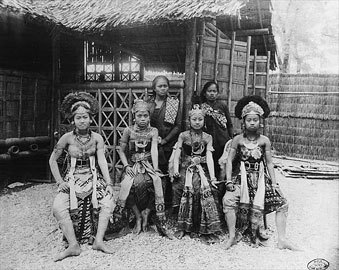
In 1889, 120 years ago tomorrow, the Exposition Universelle world fair opens in Paris.

via expositions.bnf.fr

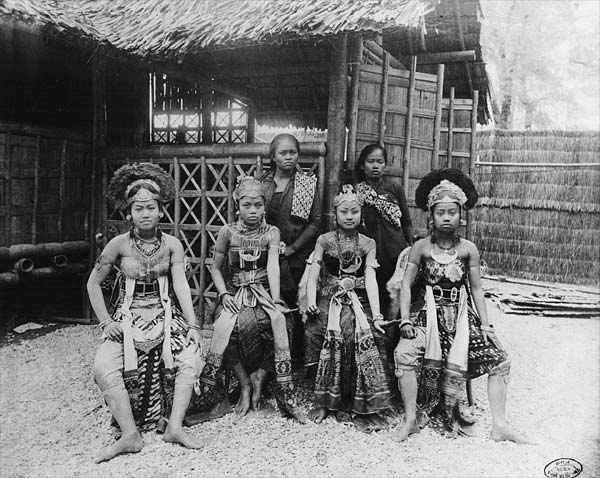
At the Exposition (see photo), the French composer Claude Debussy first heard Javanese gamelan music, performed by an ensemble from Java. David Toop, a modern musical critic, denotes Debussy’s experience at the fair to mark the start of an ambient music. Toop (see previous  post) expounds upon Debussy’s importance in his 1995 exegesis on ambient sound, Ocean of Sound.

Psychopathy Checklist-Revised (PCL-R)

Elizabeth Báthory (1560 – 1614)

The legend attached to the name of Erzsébet Báthory lives on in the ‘Carmilla‘ of J Sheridan le Fanu, the Hammer ‘Karnstein’ trilogy of movies, and the influential role of the female vampire in today’s psyche. Lilith Silver in ‘Razor Blade Smile’ is the latest incarnation of the female vampire begun with the Hungarian Countess nearly 400 years before.

Erzsébet Báthory was a psychopath.

The two factors that determine whether you are a psychopath are: emotional detachment and lifestyle.

Factor One looks for a selfish, remorseless, individual with inflated self-esteem who exploits others.

Factor Two describes a lifestyle that is chaotic, antisocial and/or criminal, marked by impulsiveness, a lack of responsibility and reactive anger . According to Hare, a psychopath will score high on both factors, whereas someone with Antisocial Personality Disorder will score high only on factor two. [1]

The items are as follows:

  • 1. Glibness/superficial charm
  • 2. Grandiose sense of self-worth
  • 3. Need for stimulation/proneness to boredom
  • 4. Pathological lying
  • 5. Cunning/manipulative
  • 6. Lack of remorse or guilt
  • 7. Shallow affect
  • 8. Callous/lack of empathy
  • 9. Parasitic lifestyle
  • 10. Poor behavioral controls
  • 11. Promiscuous sexual behavior
  • 12. Early behavioral problems
  • 13. Lack of realistic, long-term goals
  • 14. Impulsivity
  • 15. Irresponsibility
  • 16. Failure to accept responsibility for own actions
  • 17. Many short-term marital relationships
  • 18. Juvenile delinquency
  • 19. Revocation of conditional release
  • 20. Criminal versatility