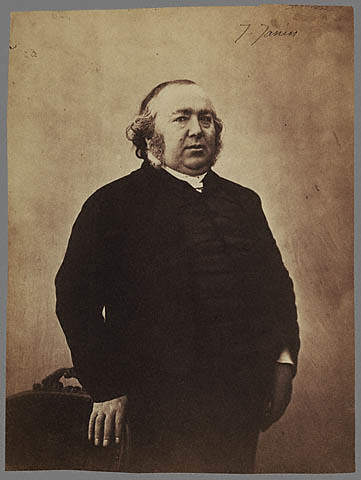

Jules Janin presents the roman frénétique

Jules Janin

“The frenetique school is a school of literature in 19th century France. The term frénétique is French for frenetic and means fast, frantic, harried, or frenzied. The term was coined by Charles Nodier.

In the category of “la littérature frénétique”, most frequently cited are Jules Janin (The Dead Donkey and the Guillotined Woman), Charles Lassailly, Xavier Forneret (Un pauvre honteux), Arlincourt (Le Solitaire) Charles Nodier (Smarra, or The Demons of the Night, 1821), Frédéric Soulié (Les Mémoires du diable, 1838) and Petrus Borel (Champavert, contes immoraux, 1833). Its peak was the late 1820s and early 1830s.

Its wider context is gothic literature. Every European country had its own terminology to denote the sensibility of the gothic novel. In France it was called the roman noir (“black novel”, now primarily used to denote the hardboiled detective genre) and in Germany it was called the Schauerroman (“shudder novel”). Italy and Spain must have had their own, but I am unaware of their names as of yet.

Their is some overlap with the Bouzingos.”

I’ve posted about this before here.

I, Galileo, kneeling before you

Galileo’s recantation

On June 22, 1633 – a memorable date in the history of countercultureGalileo was forced to recant his scientific theory that the earth moves around the sun. The Inquisition had threatened the astronomer and mathematician with torture on the rack if he did not retract his “heretical” ideas. Torn between wanting to fight for the truth and not wanting to offend the Church, Galileo recants:

I, Galileo, son of the late Vincenzo Galilei, Florentine, aged seventy years, arraigned personally before this tribunal, and kneeling before you, Most Eminent and Reverend Lord Cardinals, Inquisitors-General against heretical depravity throughout the entire Christian commonwealth, having before my eyes and touching with my hands, the Holy Gospels, swear that I have always believed, do believe, and by God’s help will in the future believe, all that is held, preached, and taught by the Holy Catholic and Apostolic Church. But whereas — after an injunction had been judicially intimated to me by this Holy Office, to the effect that I must altogether abandon the false opinion that the sun is the center of the world and immovable, and that the earth is not the center of the world, and moves, and that I must not hold, defend, or teach in any way whatsoever, verbally or in writing, the said false doctrine.

After the trial, Galileo is sent to his villa outside Florence, where he will be confined for the remaining 9 years of his life, supposedly frequently muttering “e pur si muove!

What a humiliation!

Destruction and delight in the same pair of eyes

[Youtube=http://www.youtube.com/watch?v=vryyDAj2EbA]

Clive Barker, Roger Corman, Joe Dante and Tim Burton on Barbara Steele in Clive Barker’s A to Z of Horror.

More Steele:

Barbara Steele, photocredit unidentified

Barbara Steele in bed
image sourced here.

Maschera del demonio, La/Black Sunday (1960) – Mario Bava [Amazon.com]
image sourced here.

Maschera del demonio, La/Black Sunday (1960) – Mario Bava [Amazon.com]
image sourced here.

Midi-Minuit Fantastique no. 17 (1967)
“Midi Minuit Fantastique” #17 devoted to Barbara Steele – 145 Pages – Dated of 1967

Barbara Steele in The Horrible Dr. Hichcock (1962) – Riccardo Freda
image sourced here. [Aug 2005]

Barbara Steele

images sourced here, from, Curse of the Crimson Altar (1968);
an adaptation of Lovecraft’s Dreams in the Witch House

Caged Heat (1974) – Jonathan Demme [Amazon.com] [FR] [DE] [UK]

Der Junge Törless/Young Toerless (1966) – Volker Schlöndorff [Amazon.com] [FR] [DE] [UK]

A wild-eyed, sex-crazed maniac

Off-screen, Kinski often appeared as a wild-eyed, sex-crazed maniac. He chronicled his exploits in an autobiographyKinski: All I Need Is Love or Kinski Uncut, which, according to Werner Herzog’s My Best Fiend, a documentary about the pair’s experiences working together, was largely fabricated to generate sales. (A libel suit from Marlene Dietrich due to Kinski depicting her as a lesbian resulted in the book being withdrawn from circulation until her death). Throughout the memoir we witness encounters with young actresses, hookers, chambermaids and, in two memorable scenes, Alberto Moravia‘s wife and Idi Amin‘s daughter. He was married three times and had (according to his autobiography) at least five children, three of whom he regarded as such: two daughters (Nastassja Kinski and Pola Kinski), and a son (Nikolai Kinski), all of them actors. His brother Arne lives in Berlin, still bitter about the way Klaus portrayed him in his autobiography. He alienated his family with claims of incest with his sister and his mother.

Image via The Devil’s Honey

The capricious interference of the artist

Etching of the bones, muscles, and joints, illustrating the first volume of the Anatomy of the Human Body. 2d ed. London, 1804. Etching. National Library of Medicine.

Further to my post More Géricault I tried to find the source of the Géricault Severed Heads painting and I found John Bell at the classic Dream Anatomy site. I couldn’t find the pictures I was looking for, that’s why I am giving you the above (there is one more over at my Flickr stream). I did find the story behind the Severed Heads painting of Géricault:

Théodore Géricault‘s painting Severed Heads (1818) [2] painting of two severed heads on a white cloth, turns out to be, not a painting of two heads fresh from the guillotine, but a painted elaboration of an illustration to a book on anatomy (Engravings, explaining the Anatomy of the Bones, Muscles and Joints ) by British surgeon John Bell. This site on France and Scotland in the Arts gives a detailed explanation how Délacroix’s Severed Heads is a painted elaboration of the work of John Bell, not an image of guillotined heads.

Also from dreamanatomy : “John Bell criticized “the subjection of true anatomical drawing to the capricious interference of the artist, whose rule it has too often been to make all beautiful and smooth, leaving no harshness….” His own drawings and etchings are notably harsh.”

Brigitte Courme photographie


Brigitte Courme photographie

In 1969 Balthus starts to draw from photographs taken by himself and by Brigitte Courme (1934-1982) . Shown above is a picture by Brigitte Courme.

Balthus was a French artist of Polish origins whose work was figurative at a time when modern art was surrealist and abstract in nature, making him one of the first anti-modernists. His distinctive brand of nymphesque erotica (Thérèse rêvant, 1938) with lesbian overtones (The Guitar Lesson, 1934) has been influential to many present day erotomaniacs. Detractors accuse him of pedophilia and pornography but Balthus insisted that his work was not pornographic, but that it just recognized the discomforting facts of children’s sexuality.

Image sourced here

Géricault’s monomaniacs

La monomanie du vol des enfantsMonomanie du commandement militaireLa monomanie du volLa monomanie du jeuLa monomanie de l'envie


From left to right Monomanie du vol des enfants, Monomanie du commandement militaire, Monomanie du vol, La monomanie du jeu, Monomanie de l’envie.

The Monomanies is a series of ten paintings by Théodore Géricault produced between 1821 and 1824 of the patients of Étienne-Jean Georget, head physician at the Salpêtrière Parisian psychiatric ward. The paintings were commissioned by Georget so that his students could study the physical traits of these “monomaniacs“, in a sort of scientific realism that parallels the literary realism of that time.

Translation from left to right: a child kidnapper, a man obsessed with the military, a kleptomaniac, a gambling addict and a woman suffering from obsessive envy.

More on monomania.

He was always tinkering

[Youtube=http://www.youtube.com/watch?v=AAbo1uOuxG8&e]

Via >dmtls Merzbau

Active since April 2007, DMTLS is my kind of blog. His tags (upon tagging considered a fine art) tell much of the story:

20th century composer art avant-garde bizarre book cinema culture erotic-grotesque erotic art experimental fetish fluxus gothic grotesque Hermann Nitsch horror industrial jazz John Zorn John Zorn related modern classical music musick neofolk noise NYC photography surrealism video Vienna Aktionists

Already linked at another Jahsonic favourite Esotika Erotica Psychotica, >dmtls Merzbau is off for an promising start.