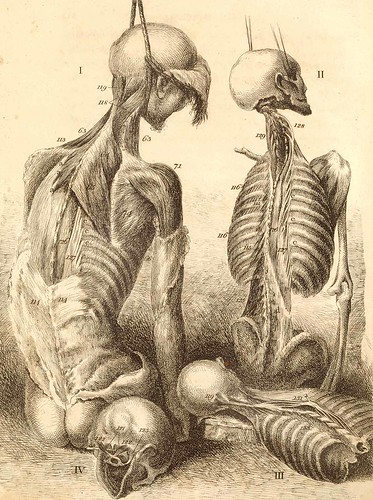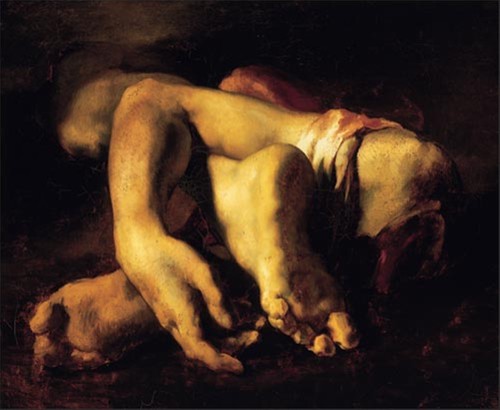
Study of Truncated Limbs (1818-9) by Théodore Géricault

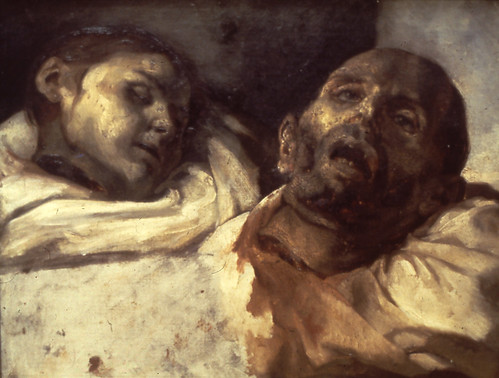
Heads severed (1818) – Géricault
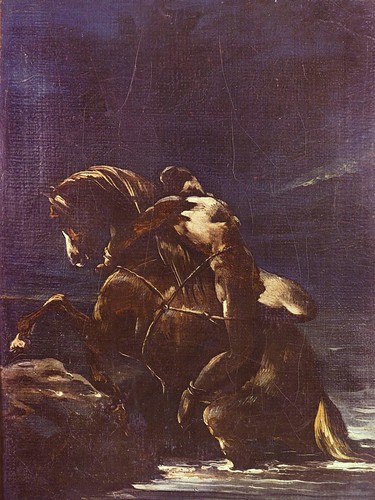
Mazeppa (c.1820) by Théodore Géricault
Ivan Mazepa was a Cossack leader in Ukraine, one of the first Ukrainian leaders to take a stand against the Russian Tsar. The historical events of Mazepa’s life have inspired Mazeppa by Lord Byron, made famous by Adah Isaacs Menken. The events were also beautifully rendered in the painting by Géricault shown above.
After the death of the author and the death of the avant-garde comes, according to Simon Reynolds, the death of the underground:
“The web has extinguished the idea of a true underground. It’s too easy for anybody to find out anything now, especially as scene custodians tend to be curatorial, archivist types. And with all the mp3 and whole album blogs, it’s totally easy to hear anything you want to hear, in this risk-less, desultory way that has no cost, either financially or emotionally.” Simon Reynolds via woebot via factmagazine
[Youtube=www.youtube.com/v/OAkfHShATKY]
A film by Austrian director Ulrich Seidl (Hundstage, 2001) I’d like to see:
Two individual fates move in opposite directions. Olga, a nurse from the Ukraine, abandons her family to look for a better life in the West and ends up working as a cleaning woman in a geriatric ward in Austria. Paul, an unemployed security guard from Vienna, is looking a reason to get up in the mornings and heads East with his stepfather, ending up in the Ukraine. Two young people on the move, eager to start a new life, confronted with a rough reality. Two stories about the pursuit of happiness and material advantages, about the darker sides of sexuality and death, and about the difficulties of cleaning the teeth of a stuffed fox. —- festival-cannes.fr, still
In a controversial article titled An Oasis in the Desert of Eurotrash Philosophy published in the The Chronicle of Higher Education of January 23, American literary critic Carlin Romano praises Pierre Hadot and lambasts European philosophers for their views on 9/11:
[Youtube=http://www.youtube.com/watch?v=D8tOpHKPYGk]
Nice re-interpretation of Numbers by a girl named BeuzitaBrocolis.
The Museum Tinguely presents the most extensive exhibition hitherto on the Situationist International that was founded on July 28, 1957. On the occasion of the 50th anniversary of its foundation, 400 exhibits will illustrate this last important avant-garde movement that counted 72 artists among its members, with sections in Germany, Holland, America, North Africa and elsewhere, rescuing it from oblivion.
More visuals of the book here.
The title of the exhitibion, In girum imus nocte et consumimur igni is a 1978 French language film by Guy Debord. This film, which was meant to be Debord’s last one, is largely autobiographical but begins with a thorough and pitiless critique of the spectator.
The title of the movie is a palindrome known as “the Devil’s verse.” It is Latin for “We enter the circle at night and are consumed by fire”, and was said to describe the behavior of moths. It is likely from medieval rather than ancient times.
[Youtube=http://www.youtube.com/watch?v=LXiAMfjybx4&]
“Yesterday in 1981, Gun Club released their debut single, “Sex Beat“. It was backed by “Ghosts On The Highway“. Both songs appeared on their debut album, Fire of Love. The Los Angeles band went through numerous personnel changes. At various points in their career, they had Patricia Morrision (ex-The Bags, later Sisters Of Mercy and The Damned), Rob Graves (ex-The Bags, future 45 Grave), Terry Graham (ex-The Bags) and Kid Congo Powers (future The Cramps).” On this date in 80s music history.
Liebestod (German, “love death”) is the title of a song from the opera Tristan und Isolde by Richard Wagner.
As a literary term liebestod (from German Liebe, love and tod, death) it refers to the literary theme of erotic death or love death meaning the two lovers’ consummation of their love in death or after death.
Two-sided examples include Tristan und Isolde, Romeo and Juliet and to some degree Wuthering Heights, one-sided examples Porphyria’s Lover and The Sorrows of Young Werther.
The joint suicide of Heinrich von Kleist and lover Henriette Vogel is often associated with the liebestod theme.