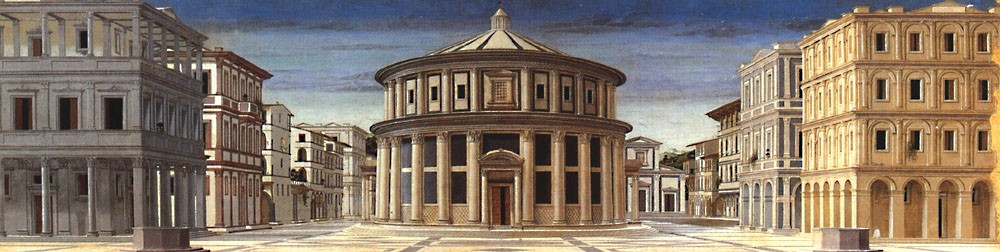
Money in Literature (1880) – Emile Zola

“I must also add unless a book is very popular, it never enriches the author. Also, three or four thousand copies sold is a good sale.”

Quoted in Resa Dudovitz’s excellent 1990 The Myth of Superwoman : Women’s Bestsellers in France and the United States, the best study on the economic aspects of publishing since my reading of Robert Darnton’s work. Her chapter on the bestseller is recommended.

See: “Money in Literature” (1880) – Emile Zola

Key texts of paracinema

Key texts of paracinema: Hard Core (1989) – Linda WilliamsMen, Women, and Chain Saws (1992) – Carol J. CloverThe Monstrous-Feminine – Barbara Creed (1993)Trashing the Academy (1995) – Jeffrey SconceSleaze Mania (1999) – Joan HawkinsCutting Edge (2000) – Joan HawkinsPorn Studies (2004) – Linda Williams


Paracinema is an academic term to refer to a wide variety of film genres out of the mainstream, bearing the same relationship to ‘legitimate’ film as paraliterature like comic books and pulp fiction bears to literature.

The term was coined in the early seventies by Ken Jacobs to denote countercultural and underground films of the sixties but re-coined in 1995 by Jeffrey Sconce, an American media scholar, to denote ‘an extremely elastic textual category’ which includes entries from seemingly disparate genres of the non-mainstream fuelled by oppositional taste strategies (see The Cultural Politics of Oppositional Taste (2003)). Major theorists of the 1990s and 2000s paracinematic variety include Linda Williams, Joan Hawkins, Carol J. Clover and Barbara Creed (1993). [Aug 2006]

Off topic: Yesterday was my brother’s birthday party; of the music he played I especially enjoyed a recent album by British psych folk singer Vashti Bunyan and French singer Benjamin Biolay’s 2003 album Négatif.

Exploration of art as a commodity

Google video, a Marxist view on the modern art world.

The video (a conference paper by John Mitchell) features Alan Woods and is based on Alan Woods’s 2003 paper Capitalist fetishism and the decay of art:

“The cheap and nasty pop culture that capitalism produces in its phase of senile decay plays approximately the same role as the cheap and nasty fast food that is undermining the health and clogging the arteries of the present generation of youth. The only difference is that this “pop art” is undermining culture and clogging the mental arteries of society. It is hard to say which activity is the more harmful. “

Another example of the censor pointing the way to interesting art.

See also: commodity fetishism

Missing Person (1978) – Patrick Modiano

Missing Person (1978) – Patrick Modiano
[Amazon.com]
[FR] [DE] [UK]

My brother is a fan of Patrick Modiano a writer of semi-autobiographical novels (more on that category of novels later). Today is my brother’s fortieth birthday. I think I am going to buy him Paul Auster’s last, Brooklyn Follies. Modiano did not have an entry at Wikipedia (so I translated one from French), nor is he listed in the 1001 books book I am reading. Modiano’s themes include time, memory, place, identity, neglect and the past.

Patrick Modiano is a French language novelist born July 30, 1945 in Boulogne-Billancourt of a father of Italian origins and a Belgian mother, Louisa Colpijn (actress). He is a winner of the Grand prix du roman de l’Académie française in 1972 and the Prix Goncourt in 1978.

A number of his novels have been adapted for film [1], Lacombe Lucien by Louis Malle probably being the most famous. —http://en.wikipedia.org/wiki/Patrick_Modiano [Aug 2006]

Off topic: I’ve updated my notes on postmodernist cinema and modernist cinema.

If you’re the girl of my dreams…

“If you’re the girl of my dreams. then…”, he says. “Then you could be the man of mine.,” she says.

Reconstruction (2003) – Christoffer Boe [Amazon.com]

Watch the trailer

A beautiful film about recognition/forgetting. Lots of old-fashioned clouds of cigarette smoke, lyrical dialogues, interesting soundtrack (Thomas Knak), reminiscent of Gilles Mimouni‘s 1996 L’Appartement.

See wiki entry: Reconstruction

k-punk’s contribution to the pornography symposium

k-punk’s contribution to the pornography symposium:

What Ballard, Lacan and Burroughs have in common is the perception that human sexuality is essentially pornographic.

For all three, human sexuality is irreducible to biological excitation; strip away the hallucinatory and the fantasmatic, and sexuality disappears with it. As Renata Salecl argues in (Per)Versions of Love and Hate, it is easier for an animal to enter the Symbolic Order than it is for a human to unlearn the Symbolic and attain animality, an observation confirmed by the news that, when an orang-utan was presented with pornography, it ceased to show any sexual interest in its fellow apes and spent all day masturbating. The orang-utan had been inducted into human sexuality by the ‘inhuman partner’, the fantasmatic supplement, upon which all human sexuality depends. —k-punk [Aug 2006]

Capitalized Phrases analysis:

Eyes Wide Shut J. G. Ballard Jacques Lacan William Burroughs – – Renata Salecl – Boschian Jean Baudrillard Sigmund Freud – Delvaux – Helmut Newton David Cronenberg Immanuel Kant Marquis de Sade Sacher-Masoch – Jonathan Weiss – Dior – Chanel – Iain Sinclair

Postmodern American literature

In search of Cross the Border—Close the Gap and Playboy magazine.

For our discussion, the term [postmodernism] only really becomes interesting with the debate on American literature, as introduced by Irving Howe, who in his essay Mass Society and Postmodern Fiction (Partisan Review XXVI, 1959, pp. 420-36) heralded in a complete reversal with his use of the term. He describes contemporary literature as being characterised by limpness, as having lost its potency. This was an accusation (although he also considered it a natural development) inasmuch as he stated that the new mass society with its egalitarian forms found its approximation in literature, i.e., no longer possessed innovative power. Worth mentioning are also Leslie Fiedler: Cross the Border—Close the Gap ( Playboy, December 1969) (so there was “transcending of borders” already then!). The term first became a central topic of debate in American literature of the 1950s. — via wsws.org

See also: postmodern literature

Blogging and remediation

In search of genre theory

One of the fundamental principles of new media that directly influenced our teaching and research is the principle that old media and familiar genres end up as the content of new media. Marshall and Eric McLuhan (1988) call this principle the “law of retrieval” (pp. 102-06), Jay David Bolter and Richard Grusin (1999) call it “remediation” (pp. 2-15), and Lev Manovich (2001), drawing on the McLuhans and Bolter and Grusin, says, “the language of cultural interfaces is largely made up from elements of other, already familiar cultural forms” (p. 71). The web is remediating all media that has come before it (print, music, film, television, radio, paintings, email, etc.); therefore in our teaching we wanted to emphasize for our students that weblogging is not a radically new way of writing, but a repurposing of familiar (we hoped) print genres. Other theories of or approaches to media, like Gregory Ulmer’s theory of electracy and his pedagogy articulated in Internet Invention (2003) might lead to more experimental uses of weblogging than what we encouraged from our students, but rather than emphasize the newness and unfamiliarity of weblogs, we wanted to balance the novelty of the activity with a grounding in familiar literate practices. Bolter and Grusin’s response to the “modernist rhetoric” of making a “radical break with the past” sums up our own understanding of new media, including weblogs: “what is new about digital media lies in their particular strategies for remediating television, film, photography, and painting [and print]. Repurposing as remediation is both what is ‘unique to digital worlds’ and what denies the possibility of that uniqueness” (50). —Into the Blogosphere

See also: genre theory

The first question in genre theory

According to Bulgarian philosopher and literary theorist Tzvetan Todorov 1970 book The Fantastic: A Structural Approach to a Literary Genre (1970) the first question in genre theory is:

“Are we entitled to discuss a genre without having studied (or at least read) all the works wich constitute it [the corpus]?”

He answers the question with yes:

“Scientific method allows does not require us to observe every instance of a phenomenon in order to describe it; scientific method proceeds reather by deduction.”

But he also warns that:

“Whatever the number of phenomena (of literary works, in this case) studied, we are never justified in extrapolating universal laws from them.”

After which he goes on to quote Karl Popper and the famous black swan example of inductive vs deductive reasoning:

“no matter how many instances of white swans we have observed, this does not justify the conclusion that swans are white.”

See also: genre theory