That everyone can learn to read will ruin …

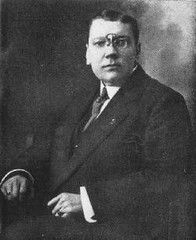
Friedrich Nietzsche

Two superb sentences in the ‘Of Reading and Writing’ chapter of Friedrich Nietzsche’s Also Sprach Zarathustra, presented here in a 1961 translation by R.J. Hollingdale. The second quote confirms John Carey’s stance in Intellectuals and the Masses that Nietzsche was a philosopher to the cultural elitist and pessimists, the first quote shows Nietzsche as a great prose-poet:

  1. Of all writings I love only that which is written with blood.
  2. That everyone can learn to read will ruin in the long run not only writing, but thinking too.

More from the same page:

Of all writings I love only that which is written with blood. Write with blood: and you will experience that blood is spirit.

It is not an easy thing to understand unfamiliar blood: I hate the reading idler.

He who knows the reader, does nothing further for the reader. Another century of readers — and spirit itself will stink.

That everyone can learn to read will ruin in the long run not only writing, but thinking too.

Once spirit was God, then it became man, and now it is even becoming mob.

He who writes in blood and aphorisms does not want to be read, he wants to be learned by heart….

You tell me: ‘Life is hard to bear.’ But if it were otherwise why should you have your pride in the morning and your resignation in the evening?

Life is hard to bear, but do not pretend to be so tender! We are all of us pretty fine asses and assesses of burden!

What have we in common with the rosebud, which trembles because a drop of dew is lying on it?….

The juvenile delinquents — not the pop artists —

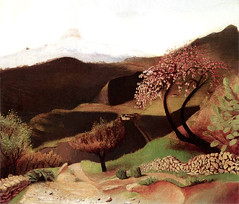
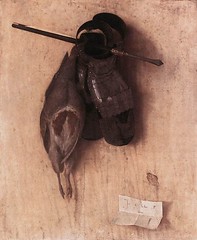
King Asa of Juda Destroying the Idols () – Monsù Desiderio

I was looking for info on Media Burn (1975) [Youtube] and [Youtube] and [Photo] by the Ant Farm collective and I happened upon Tyler Green’s Modern Art Notes blog. Daniel Flahiff introduces the top five American buildings blog-a-thon:

In response to Tyler Green’s challenge to choose your five favorite American buildings (okay, structures)–which is itself a response to the AIA list–here are my five [a list that could, of course, change tomorrow], in no particular order. What are yours? No, really, I want to know…

The reason I was searching for Media Burn in the first place was a previous search for American radical and activist Charles Radcliffe, the image of the Cadillac smashing into the wall of television turns up when you Google for Radcliffe.The reason I was looking for Radcliffe is that I wanted to introduce you to The Revolution of Modern Art and the Modern Art of Revolution, an essay published by the British arm of the Situationist International and co-authored by T. J. Clark, Christopher Gray, Charles Radcliffe and Donald Nicholson-Smith. This essay, which I’ve hosted for a while now (most if not all of the SI texts are copyleft), resurfaced to my consciousness following the comments by Muli Koppel to my recent post on social realism and anarchism in 19th century French art.

Of the essay the most potent quote is:

THE JUVENILE delinquents — not the pop artistsare the true inheritors of Dada. Instinctively grasping their exclusion from the whole of social life, they have denounced its products, ridiculed, degraded and destroyed them.

A smashed telephone, a burnt car, a terrorised cripple are the living denial of the ‘values’ in the name of which life is eliminated. Delinquent violence is a spontaneous overthrow of the abstract and contemplative role imposed on everyone, but the delinquents’ inability to grasp any possibility of really changing things once and for all forces them, like the Dadaists, to remain purely nihilistic.

They can neither understand nor find a coherent form for the direct participation in the reality they have discovered, for the intoxication and sense of purpose they feel, for the revolutionary values they embody. The Stockholm riots, the Hell’s Angels, the riots of Mods and Rockers — all are the assertion of the desire to play in a situation where it is totally impossible.

All reveal quite clearly the relationship between pure destructivity and the desire to play: the destruction of the game can only be avenged by destruction. Destructivity is the only passionate use to which one can put everything that remains irremediably separated. It is the only game the nihilist can play; the bloodbath of the 120 Days of Sodom proletarianised along with the rest.The Revolution of Modern Art and the Modern Art of Revolution

Some info on Asa King of Judah of whom the destructions are pictured above:

Asa, King of Judah purged the land of pagan cults; all the sites of idolatrous worship were completely destroyed and the worshippers persecuted. The Queen Mother was also deposed for having been involved with same. There was also a large-scale crackdown on prostitutes.

Elsewhere

Jan Jonston (Wikipedia)

Some good posts sitting in my favourites :

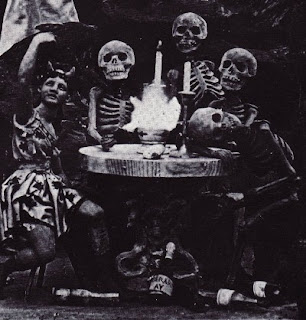
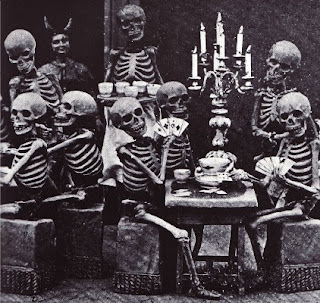
  1. The Laughing Bone on Diableries
  2. GmtPlus9 (-15)Jackie Mittoo’sChampion Of The Arena
  3. Scott McLemee on Robert ‘King Crimson’ Fripp with added Youtube clip.
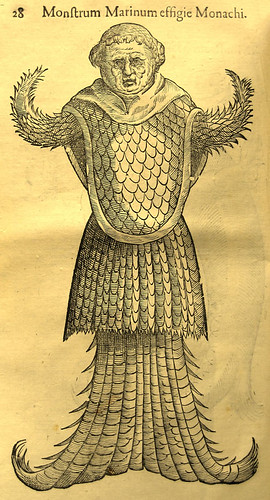
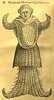
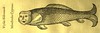
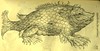
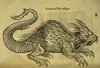
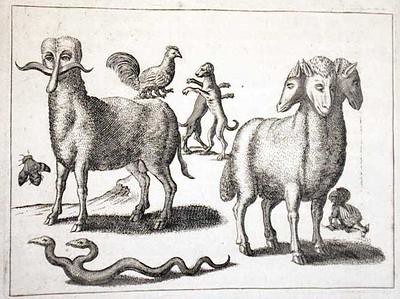
  4. Marginalia reports on Jan Jonston’s fantastic beasts (also reproduced below).
  5. GmtPlus9 (-15)reports on jahsonic favourite French erotomaniacs Gilles Berquet and Mïrka Lugosi who are currently exhibiting at Air de Paris.
  6. Curt at Groovy Age of Horror picks up on my nobrow posts in a series of posts titled Horror, High and Low on the merits of genre fiction in which he refers to Freud’s primary and secondary ways of thinking. To be continued at this blog.

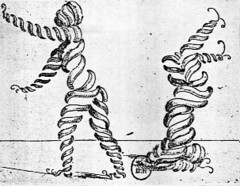
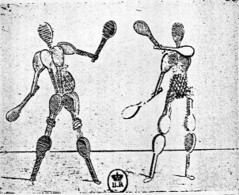
Illustration by Jan Jonston

Illustration by Jan Jonston

Illustration by Jan Jonston

Contrarianism blog-a-thon; taste is a kind of prison for oneself

“This weekend we’re saying to hell with the conventional wisdom,” announces Jim Emerson, author of the blog Scanners and notable Amazon critic. “We usually say that anyway, but consider the Contrarianism Blog-a-Thon an excuse to express how you really feel.”

More importantly, there is a poll: “Which of these ‘great directors’ [Altman, Antonioni, Godard, Fellini, Ford, Hitchcock, Kubrick, Welles, Wilder] do you think is not-so-great?” 

My problem with this list is that I feel nearly all the directors listed are overrated with the exception of Hitchcock and Altman.

From where I stand the most underrated directors are:

Woody AllenPedro AlmodóvarCatherine BreillatLuis BuñuelRoger CormanDavid CronenbergMichael HanekeJuzo ItamiPatrice LeconteSpike LeeDavid LynchRadley MetzgerFrançois OzonRoman PolanskiNicolas RoegJacques TatiAlex van WarmerdamMichael Winterbottommore …

Nevertheless, Jim Emerson’s post offers some interesting quotes:

“For serious critics … the second-best thing to perfection is often the near-miss, the disreputable and even the despised. Next to discovering a new director, planting a flag in an uncharted national cinema or sitting next to Zooey Deschanel at an event, few things please a critic more than polishing a tarnished career or taking on a dubious cause, particularly if everyone else really hated it.”
Manohla Dargis, New York Times, February 14, 2007

“I deeply believe that taste is a kind of prison for oneself – when a critic finds himself or herself always rigidly repeating the same opinions, the same positions, the same likes and dislikes (that is the kind of bad posture which Pauline Kael bequeathed to criticism). Critics should feel free to bring in their own emotional reactions to films – it is hard to keep them out of writing – but the phenomenon known as the ‘gut feeling’ or gut reaction can become a terrible end in itself: ‘this film makes me angry or it makes me happy, so it’s a rotten film or a great film, and I’m not going to discuss it any further.’ The important thing is always argument, analysis, logic. I have an irrational side (critics need it), but my rational side believes in logical demonstration: if you can prove to me that what are saying about a film makes internal sense, if you can marshal the evidence from the film itself to back up what you say, then I too can be persuaded to disregard my own first gut reaction and explore that film again in a new, more open way.” — Adrian Martin, Cinemascope, January – April, 2007

Also an interesting submission to this blog-a-thon:

Steve Carlson @ Blogcritics: “I Spit on Your Grave”
“As it turns out, ‘I Spit on Your Grave‘ is not the hateful nadir of cinema. It is, instead, the ‘Unforgiven’ of the rape-revenge genre, in that it is simultaneously the perfect expression of and the eulogy for the genre. It’s as brutal and confrontational a cinematic work as I’ve yet seen; Zarchi reduces the genre ito its barest elements and in doing so asks the audience to consider why they are there in the first place.”

The two men had an elective affinity to each other


Meryon’s engraved views of Paris. No one was more impressed with them than Baudelaire. To him the archaeological view of the catastrophe, the basis of Hugo’s dreams, was not the really moving one. … Meryon brought out the ancient face of the city without abandoning one cobblestone. It was this view of the matter that Baudelaire had unceasingly pursued in the idea of modernism. He was a passionate admirer of Meryon.

The two men had an elective affinity to each other. They were born in the same year, and their deaths were only months apart. Both died lonely and deeply disturbed — Meryon as a demented person at Charenton, Baudelaire speechless in a private clinic. Both were late in achieving fame. Baudelaire was almost the only person who championed Meryon in his lifetime. –Walter Benjamin [1]

Hystéro-épilipsie: attaque

Photographic Iconography of Salpêtrière.
Paris: 1876-1880
Image sourced here.

More from this collection:

Salpetiere3 Salpetiere2 Salpetiere1 Salpetiere4

The Pitié-Salpêtrière Hospital is a hospital in Paris. Salpêtrière was originally a gunpowder factory, but was converted to a dumping ground for the poor of Paris. Eventually it served as a prison for prostitutes, and a holding place for the mentally disabled, criminally insane, epileptics, and the poor; it was also notable for its famous population of rats.

During the French Revolutionary period, it was stormed by the mob and the prostitutes released, but others (probably madwomen) were less fortunate and were murdered. Since the Revolution, La Salpêtrière has served as an insane asylum and a hospital for women.

Three immoral tales

A 1833 novel by Petrus Borel: Champavert, contes immoraux

Champavert : Contes immoraux (1833) – Pétrus Borel [Amazon.com] [FR] [DE] [UK]more …

A 1974 film by Walerian Borowczyk. Tagline: “You don’t have to go to a museum to see an X-rated Picasso”.

Immoral Tales (1974) – Walerian Borowczyk [Amazon.com] [FR] [DE] [UK] more …

A 1994 non fiction book Immoral Tales: European Sex & Horror Movies 1956-1984 by Cathal Tohill and Pete Tombs, that won the Bram Stoker Award for Best Non-Fiction. The book covers European Cinema with profiles of Jess Franco, Jean Rollin, José Larraz, José Bénazéraf, Walerian Borowczyk and Alain Robbe-Grillet.


Immoral Tales: Sex And Horror Cinema In Europe 1956-1984 (1994) – Cathal Tohill & Pete Tombs [Amazon.com] [FR] [DE] [UK] more …

Immorality is poised on the brink of good/evil, psychopathology and morality.

To the creator of films as well as other forms of literature, the dark side of human nature has often proved more rich and interesting than the bright. Films and books on the lives of saints have not been as popular as murder mysteries and works of horror. While we may have no desire to experience them in our own lives, terrible deeds and evil people exert their perverse attraction on our psyches. We who consider ourselves moral and upright are often fascinated by the behavior of the pitiless, merciless, and guiltless psychopath. Like a magnificent black panther: powerful, dangerous, and alien, the psychopathic character can have a dark, perfect beauty that simultaneously attracts and repels us. –Gordon Banks [1]

The last quote by Gordon Banks reminds me very much chapter four in Aristotle’s Poetics which explains our attraction to the horrific when fiction is concerned. Why we like things which are painful.

Depending on the translation Aristotle states:

  • Objects which in themselves we view with pain, we delight to contemplate when reproduced with minute fidelity: such as the forms of the most ignoble animals and of dead bodies. –sourced here. [Aug 2005]
  • for we enjoy looking at accurate likenesses of things which are themselves painful to see, obscene beasts, for instance, and corpses. –sourced here. [Aug 2005]

See also: ambivalenceart horrorrepresentation

To be GOVERNED is to be watched, inspected, spied upon …

Gustave Courbet (portrait by Nadar)

“I have studied the art of the masters and the art of the moderns, avoiding any preconceived system and without prejudice. I have no more wanted to imitate the former than to copy the latter; nor have I thought of achieving the idle aim of ‘art for art’s sake.’ No! I have simply wanted to draw from a thorough knowledge of tradition the reasoned and free sense of my own individuality. To know in order to do: such has been my thought. To be able to translate the customs, ideas, and appearance of my time as I see them — in a word, to create a living art — this has been my aim.” Gustave Courbet, preface to World’s Fair catalogue, 1855.

The Stone Breakers (1850) – Gustave Courbet

Courbet depicted the harshness in life, and in so doing, challenged contemporary academic ideas of art, which brought him criticism that he deliberately adopted a cult of ugliness. [Apr 2006]

Anarchism had a large influence on French Symbolism of the late 19th century, such as that of Stéphane Mallarmé, who was quoting as saying “Je ne sais pas d’autre bombe, qu’un livre.” (I know of no bomb other than the book.) Its ideas infiltrated the cafes and cabarets of turn of the century Paris.

Related: avant-gardeanarchismgovernmentFrench theory

Proudhon and his children (1865) Gustave Courbet

The painter Gustave Courbet was friends with Proudhon and supported the latter’s views on societal change. Proudhon was avant-garde in politics, Courbet in the visual arts. One of Proudhon’s most poetic and prophetic exposés was “To be GOVERNED is …” which is reproduced on this page.

To be GOVERNED is to be watched, inspected, spied upon, directed, law-driven, numbered, regulated, enrolled, indoctrinated, preached at, controlled, checked, estimated, valued, censured, commanded, by creatures who have neither the right nor the wisdom nor the virtue to do so. To be GOVERNED is to be at every operation, at every transaction noted, registered, counted, taxed, stamped, measured, numbered, assessed, licensed, authorized, admonished, prevented, forbidden, reformed, corrected, punished. It is, under pretext of public utility, and in the name of the general interest, to be place[d] under contribution, drilled, fleeced, exploited, monopolized, extorted from, squeezed, hoaxed, robbed; then, at the slightest resistance, the first word of complaint, to be repressed, fined, vilified, harassed, hunted down, abused, clubbed, disarmed, bound, choked, imprisoned, judged, condemned, shot, deported, sacrificed, sold, betrayed; and to crown all, mocked, ridiculed, derided, outraged, dishonored. That is government; that is its justice; that is its morality.” (P.-J. Proudhon, General Idea of the Revolution in the Nineteenth Century, translated by John Beverly Robinson (London: Freedom Press, 1923), pp. 293-294.)


The Big Night Down The Drain

Die große Nacht im Eimer (“The Big Night Down The Drain”) is an oil painting by Georg Baselitz. It was painted in the years 1962/1963 and hangs today in the Museum Ludwig in Cologne.

In October, 1963, the work, as well as the picture “Der nackte Mann”, shown in the west-Berliner gallery Werner & Katz (Baselitz first solo exhibition), was seized by the public prosecutor’s office because of immorality. The criminal proceedings ended in 1965 with the return of the pictures.

The history of four-footed beasts and serpents

WilliamDent TumorAlibert Scythian Ruskin2 Ruskin RegDouble RegChild Races Puck pig natter1754 mclean1836 mandrake Licetus1665b Licetus1665 Licetus LepraNigrans Lavater2 Lavater Lamia Lambert human hairy goose Elephant Cyno Cholic Caylus Carlyle Buffon Boruw Birthmarks Bidden Baynes ArcimboldoCooking

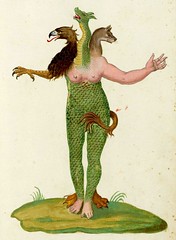
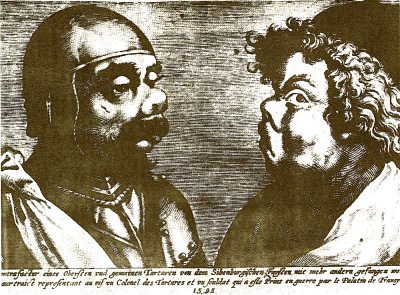
The legend to the series of illustrations posted above by Ian McCormick is posted below. Alternatively, you can consult these images at my Flickr account here. The enigmatic Ian McCormick posted the images to his easynet page in the late nineties when I found them. I’ve tried joining McCormick’s Yahoo group, but there doesn’t seem to be anyone there. Does anyone know of the current whereabouts of Ian?

Scythian Lamb

Mandrake from Herbarius (1485).

One-eyed monster from Hartman Schedel’s Liber Chronicarum (1493).

Blemmyae, or headless monster from Hartman Schedel’s Liber Chronicarum (1493).

Long-eared Phanesians from Hartman Schedel’s Liber Chronicarum (1493).

Big-lipped monster from Hartman Schedel’s Liber Chronicarum (1493).

Sciapodes from Hartman Schedel’s Liber Chronicarum (1493).

Goat-people (satyrs) from Hartman Schedel’s Liber Chronicarum (1493).

Monstrous pig of Landseer by Albrecht Durer (1496).

Human Monsters from Gregor Reisch’s Margarita Philosophia (1517).

Cooking from Giuseppe Arcimboldo’s The Genius of Cooking (1569).

Triton and Siren from the Latin edition of Ambroise Pare’s Des Monstres et Prodiges (1582).

Lamia See Topsell’s The History of Four-footed Beasts and Serpents (1607, 1608, 1658).

Biddenden Maids “Pygopagous twins”.

Parastic ectopy; Siamese twins from Johann Schenk’s Monstrorum historia memorabilis (1609).

Cynocephali from Ulisse Aldrovandi’s Monstrorum Historia (1642).

Goose-headed Man from Ulisse Aldrovandi’s Monstrorum Historia (1642).

Hairy Man from John Bulwer’s Anthropometamorphosis: Man Transformed: or the Artificial Changling (1653).

More monsters (Fortunius Licetus, De Monstris, 1665).

Medusa Head Found in an Egg (Fortunius Licetus, De Monstris, 1665).

Elephant-headed man from Fortunio Liceti’s De Monstris (1665).

Amorphous Monster (Fortunius Licetus, De Monstris, 1665).

Bear-headed Roman Senator (Anne-Claude-Philippe, Conte de Caylus, Recueil d’antiquites, 1665)

Pope-ass and other monsters from Fortunio Liceti’s De Monstrorum causis natura (1665).

Sneering Woman (James Parsons, Crounian Lectures on Muscular Motion, 1745).

Black Albino Child (Georges Buffon, L’histoire de l’homme, 1749)

Chimera (Laurent Natter, Traite de la Methode Antique, 1754).

Miniature Count Josef Boruwlaski with his wife Islina and their baby.(18th century).

Large Man Daniel Lambert. (18th century).

The Cutter Cut Up (William Dent, 1790).

Calculating Facial Disproportion (J.C. Lavater, Essays on Physiognomy, 1792).

Birthmarks (J.C. Lavater, Essays on Physiognomy, 1792).

Rage (J.C. Lavater, Essays on Physiognomy, 1792).

The Siamese Brothers (T. M. Baynes, 19th century).

Double Child (Nicolas-Francois Regnault, Descriptions des principales monstruosites, 1808).

Monstrous child with multiple sensory organs (Nicolas-Francois Genault, Descriptions des principales monstruosites, 1808).

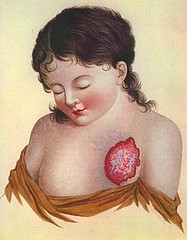
Tumor (Jean Louis Alibert, Clinique de l’Hopital Saint-Louis, 1833)

Lepra Nigrans (Jean Louis Alibert, Clinique de l’Hopital Saint-Louis, 1833)

The Cholick (George Cruickshank, 1835).

The Body Politic or the March of the Intellect (T.Mclean, 1836).

Electric Kingdom ‘Postmodern Arcimboldo’. Club Flyer, 13 March 1999.

This post was inspired by Marginalia’s post on Jan Jonston.