Hippies, modsters and other long haired youngsters

hitweek.jpg

Sourced here is a cover of Dutch underground magazine Hitweek, depicting Frank Zappa. Of which Dr. Vinyl says:

Legendary Dutch underground music magazine. The first year was only available in Amsterdam ( 1965-1966) but the later issues also in other big Dutch cities. The was THE magazine for hippies, modsters and other long haired youngsters. Not like commercial magazines such as Muziek Expres or Muziek Parade HITWEEK was the magazine were you could find articles and pictures of obscure US, UK and Dutch bands such as THE OUTSIDERS, THE PINK FLOYD, Q65, THE CREATION, LAZY BONES, THE MOTHERS, VELVET UNDERGROUND + many many more. HITWEEK was also famous because of the artwork , especially the years 1967-1969 had GREAT psychedelic drawings and pictures. HITWEEK can be compared to the UK underground magazine IT!

The magazine’s editor was Willem De Ridder, who is connected to Jim Haynes, the Dutch Provos, the Fluxus art movement, Suck magazine and the whole late of sixties underground/counterculture Europe.

Do not confuse De Ridder with Bernard Willem Holtrop of Hara Kiri magazine.

The fate of a waiter

Poster Waiter.jpg

Waiter (2006) – Alex van Warmerdam

A new film by Alex van Warmerdam is something to look forward to, Warmerdam is the only Dutch language filmmaker whose work I follow closely.

Annet Malherbe in Abel

One of his earlier features, Abel (1986), is an underrated — criminally as epithet is wholly in its place here — film that deserves to be seen by a wider audience. Maybe a Hollywood remake?

Duration is that which decomposes

Via Methods and Black Squares comes this lovely multimedia poem by Deleuze who states:

“Who introduced duration to the novel before cinema? It was Flaubert with Mme Bovary.”


Gilles Deleuze, photo credit unidentified

La durée c’est ce qui se décompose

Ha!
La durée c’est une
défection . La durée c’est,
tomber en poussierrrrrrrrrrr.
Oui, oui.
C’est Flaubert. C’est Flaubert.
Et. Et.
Si ça dure, ça se décompose.
[silence]
Ce n’est pas du tout Bergsonien.

Muybridge’s Complete Human and Animal Locomotion


Sadness in the corporate world

Dadanoias reports on a film by personal fave Gaspar Noé (Irréversible and I Stand Alone and most recently Destricted), starring Eva Herzigova; here are more clips from a site dedicated to the work and person of Noé. Dadanoias got the clip via a blog she follows, which is called The Stream Monkey; it has some very edgy posts, just have a look at this, called Sadness in the corporate world.

In case you are wondering who this Eva Herzigova girl is, here is her Google gallery. Eva has apparently acted in two films I am curious about: The Picture of Dorian Gray and Modigliani.

Again via Stream Monkey, Dark Side Hotel this series of very nice photographs, of which this one is the most erotic.

A terrifying, fabricated documentary

The War Game (1965) – Peter Watkins [Amazon.com] [FR] [DE] [UK]

“A terrifying, fabricated documentary records the horrors of a future atomic war in the most painstaking, sickening detail. Photographed in London, it shows the flash bums and firestorms, the impossibility of defence, the destruction of all life. Produced by the BBC, the film was promptly banned and became world-famous and rarely seen.” —Amos Vogel, 1974

Phinn has just published a post on this film with links to the film on Youtube. I like the category pseudo-documentary –also called mockumentaries or quasi-documentaries — to which also belong such diverse genres as white coaters and cinéma vérité. Girish recently did a post on them, but this category was not included in it.

From Phinn:

The War Game Part 1 (of 5)

  • Part 2 (of 5)
  • Part 3 (of 5)
  • Part 4 (of 5)
  • Part 5 (of 5)
  • It has been restored since

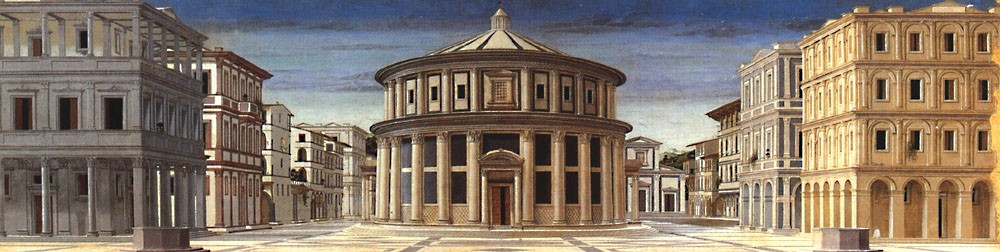
    Ancient Greece marks the beginning of Western culture; the dominant cultural form in the modern world which has come to play an influential role on more cultures worldwide than any other culture. For many centuries it was an essentially European culture, but it has now mostly become an American culture. Shown above is a 1872 snapshot of the Partenon located in Athens, Greece. It has been restored since.

    The most haunting image of the Holocaust

    Having found Five explanations for the jump cuts in Godard’s Breathless made me research other work by the author Richard Raskin and I ended up with finding one of his books on the photograph shown above. The extended essay/book is called A Child at Gunpoint [Amazon] and it documents one of the iconic pictures of the twentieth century. For a long time it was unknown who the boy in the picture was. It has been recently suggested that it was Tsvi Nussbaum. For an online analysis of the identity of the people in the photograph, see here.

    In the introduction to the book the publisher writes:

    Widely regarded as the most haunting image we have of the Holocaust, the photo of a young boy with his hands up being driven from the Warsaw ghetto has served as a touchstone for everyone from the Nuremberg prosecutors to Elie Wiesel, and from Susan Sontag to revisionist ranters on the web.

    What makes this picture so ‘haunting‘ is that it involves children. The most famous picture of the Holocaust is probably this one. Searching for Child+Holocaust at Google brings up this.


    Grimacing sculptures

    This started out as a post on Gottfried Helnwein but ended up being about Messerschmidt (1736 – 1783).

    An unidentified bust by Messerschmidt (1736 – 1783). One can only guess what makes a man in the 18th century make busts like this one. Wikipedia says “at about 1770-72 Messerschmidt began to work on his so-called character heads, obviously connected with certain paranoid ideas and hallucinations from which, at the beginning of the seventies, the master began to suffer.” If anything, this work reminds me of this.

    Gottfried Helnwein — a beautiful image here — shares many affinities with the transgressive and hyperrealist work of Ron Mueck, Trevor Brown and Mark Ryden.

    Viennese-born Helnwein is part of a tradition going back to the 18th century, to which Messerschmidt’s (another artist of the grotesque) grimacing sculptures belong. One sees, too, the common ground of his works with those of Viennese actionists Hermann Nitsch and Rudolf Schwarzkogler, who display their own bodies in the frame of reference of injury, pain, and death. One can also see this fascination for body language goes back to the expressive gesture in the work of Egon Schiele.


    And the world will come from your mouth

    Dennis Cooper celebrates Alexandro Jodorowsky day.

    As always, Dennis spends a considerate amount of time on the artists he celebrates. Here is a list of subtopics:

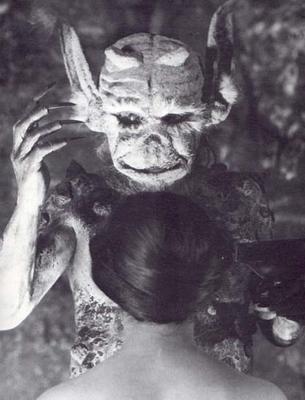
    Jodorowsky is primarily know for directing the midnight movie and cult classic El Topo (1970), a kind of spaghetti western with Buñuelian overtones. Through the Panic Movement he was connected to two other cult figures: Roland Topor and Fernando Arrabal. Most recently Jodorowsky made headlines news by officiating the non-denominational marriage ceremony of rock singer friend Marilyn Manson and burlesque performer Dita Von Teese.

    El Topo (1970) – Alexandro Jodorowsky [Amazon.com] [FR] [DE] [UK]

    Jodorowsky:

    “And I imagine…with great pleasure…all the horrible stirrings of the nonmanifested to bring forth the scream which creates the universe. Maybe one day I’ll see you trembling, and you’ll go into convulsions and grow larger and smaller until your mouth opens and the world will come from your mouth, escaping through the window like a river, and it will flood the city. And then we’ll begin to live.” — A. Jodorowsky, 1971.

    Sir Stephen gave her his consent

    L’Histoire d’O / Story of O (1954) – Pauline Reage [Amazon.com]

    I’d never paid attention to it, but Pauline Réage’s 1954 novel Story of O betrays its ‘literary fiction’ (as opposed to genre fiction) antecedents by a metafictional streak; the novel has two alternative beginnings and endings. Postmodernism avant la lettre.

    After the novel is two pages underway the narrator steps in and announces:

    “Another version of the same beginning was simpler and more direct: the young woman, dressed in the same way [as in the first opening of the story], was driven by her lover and an unknown friend.”

    Likewise, the author provides an alternative ending which is rather macabre:

    “In a final chapter, which has been suppressed, O returned to Roissy, where she was abandoned by Sir Stephen.

    There exists a second ending to the story of O, according to which O, seeing that Sir Stephen was about to leave her, said she would prefer to die. Sir Stephen gave her his consent.”

    Notice the secretive “a final chapter, which has been suppressed”. Very Borgesian.

    P. S. I am currently reading the Dutch translation by Adriaan Morriën who adds an interesting afterword to his translation of this classic, which was written before the true identity of the writer of O was known. He notes that the women in Story of O are not slaves without rights but that their permission and consent is sought for everything they undergo. He also notes that apart from the first 10 pages the narrator steps out of the way to give an account seen through the point of view of O herself. The novel, he says “does not provide a philosophy nor a way of life but rather a description of human relations that are conceivable.” But this reminds me very much of what Poe said in 1850: “The mind of man can imagine nothing which has not really existed.” Aury could not have written this novel without living the story first.

    Sort of off-topic: staying with the subject of sadomasochism in fiction, Il Giornale Nuovo has a nice post on the graphic work of Bruno Schulz, a man primarily known for his modernist fiction. This image tells most of the story.