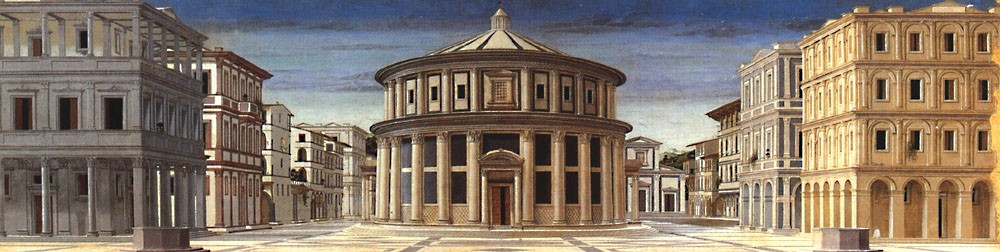
Extremely interesting piece of visionary architecture by Japanese architect Shusaku Arakawa at the Rossignol weblog. Shusaku Arakawa is the director of the 1970 experimental film Why Not?. A Google gallery of his work here.
Hopscotch (1963) – Julio Cortázar
[Amazon.com] [FR] [DE] [UK]
Rayuela (1963), translated into English as Hopscotch, is the most famous novel by the Argentine writer Julio Cortázar.
Hopscotch is a dazzling literary experiment that ranks among the most important novels written in Spanish in the 20th century. It has been highly praised by other Latin American writers including Gabriel García Márquez, Mario Vargas Llosa or José Lezama Lima. The novel has an open-ended structure that invites the reader to choose between a linear reading or a non-linear one that interpolates additional chapters. Cortázar’s employment of interior monologue, punning, slang, and his use of different languages is reminiscent of Modernist writers like Joyce, although his main influences were Surrealism and the French New Novel, as well as the “riffing” aesthetic of jazz. —http://en.wikipedia.org/wiki/Rayuela [Oct 2006]
Biography —http://en.wikipedia.org/wiki/Julio Cortázar [Oct 2006]
List of superlatives:
“The most powerful encyclopedia of emotions and visions to emerge from the postwar generation of international writers.” — New Republic
“A work of the most exhilarating talent and interest.” — Elizabeth Hardwick
“Cortazar’s masterpiece…the first great novel of Spanish America.”– Times Literary Supplement
“The most powerful encyclopedia of emotions and visions to emerge from the postwar generation of international writers.” — New Republic
In the eighteen-thirties occurred a literary dawn
In the eighteen-thirties occurred a literary dawn directly affecting not only the history of the weird tale, but that of short fiction as a whole; and indirectly moulding the trends and fortunes of a great European æsthetic school. It is our good fortune as Americans to be able to claim that dawn as our own, for it came in the person of our most illustrious and unfortunate fellow-countryman Edgar Allan Poe. Poe’s fame has been subject to curious undulations, and it is now a fashion amongst the “advanced intelligentsia” to minimize his importance both as an artist and as an influence; but it would be hard for any mature and reflective critic to deny the tremendous value of his work and the persuasive potency of his mind as an opener of artistic vistas. True, his type of outlook may have been anticipated; but it was he who first realized its possibilities and gave it supreme form and systematic expression. True also, that subsequent writers may have produced greater single tales than his; but again we must comprehend that it was only he who taught them by example and precept the art which they, having the way cleared for them and given an explicit guide, were perhaps able to carry to greater lengths. Whatever his limitations, Poe did that which no one else ever did or could have done; and to him we owe the modern horror-story in its final and perfected state. –H. P. Lovecraft in Supernatural Horror in Literature (1924-1927) via http://en.wikisource.org/wiki/Supernatural_Horror_in_Literature/Edgar_Allan_Poe [Oct 2006]
Love needs closeness, desire needs distance
Mating in Captivity: Reconciling the Erotic and the Domestic (2006) – Esther Perel
[Amazon.com] [FR] [DE] [UK]
“Love,” says Perel, “needs closeness and intimacy and familiarity to flourish. Desire does not. Desire needs distance, insecurity, novelty and surprise. Desire needs tension, breaches and repairs.”
“Love is not comfortable with fights, but desire needs fights,” says Perel. “Fights generate energy, erotic energy – and this is not just desire for sex, but a general exuberance and vitality, an élan, an aliveness! We often judge couples on the amount they fight, like: “Oh, they have such a good relationship! They never fight!” And yes, I know of couples who never fight and do have a very good relationship – but they also have a sex life that is somewhat flat. Desire needs fights! Intimacy – that is, emotional intimacy – inhibits erotic expression. Desire needs edge!”
“Love needs absence of sexual threat, but desire? Desire needs to know there are other options out there for your partner, that your partner moves out there in a sexual world when they are not with you, a world of other people who look at them, sexually. Love needs talk. Desire needs not to talk. Eroticism thrives in the space between the self and the other. In order to maintain a sexual edge in our relationships, we must learn to tolerate this void, these uncertainties.”
“I wrote this book,” she says, “because, in 22 years of practice in six different languages, I’ve met couples over and over again who were having a good relationship, who love each other, but who have no sex, no tingle! I met couples who had a bad relationship, and who I helped to have a good relationship again, and the expectation was that the sex would just come back – but it didn’t. I began to think there’s something in this premise – that if sex is wrong, the relationship is wrong; and equally that more talk, intimacy and closeness will equal more sex, better sex – that just doesn’t work.”
“Fantasy… is never politically correct, it’s transgressive and about power, which is why it’s so hot. It’s about surrender, revenge, aggression, abandonment. You can transcend moral and social boundaries. But this idea that you should share your fantasy with your partner… I think that’s very risky.”
“Talking is overrated. Especially talking to just one person”.
“I cannot stand this tendency to identify a victim and a perpetrator in an affair.”
“This idea that tenderness and emotional intimacy leads to good sex – I’m afraid it became current when women came into my profession.” –via Click Opera [Oct 2006]
Indeep, Penguin covers, Youtube and Don Quixote
From my Google reader:
Dadanoias on Penguin covers, The Laughing Bone on Don Quixote, with illustrations by Peter Howson, Honoré Daumier and Gustave Doré, Eva Deadbeat on a new female Youtube comic duo and Mr. Dante Fontana with Indeep’s 1983 Last Night a DJ Saved My Life.
Enjoy
Dictionary of the Khazars (1984) – Milorad Pavic
[Amazon.com] [FR] [DE] [UK]
Much of the novel’s alleged power is embedded in the line, that compulsory author-directed movement from the beginning of a sentence to its period, from the top of the page to the bottom, from the first page to the last. Of course, through print’s long history, there have been countless strategies to counter the line’s power, from marginalia and footnotes to the creative innovations of novelists like Laurence Sterne, James Joyce, Raymond Queneau, Julio Cortazar, Italo Calvino and Milorad Pavic, not to exclude the form’s father, Cervantes himself. But true freedom from the tyranny of the line is perceived as only really possible now at last with the advent of hypertext, written and read on the computer, where the line in fact does not exist unless one invents and implants it in the text. –(Robert Coover, 1992) via New York Times [Sept 2005]
Dictionary of the Khazars: A Lexicon Novel is the first novel by Serbian writer Milorad Pavich (Milorad Pavi?), published in 1984.
There is no easily discerned plot in the conventional sense, but the book is based on an historical event generally dated to the last decades of the 8th century or the early 9th century.
Pavic often veers into his own style of playful, somewhat Borgesian fantasy. The novel might be a sort of metafictional false document, as the people and events in the novel are presented as factual.
The novel takes the form of three cross-referenced mini-encyclopedias. Due to its format as a dictionary, the novel may be read in any number of ways, rather than just front to back. This challenges readers to shun passive reading and become active participants in the novel, as they piece together the story from fragmented, and often conflicting, accounts.
The book comes in two different editions, one “Male” and one “Female”, which differ in only a critical paragraph. –Adapted from http://en.wikipedia.org/wiki/Dictionary_of_the_Khazars [Oct 2006]
The greatest critics help us understand
The greatest critics help us understand the greatest of poets and novelists; but sometimes the opposite is also true. Charles-Augustin Sainte-Beuve in 19th-century France wrote marvelous essays on literature, which are perfectly readable today. Yet if you want to get at Sainte-Beuve’s deeper instincts, you should read him in the light cast by his brilliant friend Victor Hugo. Edmund Wilson was Sainte-Beuve’s intellectual heir in the United States — the man who figured out how to write Sainte-Beuve-like essays in American English. Yet Wilson, too, makes a little more sense if you read him in a light cast by Hemingway, Dos Passos and Fitzgerald — Wilson’s novel-writing friends and contemporaries. –Paul Berman, 2003, The New York Times
Orlando Furioso and the fantastique
Ruggiero Rescuing Angelica (1819) – Jean Auguste Dominique Ingres
Orlando Furioso (1877) – Gustave Doré
Orlando Furioso (“Mad Orlando” or “The Madness of Orlando” ) is an epic poem written by Ludovico Ariosto in 1516. It is a “gionta”, a sequel, to Matteo Maria Boiardo’s Orlando Innamorato (Orlando in Love), but it is quite distant from the other work in that it does not preserve the humanistic concepts of knight errantry.
Related: Orlando Furioso
Nicole Kidman (2006) – David Thomson
[Amazon.com] [FR] [DE] [UK]
A long and winding meditation on moviemaking and starmaking. There was a recent post of a David Thomson talk on his book. I forgot where it was published. Can anyone point me in the right direction?
Don Giovanni on Arte TV last night
Yesterday evening I landed on Arte TV (a Franco-German TV network, which aims to promote quality programming related to the world of arts and culture) and today I found out that I was watching Mozart’s Don Giovanni which Arte describes as:
Revisité par René Jacobs et mis en scène par Vincent Boussard, le chef-d’oeuvre de Mozart renvoie singulièrement à notre époque. Un Don Giovanni qui mêle sensualité et violence, humour et tragédie.
The reason I kept on watching (I normally don’t go for opera) is twofold: 1. I have been listening since six months to state-run Belgian art/classical music/jazz radio station Klara so my ears have gotten used to these sounds; 2. the striking appearance of the decors (very reminiscent of the Dr. Caligari film of the 1920s) with the slanted angles and unusual lighting.
Wikipedia has this on Don Giovanni :
Don Giovanni is an opera in two acts with music by Wolfgang Amadeus Mozart and libretto by Lorenzo da Ponte. It was premiered in Estates Theatre in Prague on October 29, 1787.
Don Juan is a legendary fictional libertine, whose story has been told many times by different authors. The name is sometimes used figuratively, as a synonym for “seducer“.
The Danish philosopher Søren Kierkegaard wrote a large essay in his book Either/Or in which he – or at least one of his pseudonyms – defends the claim that Mozart’s Don Giovanni is the greatest work of art ever made.
The finale in which Don Giovanni refuses to repent has been a captivating philosophical and artistic topic for many writers including George Bernard Shaw, who in Man and Superman, parodied the opera.