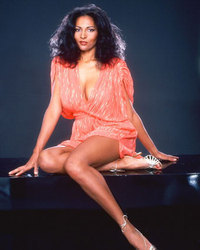
Pam Grier@60

via here.

Pamela Suzette Grier (born May 26, 1949) is an iconic American actress. She came to fame in the early 1970s, after starring in a string of moderately successful women-in-prison and blaxploitation films, and has generally remained in the public eye, starring in B-movies such as 1974’s Foxy Brown, and in mainstream films such as Quentin Tarantino’s 1997 film, Jackie Brown.

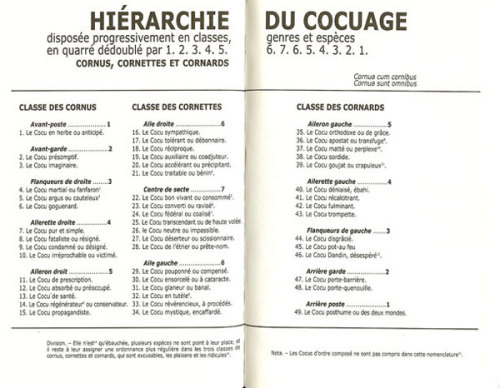
Charles Fourier’s Hierarchy of Cuckoldry (1924)

Charles Fourier: Hiérarchie du cocuage – Les presses du réel (book) Hiérarchie du cocuage by Charles Fourier (1924).

Charles Fourier‘s Hiérarchie du cocuage (1924)

“… let us first establish a hierarchy of cuckoldry and introduce into this serious debate the beacon of analytic method, which the philosophers regard as the path to truth. ”

“Among cuckolds, it is possible to distinguish nine degrees of cuckoldry, both among men and women, for women are cuckolded far more often than men; indeed if the husband has horns as tall as a stag’s antlers, the wife’s may be said to be as high as the branches of a tree.” —The theory of the four movements [1]

I stumbled upon this work via the excellent Anton Constandse Eros – de waan der zinnen (1977). The hierarchy of cuckoldry is part of a defense of free love.

The Last Days of Emma Blank by Alex van Warmerdam

[Youtube=http://www.youtube.com/watch?v=jFGrA1KCfEo]

The Last Days of Emma Blank[1] by Alex van Warmerdam

Chances are slim that you come across this film if you live outside of Europe or even Dutch-speaking countries, but if you see this film playing near you, don’t miss it. Warmerdam is the best director of The Netherlands and has been for some time now. His palmares includes Abel (1986), The Northerners (1992), Little Tony (1998), Grimm (2003)  and Waiter (2006).

The Last Days of Emma Blank (Dutch original: De Laatste dagen van Emma Blank) is a Dutch film by Alex van Warmerdam released in May 2009. The film is co-produced with La Parti Productions in Belgium and is the story of Emma Blank, a rich woman who is incurably ill and who is living her last days. She is surrounded by personnel who patiently await her death, which takes longer that originally envisioned.

I have always found the odour of my beloved ones exceeding pleasant, and the stronger their transpiration, the more they seemed sweet to me

File:Tomato leaf stomate 1-color.jpg - Wikipedia, the free encyclopedia

a juxtapoetic illustration of sweat

There is a charming Italian restaurant and traiteur right next to my door, called Il Particolare.

Particolare

In their tiny dining room hangs a quote of the preface to Casanova’s Histoire de ma vie. Its most intriguing bit reads:

“Wat de vrouwen betreft, vond ik altijd dat het liefje, dat ik begeerde lekker rook en hoe meer ze zweette, des te heerlijker ik haar vond.”

Like so many translations of Histoire de ma vie, it was previously bowdlerized.

The original French text reads:

“J’ai toujours trouvé que celle que j’aimais sentait bon et plus sa transpiration était forte, plus elle me semblait suave.”

Jean Laforgue, who translated from the German Brockhaus edition “rectified”: “Quant aux femmes, j’ai toujours trouvé suave l’odeur de celles que j’ai aimées”.

Arthur Symons repeats the bowdlerized version (as he had no access to the original edition): “As for women, I have always found the odour of my beloved ones exceeding pleasant.” It should actually read: “I have always found the odour of my beloved ones exceeding pleasant, and the stronger their transpiration, the more they seemed sweet to me.

RIP Zé Rodrix (1947 – 2009)

RIP Zé Rodrix (1947 – 2009)

[Youtube=http://www.youtube.com/watch?v=OITefBHuEkk&]

Elis Regina‘s recording of Zé Rodrix‘s  rock ruralCasa no Campo

Zé Rodrix (born José Rodrigues Trindade in Rio de Janeiro , 25 November, 1947- São Paulo, 22 May 2009) was a Brazilian musician, known as member of Sá, Rodrix & Guarabyra and the group Som Imaginário which accompanied Milton Nascimento and Gal Costa.

In 1971, Elis Regina‘s recording of his rock ruralCasa no Campo” (with Tavito) became a national hit.

See Brazilian music, Brazilian rock

A day at the Brussels museum of fine arts

Detail of Venus and Cupid by Lucas Cranach the Elder

A., W. and myself went to the Alfred Stevens exhibition at the KMSKB[1] in Brussels, after which we visited their partially displayed 15th and 16th century art collection.

Alfred Stevens (1828–1906) illustrates the boredom of the 19th century demimondaine, the most interesting work on display was his panorama Histoire du siécle, a definite precursor to the Taiwanese work Discussing the Divine Comedy with Dante. His other work has merit for occupying the niche that it does, but is not on par with contemporaries Jean-Léon Gérôme (1824 – 1904), William-Adolphe Bouguereau (1825 – 1905), Gustave Moreau (1826 – 1898) or Arnold Böcklin.

I took several photos[[2], many details, Bosch is instantly recognizable (from the Triptych of The Temptation of St. Anthony), other photos will perhaps be annotated in the future on my Picasa pages.

RIP Lucy Gordon (1980 – 2009)

RIP Lucy Gordon (1980 – 2009)

via upload.wikimedia.org RIP Lucy Gordon (actress) I’m skipping Arthur Conan Doyle @150,  Arthur Cravan @120 and Carl Craig &@40 to announce the sad death of British actress Lucy Gordon, a couple of days before her 29th birthday. Sad because she chose to end her life violently. She was set to play Jane Birkin in Joann Sfar’s Serge Gainsbourg : vie héroïque, scheduled for release in 2010.

May 2007 photo of Lucy Gordon by David Shankbone[1][2]

I’m skipping Arthur Conan Doyle @150, Arthur Cravan @120 and Carl Craig &@40 to report the sad death of British actress Lucy Gordon, a couple of days before her 29th birthday. Sad because she chose to end her life violently. She just finished shooting Jane Birkin in Joann Sfar‘s Serge Gainsbourg : vie héroïque, scheduled for release in 2010.

Introducing Joel Brodsky (1939 – 2007)

via www.wfnk.com Joel Brodsky Joel Brodsky, American photographer, noted for Ohio Players album cover photography.

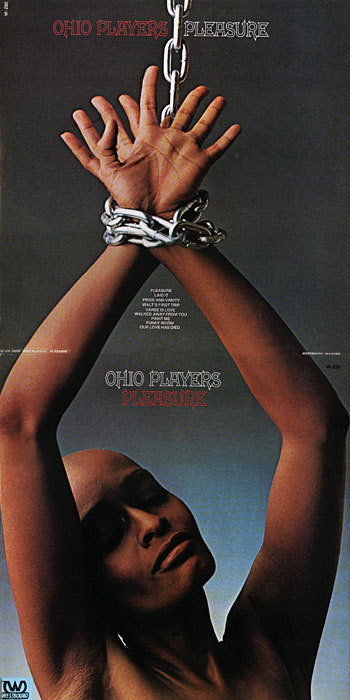
Pleasure

Joel Brodsky (7 October 1939 – 1 March 2007) , American photographer, best-known for his risqué Ohio Players album cover photography. His photographs are also featured on the covers of The DoorsStrange Days[1], The Stooges debut album[2], Herbie Mann’s Memphis Underground[3] and the Ohio Players’ Ecstasy[4] and Pleasure[5].

His best-known picture, according to a Washington Post story, was used as the cover of the 1985 The Best of The Doors[6] album. It made in late 1966 and shows a bare-chested Jim Morrison of the Doors, with his arms outstretched.

Brodsky’s photographs appeared on over 400 album covers.

Christophe Bruno’s Dadameter

Via Bright Stupid Confetti[1] comes Christophe Bruno‘s Dadameter

bright stupid confetti: packets of future transmission See Dadameter

The Dadamap

Christophe Bruno (born July 1, 1964) is a French artist. He began his artistic activity in 2001, influenced by the net.art movement. His thesis is that through the web, and especially through the ability to search and monitor it thoroughly by means of Google, we are heading towards a global text that among other things enables a new form of textual, semantic capitalism, which he explores in his work. His artworks include Iterature, Logo.Hallucination, The Google Adwords Happening and many other pieces.

The Dadameter is an art project by French artist Christophe Bruno first presented in 2008. It was inspired by the work of french writer Raymond Roussel use of homophony described in How I Wrote Certain of My Books.

In the words of the Bruno “the project is a satire about the recent transmutation of language into a global market ruled by Google et al. and uses the most up-to-date technologies of control to draw cartographies of language at large scale.”

It was co-produced by the Rencontres Paris-Berlin-Madrid 2008 for contemporary art and new cinema and programmed by Valeriu Lacatusu.

The result of the project is the so-called Dadamap[2][3] in which each pixel corresponds to one couple of words. The project started from “a lexicon of several thousands of words which correspond to about 800,000 couples (as many pixels then), and we looked for homophonic correlations, as in billard / pillard [see Roussel], or for semantic correlations.”

The procedure provides three measurements for each couple of words corresponding to homophony (the Damerau-Levenshtein distance), Google Similarity (or semantic relatedness) and thirdly equivocation (to which extent a word has a univocal meaning or at the contrary is polysemic or equivocal).

The Dadamap is a topographical map resembling an ocean floor, it features green for wasteland, light blue for utilitarianism, blue for mainstream, deep blue for boredom and brown for homophony[4]. There is an equivocation separation line which roughly splits the map into two, or maybe that is a rift. From left to right, the map contains the following lemmata: OuLiPo, Roussel, Dada, rap, Tecktonik, 911, pop, Warhol, Fluxus, Duchamp, Jarry, Baudrillard, reality TV, spam, neen, bling-bling, net.art, Debord, Burroughs, Mallarmé, spam, Hapax, Googlewhacks, epiphanies, infotainment, Joyce, Nouveau Réalisme, Sarkoland, recycling, Deleuze and Google.
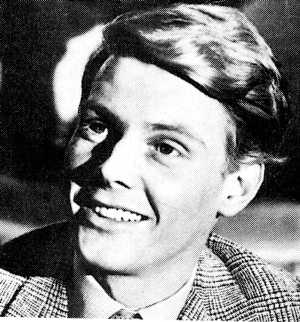
James Fox @70

James Fox @70

James Fox (born 19 May 1939) is an English actor best-known for his portrayal of Chas in Performance (1970, directed by Donald Cammell and Nicholas Roeg).

Chas (James Fox) is a “performer,” an ultra-violent enforcer for an East London gang who begins to enjoy his work a little too much, culminating in the murder of an associate. He goes on the run, both from the police and from his former colleagues and finds himself a hideout in the house of a reclusive, eccentric rock star named Turner (Mick Jagger) who lives there with his female friends. Chas and Turner are initially repelled by each other, but come to see that the worlds of the rock star and the gangster are not as different as they first appear.

His previous cult film was The Servant (1963, directed by Joseph Losey) in which Tony (James Fox), a wealthy young Londoner, hires Barrett (Dirk Bogarde) as his manservant. Nothing being what it seems, the characters manoeuvre around each other until roles reverse and Tony emerges enslaved to his butler.

Both Performance and The Servant are WMCs.