Ten years of Scheld’Apen celebration/party this Saturday. Scheld’Apen is the most arty nightspot in Antwerp. Arty that is, not arty-farty.
[Youtube=http://uk.youtube.com/watch?v=Fd5zh6JBm5g]
Ten years of Scheld’Apen celebration/party this Saturday. Scheld’Apen is the most arty nightspot in Antwerp. Arty that is, not arty-farty.
[Youtube=http://uk.youtube.com/watch?v=Fd5zh6JBm5g]
Jeffrey Lee Pierce (June 27, 1958 – March 31, 1996) was an American singer, songwriter and guitarist. He was one of the founding members of the 1980s punk band The Gun Club. He would have turned 50 today if he hadn’t exchanged the temporary for the eternal in his late thirties.
The Gun Club injected punk rock with doses of blues and country music. Pierce’s wailing vocals were an ideal delivery for his songs, which generally had a spooky, haunted quality.
Fire of Love was their debut album from whence came “Sex Beat,” released in 1981 on Ruby Records. “Sex Beat” is World Music Classic #48.
[Youtube=http://www.youtube.com/watch?v=CMdYi8pWPiw]
“Sex Beat” by The Gun Club
Choreography by Dipsetmuthafucka.
I’ve mentioned “Sex Beats” before here and the most memorable line of the song is: “We can f*** forever but you will never get my soul.”
Happy birthday Jello Biafra, former lead singer of the Dead Kennedys. In the late 1980s, the band was embroiled in an obscenity trial in the US over the 1985 Frankenchrist album, which included a “biomannerist” poster with art that depicted penises, “Penis Landscape“[1] by H. R. Giger, a work in the same vein as jahsonic fave Yoshifumi Hayashi.
Interviewed by Jools Holland:
[Youtube=http://www.youtube.com/watch?v=iVrTW7AUkoM]
“I love this word decadence, all shimmering in purple and gold. It suggests the subtle thoughts of ultimate civilization, a high literary culture, a soul capable of intense pleasures. It throws off bursts of fire and the sparkle of precious stones. It is redolent of the rouge of courtesans, the games of the circus, the panting of the gladiators, the spring of wild beasts, the consuming in flames of races exhausted by their capacity for sensation, as the tramp of an invading army sounds.” — Paul Verlaine, Les Poètes maudits (1884)
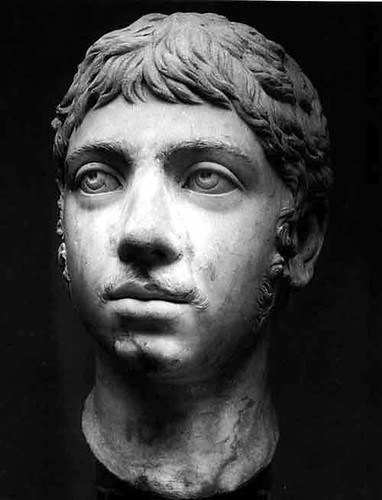
“Heliogabalus was a remarkable example of psychopathia sexualis; but in his age there were no Krafft-Ebings to submit his case to scientific observation,” said John Stuart Hay in 1911 in The Amazing Emperor Heliogabalus. Heliogabalus, or Elagabalus as he is also called, is indeed a prime example in the category of Roman decadence, along with other notorious emperors such as Tiberius, Caligula, Claudius and Nero.
Keywords in the history of Roman decadence are inbreeding, bacchanalia, orgies, vomitoria, Great Fire of Rome, gladiators and pederasty.
The classic account of Roman decadence is Edward Gibbon‘s The History of the Decline and Fall of the Roman Empire, published in six volumes between 1776 and 1788, a book that was instantly put on the Index Librorum Prohibitorum. The history of Roman decadence is a necessarily a hybrid mix of truth and fact, but is interesting to note that the view Europe had of Roman antiquity during the Renaissance was that of an highbrow ideal. It wasn’t perhaps — although the existence of Latin profanity was already known to Antiquity scholars – until the excavations of Pompeii and we found the erotic art in Pompeii and Herculaneum in the second half of the 18th century that our view of the Romans started to change. This gave rise to the very first secret museum, the Secret Museum of Naples.
Back to Heliogabalus.
Two years ago in Amsterdam, I saw a pleasant man who served us in a bar while we were having dinner. His face struck me as perverse. How can someone have a perverse face? Is the nature of your character readable on your face? Go ask the physiognomists, phrenologists, pathognomists and characterologists and they will answer “yes“. Their sciences are long out of fashion and definitely politically incorrect, but I concur, without of course, casting a judgment. You need only look at the face of Heliogabalus.
[Youtube=http://www.youtube.com/watch?v=fagd2mC6RAQ]
Bridge by Michael Cross
Bridge is an installation by British contemporary artist Michael Cross currently hosted in Hasselt, Belgium. It gives the impression that one is walking on water.
Every step you makes a floater appear and disappear. It feels like hovering over an abyss. It is mechanically powered. One of the best things I’ve seen in a while.

Bird’s Nest and Ferns (1863) by Fidelia Bridges
“When we examine a nest, we place ourselves at the origin of confidence in the world.” -—Gaston Bachelard, The Poetics of Space

Principes d’une esthétique de la mort by Michel Guiomar
And just when you think you’ve seen everything, a book manages to come out of nowhere and amaze you. Today, at the Antwerp book store Demian, I bought Principes d’une esthétique de la mort, les modes de présences, les présences immédiates, le seuil de l’Au-delà, a book essay by French writer Michel Guiomar, published in 1967 by French cult publisher José Corti. The book has not been translated to English, a possible translation of the title is Principles of an aesthetics of death. The book extensively references jahsonic favourite Gaston Bachelard.
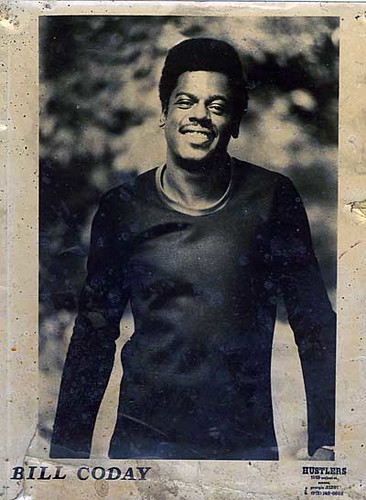
Photo unidentified of Bill Coday
Bill Coday (May 10, 1942 in Coldwater, Mississippi – June 8, 2008) was a blues and soul musician popular on the British Northern soul scene. As a young man he began singing in juke joints in and around Blytheville, Arkansas. Later, Coday travelled to Chicago, Illinois, and there one night he was “discovered” by Denise LaSalle. LaSalle signed Coday to her Crajon label, and introduced Coday to Willie Mitchell of Memphis, Tennessee. Mitchell’s reputation in the soul and soul blues music industry includes producing such artists as Al Green and Ann Peebles. Mitchell agreed to work with Coday, and a result of this relationship, the team of Mitchell and Coday produced songs that included “Sixty Minute Teaser,” “I Get High on Your Love,” “You’re Gonna Want Me,” and “Get you Lies Straight.”
[Youtube=http://www.youtube.com/watch?v=PCle3p43m3I]
“Sixty Minute Teaser”

La Fleur du marécage (1885) by Odilon Redon
In 1885, Odilon Redon depicts a Pierrot entitled La Fleur du marécage and commented with “La fleur du marécage, une tête. humaine et triste.” The engraving is is reminiscent of the fantastic plants of Edward Lear. Marécage is French for swamp, so the title translates as The flower of the swamp, a head. Human and sad.
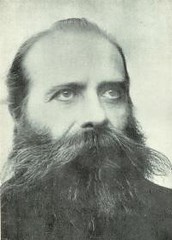
Yes, this world is indeed flat, while the other nonsense.
I am resigned, without hope, in my fate,
And to kill time until death,
I smoke by the noses of the gods thin cigarettes.
Go, live, strive, poor future skeletons,
I, the blue meander which toward the blue sky twists,
plunge into an infinite ecstasy and end up sleeping
As a perfume dying of a thousand dishes.
And I enter paradise, filled with flowery yet clear dreams
Where seen mingling in waltzes fantastic
Elephants in choirs of mosquitoes.
And then, when I wake dreaming of my verse,
I contemplate the heart full of a sweet joy,
My dear thumb roasted as a goose’s thigh.
See Le sanglot de la terre, a poem that evinces the influence of Arthur Schopenhauer‘s pessimistic philosophy and Edward von Hartmann‘s concept of the unconscious mind.
![[1]](http://members.tripod.com/~revcarroll/gigerlandscape.jpg)