Venetians strings

www.myspace.com/venetiansnares (the strings on ‘Hollo Utca 2’ appear real, but who played them?)

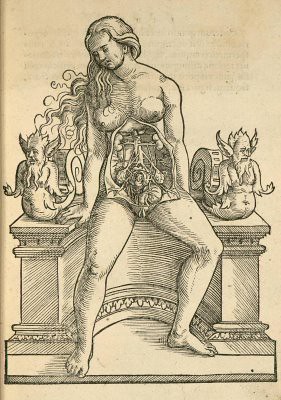
The image from the cover is from this painting: Death and Woman (1517) by Hans Baldung Grien.

At Youtube: www.youtube.com/watch?v=8rjyVF6a4xo

See also:

Cover art:

Winter in the Belly of a Snake

Trever Brown?

Doll Doll Doll

Trever Brown?

Horse and Goat

Trever Brown?

Higgins Ultra Low Track Glue Funk Hits, 1972-2006Chocolate Wheelchair Album

??

Hospitality

?

Cavalcade of Glee and Dadaist Happy Hardcore Pom Poms

?

Meathole

?

Winnipeg is a Frozen Shithole

?

and one more by Trevor Brown (I think):

On micro-blogging and macro-blogging

Micro-blogging is a relatively new term that has been used in connection to new social networking applications such as Twitter (What are you doing?). Today, it’s also being used in connection to Flickr and YouTube. A good post on the subject here and here.

I’ve only been ‘properly’ blogging since August 2006. With properly I mean using blogging software, I used to imitate the style of a blog in simple .txt files here. First I tried blogspot, which I disliked so much that I thought I’d return to my old ways, but then I tried WordPress and have stuck with it.

But when I compare the ease of editing at WordPress with those found at Flickr, Flickr is clearly the winner. Many times when I started with a post I’d compose it first at Flickr and than copy it and continue with it here (WordPress).

Now the main –how do you say it in English (overall tendency or purpose)? — is:

  • to praise Flickr’s writing environment.
  • to praise WordPress and especially its SNAP extension
  • to raise the question whether there is a Flickr-like application for MP3s
  • to question whether there is content management system in the making which is as elegant as Flickr, and which also includes content from Wikipedia and YouTube, sort of the meta-approach to internet publishing and where I could re-publish the content now hosted at Jahsonic.com
  • to introduce the term macro-blogging referring to the process listed in the bullet point above

In order to spice up what is perhaps an uneventful blog entry I give you Chesty Morgan in Fellini’s Casanova:

[youtube=http://www.youtube.com/watch?v=VeUzWi2O0KU]

Breast fetishists may want to scrub to two minutes and 23 seconds.

Credit where credit is due: I think it is Nils Geylen who first led me to the concept of micro-blogging.

My name, I believe, is Robert Jones

I am, that is to say I was, a great man, but I am neither the author of Junius nor the man in the mask, for my name, I believe, is Robert Jones, and I was born somewhere in the city of Fum-Fudge.

The first action of my life was the taking hold of my nose with both hands. My mother saw this and called me a genius:—my father wept for joy and presented me with a treatise on Nosology. This I mastered before I was breeched. ..

Who else but Borges could start a story by introducing a character who is unsure of his own name? The answer is Poe, the story is titled Lionizing (1835). It makes you wonder if there are any precedents of stories with characters who are unsure who they are.

I am currently reading Poe for the first time in my life. I’d written about Poe without ever having read one of his stories. Much like I had written about Baudelaire and Borges (and decided I was going to like them) without ever having read them. Recently, I found a rationale for my behaviour. It came by way of Oscar Wilde who supposedly said: “I never read a book I must review, it prejudices you so.”

I am reading Poe in Dutch, my native language. Poe is really too difficult for non-native speakers. I mean, how many native speakers know what vituperate means? In Dutch this translates as beschimpen, and while not a word I use every day, nor every month, maybe once every year, I do know what to make of it. Nevertheless, I enjoy difficult words and I learn every day. My main site Jahsonic helps me in this by providing context. Yesterday I came across arcane, I look it up at my place and at Wikipedia and at Answers.com. Roughly it means esoteric.

Then I remember Eric Losfeld and his Editions Arcanes:

Losfeld began secret publishing about 1949, and openly in 1952 when he established Editions Arcanes. For the following ten years or so his feet were planted firmly in the fields of both clandestine and open publishing. His open publications were certainly avant-garde and included works by Nelly Kaplan, Claude Seignolle, Boris Vian, Francis Picabia, Andre Pieyre de Mandiargues amongst others. —Patrick J. Kearney more…

Back to Poe. Please check this post with a very good illustration of Lionizing. And the superb The Nose by Gogol.

Totally unrelated is a Horace Andy track over at Sly and Robbie’s MySpace.

Excuse the rambling post. My name, I believe, is Jan Geerinck.

Groovy Glamour International

Supplement to Glamour International n. 16, April 1991

Cover illustration probably by Leone Frollo.


See a collection of Glamour International covers at the excellent Numagazine vintage erotica site (to which I am not affiliated) and my page on a similar Italian publisher Glittering Images.

Each issue of Italian erotica magazine Glamour is 12×12 inch, has a color wraparound cover, and is mostly in color. The focus is international eroticism, from classic cheesecake and bondage to the latest work by top artists.

Black women and jungle girls for example includes work by filmmaker Federico Fellini, and huge double-page spreads by Scozzari, Cadelo, Steranko, Frollo, Dave Stevens, Saudelli, Frazetta, and a fine cover and illustration by Chichoni. Girls and horror films of the 1950s, and Bill Ward. See all available at Amazon here: Alberto Becattini

Some Google galleries here, here and here.

Also check Numagazine’s review of Psychopathia Sexualis in Italian sinema. Mine is here.

And to conclude I want to let you in on a little secret: the best Italian — and perhaps the best worldwide — erotic photography is by Carlo Mollino. The proof is here.

Si boops deh. With his arms open wide

Click here [YouTube].

Enjoy. I always believed the lyrics were: “Civil check, arms open wide.” Who can tell me the title of the classical? song whistled at 2:30?

This song is by Sly and Robbie produced by Laswell.

While we’re on the subject of Mr. Laswell, Miles Post Mortem is a 1998 French language documentary by Pierre-Yves Bourgeaud for Arte television on Laswell’s Miles Davis remixes.

Erotomaniac and countercultural historian Bouyxou given carte blanche

Unidentified photograph of Bouyxou
Sourced here.

For those of you living in Paris, or visiting Paris, the cinémathèque has given Jean-Pierre Bouyxou carte blanche to run a retrospective of “his kind of cinema“. Bouyxou (born 1946 in Bordeaux) is an erotomaniac and a countercultural historian. Most recently, Mike of Esotika … reviewed his film Satan bouche un coin. I also added some Bouyxou products to my Flickr account here and here as well as a cover of his magazine Sex Star System here. Some other magazines Bouyxou contributed to were Vampirella, Zoom, Métal hurlant, L’Echo des savanes, Penthouse, Lui, Hara-Kiri and Paris Match. He was editor-in-chief of Fascination (thirty issues from 1978 to 1986).

Bouyxou belongs to that European tradition of eroticism which is represented in Italy for example by the people of the Glittering Images publishing house to which Bouyxou is a contributor. For a review of one of the products of this publisher, see this and this blog entry at K. H. Brown’s Giallo Fever.

Thanks to Harry Tuttle of Unspoken Cinema for the notice.

Here is the program:

  100% SEXUEL, 100% EXPERIMENTAL… – 2007 – 110’  
  Vendredi 16 Mars 2007 – 21h30 – SALLE GEORGES FRANJU
En présence de Jean-Pierre Bouyxou, José Bénazéraf, Yves-Marie Mahé
 
  ANDY MILLIGAN, QUELQUE PART… – ANDY MILLIGAN – 2007 – 85’  
  Vendredi 30 Mars 2007 – 19h30 – SALLE GEORGES FRANJU
En présence de Jean-Pierre Bouyxou

  AUTOUR DE W.S. BURROUGHS – 2007  
  Vendredi 25 Mai 2007 – 19h30 – SALLE GEORGES FRANJU
En présence de Jean-Pierre Bouyxou

  AVANT-GARDE JAPONAISE – 2007 – 147’  
  Vendredi 27 Avril 2007 – 21h30 – SALLE GEORGES FRANJU
En présence de Jean-Pierre Bouyxou et Sébastien Bondetti

  ECCE BOUYXOU – 2007 – 116’  
  Vendredi 25 Mai 2007 – 21h30 – SALLE GEORGES FRANJU
En présence de Jean-Pierre Bouyxou

  MARXISME, TENDANCE RAVACHOL – 2007 – 140’  
  Vendredi 13 Avril 2007 – 21h30 – SALLE GEORGES FRANJU
En présence de Jean-Pierre Bouyxou et Tobias Engel

  LE PARAPLUIE ET LA MACHINE A COUDRE – 2007 – 140’  
  Vendredi 13 Avril 2007 – 19h30 – SALLE GEORGES FRANJU
En présence de Jean-Pierre Bouyxou et Jean-Jacques Rousseau

  L’UNDERGROUND EN FRANCE… – 2007 – 95’  
  Vendredi 16 Mars 2007 – 19h30 – SALLE GEORGES FRANJU
En présence de Jean-Pierre Bouyxou, Philipe Bordier, Raphaël Bassan, Gérard Courant, Gérald Lafosse, Marie-France O’Leary
 
  VERTIGES ONIRIQUES – 2007 – 101’  
  Vendredi 30 Mars 2007 – 21h30 – SALLE GEORGES FRANJU
En présence de Jean-Pierre Bouyxou et Stéphane du Mesnildot

  VOYAGES AU BOUT DE LA FOLIE – 2007 – 97’  
  Vendredi 11 Mai 2007 – 21h30 – SALLE GEORGES FRANJU
En présence de Jean-Pierre Bouyxou

The common tendency to do exactly the wrong thing

For lack of a better illustration: Ligeia read by Vincent Price

The Imp of the Perverse is a metaphor for the common tendency, particularly among children and evildoers, to do exactly the wrong thing in a given situation. The conceit is that the misbehavior is due to an imp (a small demon) leading an otherwise decent person into mischief.

The phrase has a long history in literature, and was popularized (and perhaps coined) by Edgar Allan Poe in his short story, “The Imp of the Perverse“. It is a study in guilt or the human thirst for self-destructive behaviour.

“Guilt” should not be taken here in either the standard legal or moral senses. Poe’s characters usually do not feel “guilt” because they did a “bad” thing—that is, the story is not didactic (in his essay “The Poetic Principle” Poe called didacticism the worst of “heresies”); there is no “moral to the story.” Guilt, for Poe, is “perverse,” and perverseness is the desire for self-destruction. It is completely indifferent to societal distinctions between right and wrong. “Guilt” is the inexplicable and inexorable desire to destroy oneself eo ipso.

The Poe Decoder notes that “When Poe speaks of perverseness, he does not intend narrower denotations of the various forms of the word. He does not mean “perverted,” as in sexual miscreance. Though such deviancy may be perverse, it bears little resemblance to the examples of perversity which Poe elucidated in his tales.” As such, Poe’s interpretation of perverseness deserves a prominent place in the history of irrationalism.

In Poe’s words:

“… no reason can be more unreasonable; but in fact, there is none more strong. With certain minds, under certain conditions, it becomes absolutely irresistible. I am not more certain than I breathe, than that the assurance of the wrong or error of any action is often the one unconquerable force which impels us, and alone compels us to its prosecution. Nor will this overwhelming tendency to do wrong for the wrong’s sake, admit of analysis, or resolution into ulterior elements. It is a radical, primitive impulse–elementary.”

and

“We stand upon the brink of a precipice. We peer into the abyss – we grow sick and dizzy. Our first impulse is the shrink away from the danger. Unaccountably we remain… it is but a thought, although a fearful one, and one which chills the very marrow of our bones with the fierceness of the delight of its horror. It is merely the idea of what would be our sensations during the sweeping precipitancy of a fall from such a height… for this very cause do we now the most vividly desire it.”

See also:
Interpretation of The Raven, The Imp of the Perverse and The Black Cat.
The Poe decoder, I am Safe!

The Imp of the Perverse is also masterfully exemplified in The Bad Glazier, a prose poem by Baudelaire collected in Paris Spleen:

Baudelaire’s prose poem “The bad glazier” is a marvelous example of the imp of the perverse; after a discourse on personality and action, a man calls a glazier up to his fourth-story apartment. He inspects the glazier’s glass, “discovers” that there is no colored glass in the man’s pack (which we sense he may have known all along), and sends the glazier back on his way. When the poor glazier reaches the ground floor and leaves the building, our protagonist throws a flower pot at him and breaks his glass. “And drunk with my madness,” the protagonist tells us, “I shouted down at him furiously: ‘Make life beautiful! Make life beautiful!'” Rachel Barenblat via www.webdelsol.com/InPosse/barenblat.htm

Arts pricing and public funding

Have you ever liked a work of art (and here and here) very much but felt that the community, museum or government that had commissioned it paid too much for it?

This exactly what happened to me when I learned about the 750,000 euros the Flemish people paid for the 2006 water sculpture Diepe Fontein which reflects the façade of the Royal Museum of Fine Arts when full.

A fraction of the money spent (I cannot remember the exact details but if I remember well the proportion was about 10%) was used for the actual production of the piece. The majority of the money went to Spanish contemporary artist Cristina Iglesias (1956, San Sebastián, Spain) who was primarily rewarded for her intellectual property.

This article by Prof. Paul Ilegems (born 1946, curator of the Friet-museum in Antwerp) has the best description of the work. It mentions that the idea to invite Iglesias to design this work was by architect Hilde Daems, together with Paul Robbrecht and Marie-José Van Hee who had been at that time responsible for the re-design of the Leopold De Waelplaats. Ilegems mentions how the work is huftervrij, which is a Dutch term that translates as shitheadproof and denotes vandal proof. Vandalism is a big problem in public space art and it has been of recent interest in Antwerpen. Cel Crabeels’s article on the destruction of Dan Graham’s public space artwork Funhouse for Children (1998) on the Antwerp Sint – Jansplein documents this.

As I mentioned before, the main gripe I have with the work of art is not necessarily the price of it, but the fact that only a small fraction of the cost was for the actual production of the work. I specifically want to compare Diepe Fontein to another 2006 work of art, even if the work I am referring to was ‘only’ an ephemeral performance by a French company who is called Royale de Luxe. They produce the best piece of street theatre I have ever had the pleasure of witnessing: The Sultan’s Elephant. Its performance cost the Antwerp municipality 800,000 euros but the majority of it went to the actual performance (which lasted three days and were extravagant and deeply moving), not just a concept. I saw grown men and women weep with joy and awe. Watch it here if they did not come to your town last summer.

See also the sociology of art and on government funding of art.