Groping each other in a car

After treating us to a review [nsfw] of Japanese cult film The Bedroom (Hisayasu Sato, 1992), Mike now turns our attention to the cult classic of the pink film era The Embryo Hunts in Secret. It would make an ideal double bill with Blind Beast.

Mike says:

“The film opens with a man and woman passionately groping each other in a car; outside, it is pouring down rain. The man grabs for the woman’s sex, but she denies him the pleasure, insisting that they go inside. The man takes the woman to his apartment. It turns out that the man is the owner of a department store where Yuka, the woman, works in the men’s clothing department as a sale girl. The two know little about each other, other than what is knowable from an outsider perspective; they know their power relations in the business, and they know they are attracted to each other. “

See also Youtube clip of Blind Beast vs Killer Dwarf by Teruo Ishii and this German trailer of the unforgettable 1988 Tetsuo.

Lastly, this looks surreal, from a film that is not as good as the poster shown below:


The Last Supper (2005) – Osamu Fukutani

More films seen last week: Brice de Nice, an ejoyable silly French comedy; Le Dîner de cons, a very funny and dark French comedy; Pan’s Labyrinth, a diabolical version of Alice in Wonderland and a tribute to the fantastique and the magnificent trailer for David Lynch’s INLAND EMPIRE. Curious about: Terry Gilliam’s Tideland and Rampo Noir. Of the last a picture:

Rampo Noir


Why Bush won

Sex in history (1954) – Gordon Rattray Taylor [Amazon.com] [FR] [DE] [UK]

[About] 50 years ago, a book was published which accurately predicted the results of the 2004 [North American] election. No, this wasn’t a book of psychic predictions. It was a book called “Sex in History” by Gordon Rattray Taylor, a sociologist. In this book, he talked about how societies swing back and forth between two tendencies, each of which places particular prominence on one of the genders. The patrist side is the ascendant male, and the matrist side is more focused on the female. Comparing characteristics of the two cultural tendencies looks almost exactly like a comparison of the platforms of the Republican and Democratic parties.

Patrist Matrist
Restrictive attitude to sex Permissive attitude to sex
Limitation of freedom for women Freedom for women
Women seen as inferior, sinful Women accorded high status
Chastity more valued than welfare Welfare more valued than chastity.
Politically authoritarian Politically egalitarian
Conservative: against innovation Progressive: revolutionary
Distrust of research, enquiry No distrust of research
Inhibition, fear of spontaneity Spontaneity: exhibition
Deep fear of homosexuality Deep fear of incest
Sex differences maximised Sex differences minimised
Asceticism, fear of pleasure Hedonism, pleasure welcomed
Father religion
eg. “Thou shall not break the Ten Commandments or you will burn in hell”
Mother religion
eg. “God is all loving, all forgiving and all understanding”

HMMM… I WONDER WHICH ONE OF THESE WON THE ELECTION…?

Seriously though. This is probably the single-most accurate model to explain why Bush won. It fits in precisely with what I wrote yesterday about how Bush’s people tapped into the fear of the average male that their cultural importance was at risk.

Keywords in contemporary culture which denote matrist values are, “feminism,” “metrosexual,” and “equal rights”. Keywords which currently denote a more Patrist attitude are “family values,” “traditional values,” “fundamentalism”. —Pop Occulture

Hippies, modsters and other long haired youngsters

hitweek.jpg

Sourced here is a cover of Dutch underground magazine Hitweek, depicting Frank Zappa. Of which Dr. Vinyl says:

Legendary Dutch underground music magazine. The first year was only available in Amsterdam ( 1965-1966) but the later issues also in other big Dutch cities. The was THE magazine for hippies, modsters and other long haired youngsters. Not like commercial magazines such as Muziek Expres or Muziek Parade HITWEEK was the magazine were you could find articles and pictures of obscure US, UK and Dutch bands such as THE OUTSIDERS, THE PINK FLOYD, Q65, THE CREATION, LAZY BONES, THE MOTHERS, VELVET UNDERGROUND + many many more. HITWEEK was also famous because of the artwork , especially the years 1967-1969 had GREAT psychedelic drawings and pictures. HITWEEK can be compared to the UK underground magazine IT!

The magazine’s editor was Willem De Ridder, who is connected to Jim Haynes, the Dutch Provos, the Fluxus art movement, Suck magazine and the whole late of sixties underground/counterculture Europe.

Do not confuse De Ridder with Bernard Willem Holtrop of Hara Kiri magazine.

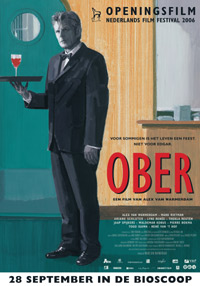
The fate of a waiter

Poster Waiter.jpg

Waiter (2006) – Alex van Warmerdam

A new film by Alex van Warmerdam is something to look forward to, Warmerdam is the only Dutch language filmmaker whose work I follow closely.

Annet Malherbe in Abel

One of his earlier features, Abel (1986), is an underrated — criminally as epithet is wholly in its place here — film that deserves to be seen by a wider audience. Maybe a Hollywood remake?

Duration is that which decomposes

Via Methods and Black Squares comes this lovely multimedia poem by Deleuze who states:

“Who introduced duration to the novel before cinema? It was Flaubert with Mme Bovary.”


Gilles Deleuze, photo credit unidentified

La durée c’est ce qui se décompose

Ha!
La durée c’est une
défection . La durée c’est,
tomber en poussierrrrrrrrrrr.
Oui, oui.
C’est Flaubert. C’est Flaubert.
Et. Et.
Si ça dure, ça se décompose.
[silence]
Ce n’est pas du tout Bergsonien.

Muybridge’s Complete Human and Animal Locomotion


Sadness in the corporate world

Dadanoias reports on a film by personal fave Gaspar Noé (Irréversible and I Stand Alone and most recently Destricted), starring Eva Herzigova; here are more clips from a site dedicated to the work and person of Noé. Dadanoias got the clip via a blog she follows, which is called The Stream Monkey; it has some very edgy posts, just have a look at this, called Sadness in the corporate world.

In case you are wondering who this Eva Herzigova girl is, here is her Google gallery. Eva has apparently acted in two films I am curious about: The Picture of Dorian Gray and Modigliani.

Again via Stream Monkey, Dark Side Hotel this series of very nice photographs, of which this one is the most erotic.

A terrifying, fabricated documentary

The War Game (1965) – Peter Watkins [Amazon.com] [FR] [DE] [UK]

“A terrifying, fabricated documentary records the horrors of a future atomic war in the most painstaking, sickening detail. Photographed in London, it shows the flash bums and firestorms, the impossibility of defence, the destruction of all life. Produced by the BBC, the film was promptly banned and became world-famous and rarely seen.” —Amos Vogel, 1974

Phinn has just published a post on this film with links to the film on Youtube. I like the category pseudo-documentary –also called mockumentaries or quasi-documentaries — to which also belong such diverse genres as white coaters and cinéma vérité. Girish recently did a post on them, but this category was not included in it.

From Phinn:

The War Game Part 1 (of 5)

  • Part 2 (of 5)
  • Part 3 (of 5)
  • Part 4 (of 5)
  • Part 5 (of 5)
  • It has been restored since

    Ancient Greece marks the beginning of Western culture; the dominant cultural form in the modern world which has come to play an influential role on more cultures worldwide than any other culture. For many centuries it was an essentially European culture, but it has now mostly become an American culture. Shown above is a 1872 snapshot of the Partenon located in Athens, Greece. It has been restored since.

    The most haunting image of the Holocaust

    Having found Five explanations for the jump cuts in Godard’s Breathless made me research other work by the author Richard Raskin and I ended up with finding one of his books on the photograph shown above. The extended essay/book is called A Child at Gunpoint [Amazon] and it documents one of the iconic pictures of the twentieth century. For a long time it was unknown who the boy in the picture was. It has been recently suggested that it was Tsvi Nussbaum. For an online analysis of the identity of the people in the photograph, see here.

    In the introduction to the book the publisher writes:

    Widely regarded as the most haunting image we have of the Holocaust, the photo of a young boy with his hands up being driven from the Warsaw ghetto has served as a touchstone for everyone from the Nuremberg prosecutors to Elie Wiesel, and from Susan Sontag to revisionist ranters on the web.

    What makes this picture so ‘haunting‘ is that it involves children. The most famous picture of the Holocaust is probably this one. Searching for Child+Holocaust at Google brings up this.


    Grimacing sculptures

    This started out as a post on Gottfried Helnwein but ended up being about Messerschmidt (1736 – 1783).

    An unidentified bust by Messerschmidt (1736 – 1783). One can only guess what makes a man in the 18th century make busts like this one. Wikipedia says “at about 1770-72 Messerschmidt began to work on his so-called character heads, obviously connected with certain paranoid ideas and hallucinations from which, at the beginning of the seventies, the master began to suffer.” If anything, this work reminds me of this.

    Gottfried Helnwein — a beautiful image here — shares many affinities with the transgressive and hyperrealist work of Ron Mueck, Trevor Brown and Mark Ryden.

    Viennese-born Helnwein is part of a tradition going back to the 18th century, to which Messerschmidt’s (another artist of the grotesque) grimacing sculptures belong. One sees, too, the common ground of his works with those of Viennese actionists Hermann Nitsch and Rudolf Schwarzkogler, who display their own bodies in the frame of reference of injury, pain, and death. One can also see this fascination for body language goes back to the expressive gesture in the work of Egon Schiele.