Subject-barred goes by the name of $. The blog is one of the more enigmatic ones on the web. I first found him via his transcript of Zizek’s The Pervert’s Guide to Cinema (2006). Subject-barred now presents a short video “Without cheese there wouldn’t be an INLAND EMPIRE,” recorded by two guys who “made/accidentally-captured this 2-minute video – of Lynch in a suitably bizarre “performance art” promotion of his latest film on a Hollywood sidewalk – sound like the two guys from the Black-Book office scene/massacre in Lynch’s Mulholland Dr …”. –subject-barred
Lasse Braun, the sexual revolution came from the cold
Yesterday evening on Arte TV (along with the BBC, one of the best television stations in Europe) there were two documentaries about the sexual revolution in Europe. The first documentary was on Lasse Braun and it was followed by a documentary on the sexual revolution as it happened in Denmark, what I have called the ‘Danish experiment’ before. I fell asleep during this second part, so some notes about the Braun feature:
Worth remembering about Lasse Braun (born 1936) is that he spent some time in Breda, The Netherlands, which was his most fruitful time; that he was/is somewhat of an intellectual/guru type of person (equalling pornography to anarchism (a practice which started in 18th century Europe)) and that he is a sexually dominant who works with women who were/are in love with him.

Sensations (1976) – Lasse Braun
There was an interesting interview with Tuppy Owens (Britain’s leading “pro-sex” (a radical group within the post-feminist camp) writer and activist, comparable to the likes of Annie Sprinkle, Susie Bright etc in America). Tuppy Owens appeared in the 1976 film Sensations, Braun’s first feature film and a good illustration of the shift of pre-1970s pornographic film (usually filmed on 8mm and 16mm formats and distributed in brothels and peep show booths) to porn chic films (filmed on professional stock and shown in ‘mainstream’ theatres.)
The end of the documentary saw Lasse Braun in Susan Block’s TV show, a very sad affair indeed.
See also: European pornography– sexual revolution in the cinema

The Pianist (2002) – Roman Polanski
I saw Roman Polanski’s 2002 film The Pianist today. The story about a Jewish piano player and his time in the Warsaw Ghetto. I have never seen a bad film by Polanski, in my view he is one of the greatest post-war cineasts and this film is no exception. While I recently said that there can be no fictional narrative of Auschwitz (thinking of the faux realism of Schindler’s List black and white footage) this film sort of changed my mind. I thought that it was very realistic in its portrayal of the atrocities committed by the Germans and the gradual build-up of the dehuminazation of the Jews. The film is also a testament to the value of art and music, a bit contrary to Adorno’s famous statement that “there can be no art after Auschwitz.”
Searching for polanski+pianist+schindler+black and white+spielberg+verisimilitude brings up two good reviews, the first by Clive James and one by kamera.co.uk.
Trivia: I cried when the wheel-chaired bound man was thrown of the balcony and the men were shot and driven over by the Germans. I laughed when one of the brothers told the story of the surgeon who was brought to the ghetto to operate on someone, and was subsequently shot along with the anaesthetized patient.
See also: verisimilitude – realism in film – the Holocaust in art and fiction
Louise Brooks (1906 – 1985)


Louise Brooks in Pandora’s Box (1929)
Various finds
Dadanoias finds an Italian Youtube clip on Valentina, the comic book character by Italian adult comic book author Guido Crepax (1933 – 2003) .
Again on Youtube, Mr. Dante Fontana finds “Planet Rock”.
And various blogs are celebrating Louise Brooks‘s 100th birthday. PCL Linkdump and Greencine.
In search of monomaniacs

Monomania: The Flight From Everyday Life In Literature And Art (2005) – Marina Van Zuylen
[Amazon.com] [FR] [DE] [UK]
First sentence: “The early twentieth-century physician, philosopher, and psychiatrist Pierre Janet (1859-1947) could be renamed the great poet of obsessive disorders…” (more)
Monomania explores the cultural prominence of the idée fixe in Western Europe during the nineteenth and twentieth centuries. Marina van Zuylen revives the term monomania to explore the therapeutic attributes of obsession. She introduces us to artists and collectors, voyeurs and scholars, hypochondriacs and melancholics, whose lives are run by debilitating compulsions that may become powerful weapons against the tyranny of everyday life.
In van Zuylen’s view, there is a productive tension between disabling fixations and their curative powers; she argues that the idée fixe has acted as a corrective for the multiple disorders of modernity. The authors she studies—Charles Baudelaire, Sophie Calle, Elias Canetti, George Eliot, Gustave Flaubert, and Thomas Mann among them—embody or set in motion different manifestations of this monomaniacal imperative. Their protagonists or alter egos live more intensely, more meaningfully, because of the compulsive pressures they set up for themselves. Monomania shows that transforming life into art, or at least into the artful, drives out the anxiety of the void and puts in its place something so orderly and meaningful that it can take on the aura of a religion. — from the publisher
Monomania word sample from Jahsonic.com:
The She Devils remains Pierre Louys’ most intense, claustrophobic work; a study of sexual obsession and monomania unsurpassed in its depictions of carnal excess, unbridled lust and limitless perversity. –Kathleen Murphy on Pierre Louÿs (1870 – 1925) It’s this very monomania that gives [Sade’s] works their coldly granitic fascination, page after page of mechanized sexual debasement hewn out like so many identical slabs of stone, and it’s also why he can disturb the most open-minded reader. — Bruce Reid on Quills (2000) – Philip Kaufman Poe’s tales, of course, fall into several classes; [the] third group deal with abnormal psychology and monomania in such a way as to express terror but not weirdness. –Lovecraft via Supernatural Horror in Literature (1924-1927)
From Art and Popular Culture:
In psychiatry, monomania (from Greek monos, one, and mania, mania) is a type of paranoia in which the patient has only one idea or type of ideas. Emotional monomania is that in which the patient is obsessed with only one emotion or several related to it; intellectual monomania is that which is related to only one kind of delirious idea or ideas. The originally French term was prominent in the 19th century and has come into disuse.
In colloquial terms, the term monomania is often attached to subcultures that to the general public appear esoteric. However, the differences between monomania and passion can be very subtle and difficult to recognize.
The term was first attested in the English language in 1823, probably on model of earlier French monomanie. [2]
See also: everyday life – escapism – addiction – obsession – creativity
Serendipity
Searching for kafka+gogol+nose+metamorphosis (inspired by Todorov’s likening of Kafka’s The Metamorphosis to Gogol’s The Nose) I re-find Alan Gullete. And via Alan I find Danill Kharms whose photograph below is striking to say the least.


Daniil Kharms, photo credit unidentified
Daniil Kharms (1905 – 1942) was an early Soviet-era surrealist and absurdist poet, writer and dramatist. Kharms lived in debt and hunger for several years until his final arrest on suspicion of treason in the summer of 1941. He was imprisoned in the psychiatric ward at Leningrad Prison No. 1. and died in his cell in February, 1942 — most likely, from starvation. —http://en.wikipedia.org/wiki/Daniil_Kharms [Nov 2006]
Via Alan Gullette http://alangullette.com/lit/absurd/ who I’ve mentioned before here. His literary entry page features pages supernatural, surreal, absurd, et al literature.
There is now only one fantastic object: man
Quoting from Todorov’s book on the fantastic, page 173, Todorov seems to hold that Sartre has a similar view on fantastic literature to his own:
“According to Sartre, Blanchot and Kafka no longer try to depict extraordinary beings; for them,
there is now only one fantastic object: man. Not the man of religions and spiritualisms, only half committed to the world of the body, but man-as-given, man-as-nature, man-as-society, the man who takes of his hat when a hearse passes, who kneels in churches, who marches behind a flag.
The quote by Sartre is taken from his article on Blanchot’s récit Aminadab, published in Situations.
There’s no English equivalent of the French récit, which names a literary genre which tells of a single event. A few dense notes on what this word comes to mean for Blanchot in The Book to Come and elsewhere. —http://spurious.typepad.com/spurious/2006/06/what_is_the_rel.html
[Nov 2006]
A Dance Fantasy (1978) – Montana
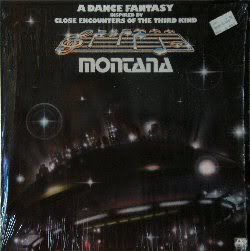
A wonderful post by Disco Delivery on Vincent Montana, Jr.’s Dance Fantasy album; includes the cover scans and all of the tracks in MP3 format.
Tolkien
Although I recently stated that I only want to do appreciative criticism, I want to investigate why I don’t like Tolkien and Lord of the Rings. I do like the fantastique and fantastic literature as defined by Todorov.
On a sidenote I’ve noticed that people who like Tolkien also like Harry Potter for which I have very little enthusiasm. Again, why?
Googling for Todorov (who is the leading authority on the fantastique) in combination with Tolkien brings up this:
Key critics such as Rosemary Jackson, Christine Brooke-Rose, and Tzvetan Todorov all see Tolkien as beyond their parameters. Jackson’s work is largely concerned with fantasy elements within realist literature, while Todorov and Brooke-Rose see Tolkien as a creator of secondary worlds, no longer a fantasy writer, but a creator of the marvellous, placing him outside their studies. –Sara Upstone via http://findarticles.com/p/articles/mi_m0OON/is_4_23/ai_99848429
The keyword is marvelous, which according to Todorov does not belong in the fantastic/que category.
And googling for Tolkien and irrealism brings the Cafe Irreal:
[J].R.R. Tolkien, who not only had to create a whole new world from scratch, but one which he could only visit in his imagination. And yet Tolkien (and the various other genre fantasy and science-fiction writers) are not irreal writers. For, having imagined a new world, a Tolkien proceeds to make it so real and concrete for us (by giving it laws, mythologies and governments) that we could visit it, if it existed, like we would visit an exotic island — surprised by the customs of the people and the creatures that inhabit its jungles, but feeling very much as if we were in the category of the real. Like the realist writer, he tries to concretize the unreal. –G.S. Evans in IRREALISM AND THE DREAM-STATE via http://home.sprynet.com/~awhit/tirr_dre.htm [Nov 2006]
The key phrase in this little investigation is “Having imagined a new world, Tolkien proceeds to make it so real and concrete for us, … making it very much as if we were in the category of the real. Like the realist writer, he tries to concretize the unreal.” By doing so he takes out all the ambiguity, ambivalence, unresolvedness, unreliability and uncertainty that makes the fantastique what I find so attractive in it.
In the words of Jan Beardsly commenting on Todorov:
Todorov distinguishes the fantastic from two other modes, the uncanny and the marvelous. While these modes have some of the ambiguity of the fantastic, they ultimately offer a resolution governed by natural laws (the uncanny) or the supernatural (the marvelous). –Jan Bardsley via http://www.unc.edu/~bardsley/ghosts/todorov.html
A final quote on uncertainty by Todorov:
“The fantastic occupies the duration of this uncertainty….The fantastic is that hesitation experienced by a person who knows only the laws of nature, confronting an apparently supernatural event” (p. 25).