Yearly Archives: 2008

Icons of erotic art #21

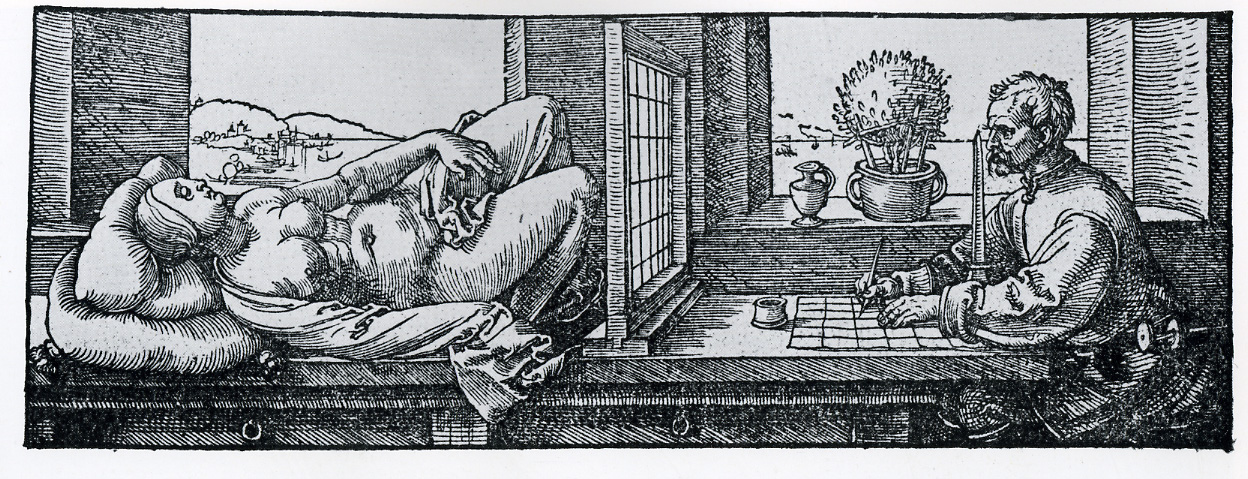
The illustration Artist and Model in the Studio by Albrecht Dürer, first published in The Painter’s Manual in 1525, is a woodcut that has been readily used to illustrate the dominance of the male gaze in Western visual culture, as well as the general consequences of mechanizing the relationship between the viewer and the viewed. In 1993 French photographic artist Dany Leriche appropriated Dürer’s original image as Hanneke et Elise [1], interpretable as a feminist-inspired rejection of the male gaze. The image is part of a diptych – the second part is a photograph of the model taken through the grid from the point of view of the observer.

Previous appropriations at Jahsonic included Balthus’s The Guitar Lesson [1] by Japanese photographer Naoto Kawahara in 2007 [2].

Tip of the hat to Lemateurdart.

Previous entries in Icons of Erotic Art here, and in a Wiki format here.
Paul Rumsey’s cinémathèque

http://www.youtube.com/watch?v=Y2tP9s8y2Ic&

Le Cochon danseur (The Dancing Pig, 1907), Pathé

I recently asked Paul Rumsey if he could be persuaded to contribute to my ongoing World Cinema Classics series. Paul came up with more than I bargained for, pointing me to a dozen of his favorite films in an ongoing email conversation.

Included were French director Jacques Rivette‘s films Duelle and Noroit (Paul pointed to the similarities in Rivette’s and David Lynch’s work); the work of Czech stop-motion animation director Jiří Barta, the American film “Return to Oz[1] (a nightmarish reinterpretation of the Oz story where at one point Dorothy (played by Fairuza Balk[2]) is sent to a nightmarish Victorian mental institution, to be given electro-shock therapy [3]) and many more such as The Baby by Ted Post, etc….

I’ve finally settled to feature the short 1907 French film above, a film that clearly demonstrates the fairground antecedents that cinema has. Paul describes the film as “beginning almost erotic and ending almost sinister,” a fitting description of this silent film cult rarity. Paul got to see the film via the intriguing blog Hugo Strikes Back!.

I’ve mentioned a similarly exciting French animation here (scroll to the bottom for the Automatic Cleaning Company, a short about a room that cleans itself).


Strange things happening in Holland

First Pim Fortuyn was assassinated for his anti-immigration positions during the 2002 elections.

In 2004 Theo van Gogh is killed because he consistently referred to Muslim community as geitenneukers (goat-fuckers).

Now Dutch politician Geert Wilders is making an anti-Islam film, and he literally says that Islamic culture is a retarded culture Youtube. Why would anyone do something like that?

I know that The Netherlands have a very long tradition in candidness and open-mindedness, as well as being staunch defenders of freedom of speech; but I live in the vicinity of their country and I feel that they are threatening my safety.

The Netherlands have installed the terrorist-alarm on the all but one highest level because Fitna, the new film by Geert Wilders is about to be aired.

I do not wish to return to the Baader-Meinhoff climate of the seventies I grew up in, nor want another 9/11 scenario.

World music classics #26

[Youtube=http://www.youtube.com/watch?v=Fb8S51M2GAc&]

Currently in heavy rotation is this track by Hercules and Love Affair. For a longer mix of better quality check Hercules & Love Affair on Myspace.

I’ve heard two remixes, which were unremarkable.

Best track of 2008, so far. The video reminds me of Moroder’s “Knights in White Satin” sleeve art. The whole track is Moroder/Cowley – influenced, not strange if you consider that the track is published by DFA Records, the leading label of electroclash (the eighties revival that has taken the dance music world by storm since 2002/2003 and which was the ideal soundtrack to accompany the nihilism of the post-dot-com era.)

Update: full lyrics,  the percussion on the MySpace version of this track reminds me of musical drummer hero Earl Young, and who does the horns? They are sublime.

Previous World Music Classics.

Unreason vs. reason

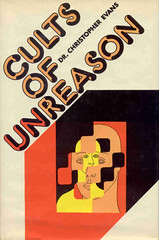
Cults_of_Unreason_1974

Adorable seventies graphic design on the book depicted above.

Of course, the classic illustration of unreason is:

The Sleep of Reason Produces Monstersis a 1799 print by Goya from the Caprichos series. It is the image the sleeping artist surrounded by the winged ghoulies and beasties unleashed by unreason.

The Sleep of Reason Produces Monsters is a 1799 print by Goya from the Caprichos series. It is the image the sleeping artist surrounded by the winged ghoulies and beasties unleashed by unreason.

Unreason on the whole is a subject of innumerable greater interest than reason. As such, I’ll take the counter-enlightenment over the enlightenment any day. Conceded, there were interesting aspects of the enlightenment, ignored by history, such as the enlightenment of Thérèse Philosophe. See Robert Darnton’s The Forbidden Best-Sellers of Pre-Revolutionary France.

Art or exhibitionism?

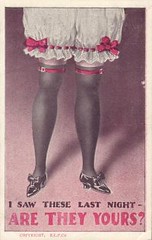
are-they-yours

Above is a feebly related image to introduce this post on Art or exhibitionism?

A recent post [1] by Belgian blogger Martin Pulaski, in which he shares with his readers his list of medication, prompts me to think about the relation between art and exhibitionism.

All of us bloggers are to a lesser or greater extent exhibitionists and artists. We want to share, get our message out there, we imagine a readership, we want it to grow, we want to connect. All are qualities of the artist and the exhibitionist. Whether we succeed or not can only be left to posteriority. This has not always been the case perhaps, I hear myself wonder. It hasn’t and it has.

One can easily point to the Romantics and JJR‘s Confessions as a starting point of this exhibitionism. One can even go further back to Catullus who authored these incredibly explicit lines of poetry in the first century BC.

Coming back to the present age and the contemporary relevance of “art or exhibitionism?,” there has been the internet which has made each and everyone of us self-publishers.

Back to the arts, the real arts, the institutionalized arts.

I’ve been very much intrigued by Tracey Emin‘s Everyone I Have Ever Slept With 1963-1995, a concept that needs no explanation except maybe a Google gallery [2].

I’ve made a variation on this candid list: Everyone I’ve personally known who committed suicide. I know it’s macabre, even more than Emin’s listing the foetus of her aborted child; but this is a dedication to those who’ve said goodbye, and a thank-you-note to whoever for my life until now.

On ‘difficult’ people

If you ever feel bad because you’ve been unkind to a friend; if you feel bad because you’ve had one of your tantrums; if you feel bad because you’ve been unbearable; if ever you think that you are a ‘difficult’ person, watch this clip from My Best Fiend (1999), you will feel a better person instantly. Nothing compares to the tantrums of Kinski. My Best Fiend is a 1999 documentary by Werner Herzog about his tumultuous yet productive relationship with German actor Klaus Kinski.

Icons of erotic art #20

Jeune fille en buste 1794 by Pierre-Narcisse Guérin, a typical illustration for the blog Femme, femme, femme

Consider me: my hands can not cover my breasts, I cling to them tightly to hide my shame. But also consider this: sunlit windows gaze down upon me like undeniable eyes, millions of bronze eyes; and shame turns into pride.

Jeune fille en buste 1794 by Pierre-Narcisse Guérin, a typical illustration for the blog Femme, femme, femme.

Previous entries in Icons of Erotic Art here, and in a Wiki format here.

Oh baby, is this the woman I want to be? (wmc#25 and wcc#41)

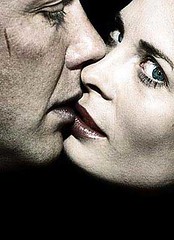
Mystery picture

“Oh baby, is this the woman I want to be? The door is unlocked, the windows are open, every time the place looks best for me. I said, kiss me, kiss me, kiss me again, kiss me again…”

These lyrics are from “Kiss Me Again“, a track by Arthur Russell. Listen to the entire track here (unfortunately the lesser of the two mixes of this twelve inch).

The photograph is of Maria Bonnevie, one of the more interesting actresses currently working in European cinema. She is the lead in the 2003 small masterpiece Reconstruction and the current cult favorite; Andrey Zvyagintsev‘s The Banishment.

The audio track posted above comes via here, a new blog of someone who goes by the nick fac586, what I believe to be a reference to Fac 51 Haçienda also known as just The Haçienda.

The author of this blog does an extended analysis of the song and its lyrics. Regarding the lyrics he says:

Have you ever gotten back together with someone who you shouldn’t have? I think most of us have, and I think that’s what this song is getting at, and the music tells the story even more than the words.

Deserving mention in this context is a recent article by popular music scholar Tim Lawrence, author of “Love Saves the Day” and current biographer of Arthur Russell. The article is titled “Connecting with the Cosmic: Arthur Russell, Rhizomatic Musicianship, and the Downtown Music Scene, 1973-92” and connects Arthur Russell in a tired way to the theory of rhizomatics of Deleuze & Guattari.

Kiss Me Again” is world music classic #25 and Reconstruction is world cinema classic #41

The Aporias of the Avant-Garde


Einzelheiten by Enzensberger

While I was in Amsterdam in the winter of 2006-2007 I asked the people in a philosophy bookstore: “If Slavoj Žižek and Sloterdijk are my two favorite contemporary philosophers, who would the third be?” They came up with Hans Magnus Enzensberger and Alain Badiou.

I had remembered Badiou but had almost forgotten Enzensberger, but last weekend at the used book store De Slegte I bought a Dutch translation of Enzensberger’s Einzelheiten, and was very much taken by his analysis of the concept avant-garde in his essay The Aporias of the Avant-Garde.

Aporias, published in 1962 in Germany, is one of the first essays that preached the “death of the avant-garde” which has been celebrated since the advent of postmodernism. It features good analyses too of Lukacs petty defense of literary realism and stimulating reflections on the absurdity of some critics’ grouping of individual artists into art movements, especially in cases such as expressionist literature (no writer has ever called himself expressionist).

On a general level it provides excellent etymological and semantic analyses of the term avant-garde.

P.S. Published in the same year was another work on avant-garde practices, which I suspect is more an eulogy: The Theory of the Avant-garde by Renato Poggioli.