La Fontaine Anspach

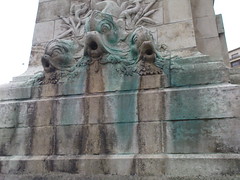
La Fontaine Anspach, detailLa Fontaine Anspach, detailLa Fontaine Anspach, detail
La Fontaine Anspach, detailLa Fontaine Anspach, detailLa Fontaine Anspach, detailLa Fontaine Anspach, detail

La Fontaine Anspach, detailLa Fontaine Anspach, detailLa Fontaine Anspach, detailLa Fontaine Anspach, detail

La Fontaine Anspach, detailLa Fontaine Anspach, detailLa Fontaine Anspach, detailLa Fontaine Anspach, detail

La Fontaine Anspach, detailLa Fontaine Anspach, detailLa Fontaine Anspach, detailLa Fontaine Anspach, detail

La Fontaine Anspach, detailLa Fontaine Anspach, detailLa Fontaine Anspach, detailLa Fontaine Anspach, detail

La Fontaine Anspach, detailLa Fontaine Anspach, detailLa Fontaine Anspach, detailLa Fontaine Anspach, detail

La Fontaine Anspach, Vismarkt, Brussels

La Fontaine Anspach was originally located at the Place de Brouckère. It was displaced to the Vismarkt. The monument is an hommage to Jules Anspach.

It was designed by Emile Janlet with the collaboration of Paul De Vigne, Julien Dillens, Godefroid Devreese and Pierre Braecke. Georges Houtstont did the ornaments.

One I forgot:

I hope they never “clean” this. No matter how dirty, I always prefer it to the restauration.

The hippie adventure

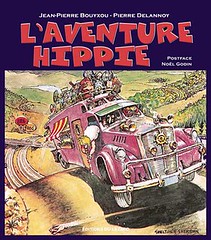
L'Aventure Hippie

L’Aventure hippie Jean-Pierre Bouyxou and Pierre Delannoy

Illustration by Gilbert Shelton and Dave Sheridan.

L’Aventure hippie is a French book written by Jean-Pierre Bouyxou and Pierre Delannoy. It subject matter is the birth of the sixties counterculture, with a special focus on French developments. It was first published at Plon in 1992, later editions at Editions du Lézard (1995 and 2000) and currently in print from the 10/18 collection.

Photos from the book

Dag naar Antwerpen met Walte feb 2009

The last issue of Suck Magazine

Dag naar Antwerpen met Walte feb 2009

Dennis Kitchen illu. to Weird Trips #1 (1972)

Dag naar Antwerpen met Walte feb 2009

Photo of Emmanuelle Arsan

Dag naar Antwerpen met Walte feb 2009

Print by Victor Moscoso

Dag naar Antwerpen met Walte feb 2009

Oh! Calcutta!

Dag naar Antwerpen met Walte feb 2009

To Katinaki from a Roland Lethem film

Dag naar Antwerpen met Walte feb 2009

Ultra Violet (photo Jacques Prayer)

Dag naar Antwerpen met Walte feb 2009

Early pre-Debord instance of “Ne Travaillez Jamais” quote

Photos from the shop where I bought the book.

Dag naar Antwerpen met Walte feb 2009

Daniel Torres

Dag naar Antwerpen met Walte feb 2009

unidentified poster

Dag naar Antwerpen met Walte feb 2009

Claude Gillot prints

Dag naar Antwerpen met Walte feb 2009

Berthet?

Dag naar Antwerpen met Walte feb 2009

Chinese furniture book

Dag naar Antwerpen met Walte feb 2009

Roland Topor poster

Dag naar Antwerpen met Walte feb 2009

Paul Mariat sleeve

Dag naar Antwerpen met Walte feb 2009

Cristina sleeve

Dag naar Antwerpen met Walte feb 2009

Lio sleeve (Pop Model)

RIP Philip José Farmer (1918 – 2009)

RIP Philip José Farmer (1918 – 2009)

RIP Philip José Farmer by you.

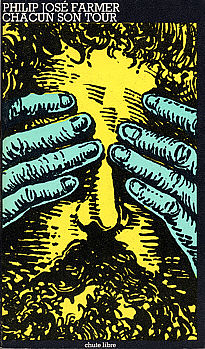
Philip José Farmer (January 26, 1918 – February 25, 2009) was an American author, principally known for his science fiction and fantasy novels and short stories. Farmer’s works often contain sexual themes, and some of his early works were notable for their groundbreaking introduction of such to science fiction. Farmer’s first published science fiction story, “The Lovers,” which won him the Hugo Award for most promising new writer in 1953, was the first sf story to deal with sexual relations between humans and aliens. It instantly put Farmer on the map. His collection of short stories Strange Relations (1960) was a notable event in the history of sex in science fiction. He was one of three dedicatees of Robert A. Heinlein‘s 1961 novel Stranger in a Strange Land, which was also noted for breaking sexual taboos. Fire and the Night (1962) is a non-science-fiction novel about a love affair between a white man and a black woman that features some interesting sociological and psychosexual twists. Witness to that are these French translation covers. [1][2][3][4][5][6]

Contemporary voices in black music

This is Carl Hancock Rux‘s “No Black Male Show” mixed with “I Recall (There I Am)” from Rux’s Rux Revue album. Most readily, it seems to refer to “The Revolution Will Not Be Televised“.

[Youtube=http://www.youtube.com/watch?v=XirwjeOJaqM]

The video by Philipp Virus and Ian Kerkhof under the alias Aryan Kaganof.

Ian Kerkhof was brought to my attention by Valter when he pointed me to The Dead Man 2: Return of the Dead Man.

Carl Hancock Rux is probably familiar with Saul Williams whose “List of Demands”[1] was one of the finds of 2008. See also contemporary voices in black music.

RIP Franciszek Starowieyski (1930 – 2009)

RIP Franciszek Starowieyski (1930 – 2009)

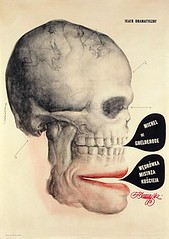
Le Grand Macabre by Franciszek Starowieyski , 1965

Poster for Michel De Ghelderode‘s play Le Grand Macabre (1965)

Franciszek Andrzej Bobola Biberstein-Starowieyski (born July 8, 1930 in Bratkówka, Poland, died February 23, 2009), was a Polish artist. From 1949 to 1955 he studied at Academy of Fine Arts in Cracow and Warsaw. He specialized in poster, drawing, painting, stage designing, and book illustration. He was a member of Alliance Graphique International (AGI).

Here[1] is a fair collection of his work on Flickr.

I’ve previously reported on the Polish film poster[2].

Fred Katz @90

Fred Katz @90

[Youtube=http://www.youtube.com/watch?v=LrFE1NMtgAs&]

Katz  on cello on gay anthem jazz standardMy Funny Valentine” by the Chico Hamilton band.

Fred Katz (born February 25, 1919) is an American composer, songwriter, conductor, cellist, and professor, perhaps best-known as the composer and lyricist of “Satan Wears a Satin Gown[1].

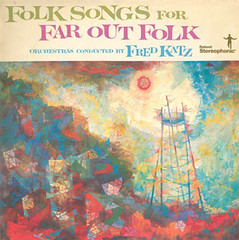
Folk Songs for Far Out Folk by Fred Katz

Folk Songs for Far Out Folk (1958)

Katz was classically trained at the cello and piano and began his career in a number of classical and swing orchestras. In the early 1950s, Katz accompanied singers such as Lena Horne, Tony Bennett and Frankie Laine. From 1955 through 1958, he was a member of the Chico Hamilton Quintet. He also recorded several solo albums such as Folk Songs for Far Out Folk[2] labels including Pacific Jazz, Warner Bros., and Decca Records.

In the late 1950s and 1960s, Katz scored a number of films for Roger Corman, including A Bucket of Blood, The Wasp Woman, Creature from the Haunted Sea and The Little Shop of Horrors. He also composed a number of pieces of classical music. Katz went on to become a professor of cultural anthropology at the University of San Fernando, specializing in ethnic music.

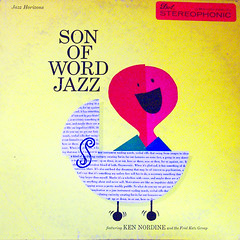
His cello can also be heard on Ken Nordine‘s Word Jazz projects, on Dorothy Ashby‘s The Rubaiyat of Dorothy Ashby, and Billy Bean‘s Makin’ It.

Riccardo Freda @100

Riccardo Freda @100

Barbara Steele in The Horrible Dr. Hichcock (1962) – Riccardo Freda
image sourced here.

Riccardo Freda (born in Alexandria,Egypt, February 24, 1909 – died in Paris, France, December 20, 1999) was an Egyptian-born Italian film director. Ironically best known for his horror and thriller movies, Freda had no great love for the horror films he was assigned, but rather favored the epic sword and sandal pictures. Freda’s Sins of Rome (1953) was one of the first Italian peplums, predating Steve Reeves‘s Hercules by four years, and his classic Giants of Thessaly (1961) was theatrically released one year before Ray Harryhausen‘s famous Jason and the Argonauts. He directed Kirk Morris and Gordon Scott in two classic Maciste films in the sixties, in addition to several spy films, spaghetti westerns, historical dramas and World War 2 actioners.

[Youtube=http://www.youtube.com/watch?v=b4OeeDwyP_s&]

The Horrible Dr. Hichcock

He never finished either of the two horror films he was assigned in the fifties (I Vampiri and Caltiki – The Immortal Monster), but rather allowed his cinematographer Mario Bava to complete them. Bava’s great effects work on Caltiki in particular launched him on a directing career of his own in 1960. Thus many fans regard Freda as Mario Bava’s mentor in the film industry.

Freda’s greatest horror films were his two 1960s titles, The Horrible Dr. Hichcock and The Ghost, both of which starred Barbara Steele, but he really enjoyed doing the adventure films a lot more. He directed Anton Diffring and the legendary Klaus Kinski in giallos later in the decade, and then slowed down in the early seventies, inexplicably emerging from his retirement at 72 to direct one last slasher film (“Murder Obsession“). He died in 1999 of natural causes (at age 90).

See also: Italian horror film
Georges Bataille’s Story of the Eye: the film

[Youtube=http://www.youtube.com/watch?v=daaKRAWTjJ8]

Georges Bataille’s Story of the Eye is a 2004 American film adaptation of the 1928 novel by the French writer Georges Bataille. The film, directed by Andrew Repasky McElhinney, takes place in a seemingly abandoned house where a group of people engage in wordless acts of passion. The film covers a period from evening to morning, and the sexual couplings among the members of the house becomes increasingly harrowing as daylight arrives.

Georges Bataille’s Story of the Eye began as a video installation before being reconfigured into a feature-length film. It had its New York theatrical premiere in September 2004, and its support was led by Dave Kehr of the New York Times, who wrote of the production; “This is transgression in a literal sense, an act of aggression that Bataille would no doubt have appreciated. This is not a movie for passive consumption, but a film that bites back.”