Horticultural horror

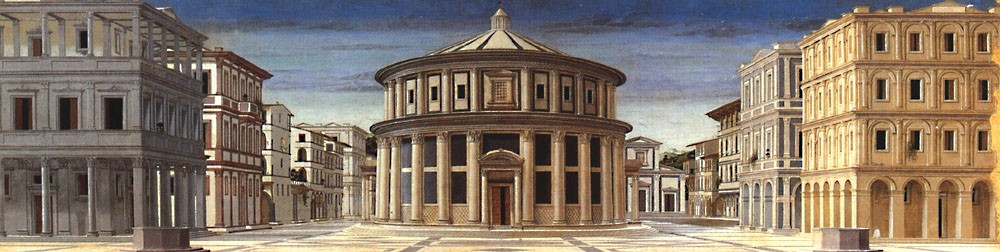
Following my recent post on an ugly plant, which was actually a very beautiful plant as suburbanlife remarked, I stumbled upon a photograph of a Tetrameles nudiflora tree at the Ta Prohm temple in Cambodia. This is a very frightening plant, the roots of which cover this entire temple in Cambodia and like the “ugly plant”, it seems to be dripping like a fluid over the structure.

I first came across horticultural horror in the stories of Stephen King but a quick search on “horticultural horror” at Google turns up many more examples. For example, “The Garden of Adompha”, a 1938 story by Clark Ashton Smith, tells of a king who maintains a gruesome garden sown with human limbs grafted onto plants.

“A bare, leafless creeper was flowered with the ears of a delinquent guardsman…. Some of the salver-like blossoms bore palpitating hearts, and certain smaller blossoms were centered with eyes…”

Previously at Jahsonic:

A reappraisal of Amélie

I had seen Le Fabuleux Destin d’Amélie Poulain in the winter of 2001 when it came out in theatres in Belgium and had not taken to it because of its faux happiness and its European hollywoodity. I’ve seen it again today and I think it is time for a reappraisal. This clever film shows a unique understanding of visual and auditory culture. It is told by an omniscient narrator* in an extremely writerly and accomplished style.**

The visuals and the score from Yann Tiersen are virtually symbiotic. One peep show scene features music from French house musician Alex Gopher‘s “The Child” (1999) (“them that’s got, shall get”). I wanted to give you the Kenny Dope remix (the one actually featured in Amélie). In stead, here Youtube is a slower version with many intrusive voices but interesting visuals (animation made out of typography by Antoine Bardou-Jacquet). If you badly need the Kenny Dope remix, buy Beats & Pieces vol. 2 on the highly recommended series out on BBE Records.

*On the omniscient narrator, see scenes in the recent film Stranger Than Fiction in which Dustin Hoffman teaches a whole seminar on the omniscient narrator phrase par excellence “little did he know”, illustrating the excesses of literary theory.

** Films such as Reconstruction (which I liked immensely) owe a lot to the Ameliesque aesthetic.

World music classics #23

In 1994 I was crazy about the “Wilmot” track (see clip below) by Andrew Weatherall‘s Sabres of Paradise project. I had since lost the record but the mesmerizing horns kept spooking through my head over the years.

Last week, I am listening with my children to a commercial radio station and I hear a track by Shantel Youtube, a Balkan artist in a “techno” remix. I recognize the mesmerizing horns.

Today, I am making my 1980s music page and re-discover the composition by The Sabres of Paradise, find its Youtube clip Youtube and discover that the original version of the horns dates back to 1931, is called “Black But Sweet”, and is composed by calypso artist Wilmoth Houdini.

Another case closed in the history of cultural appropriation in western music.

World cinema classics #38 by Nurse Myra

[Youtube=http://www.youtube.com/watch?v=i2XjH6TZkQg]

Rain (2001) – Christine Jeffs

It is my sincerest pleasure to announce the first guest contribution for Jahsonic’s World Cinema Classics category. Could it be any more befitting that today’s classic should be contributed by this blog’s liveliest commentator – a cultural omnivore like myself: Nurse Myra of the Gimcrack Hospital (PG)? Over the past few months, I have discovered her as a lady of seemingly impeccable taste, acute powers of perception and a huge stash of humor. She chose the New Zealand film Rain, directed by director Christine Jeffs released in 2001.

Nurse Myra:

“Rain deals with a very young girl observing problems in adult relationships at the same time as experiencing sexual awareness and the power that brings. The young actors are particularly good and the depiction of a new Zealand bach* holiday is perfect.

*A NZ holiday cabin was/is called a bach (pronounced batch). They were usually quite rudimentary and used to be very cheap to buy. Most of them are near the sea and prices would have skyrocketed by now.”

Previous “World Cinema Classics” and in the Wiki format here.

World music classics #22

Funky Nassau, The Compass Point Story 1980 - 1986

[Youtube=http://www.youtube.com/watch?v=L762HQ-ha7I&]

“Funky Nassau” (1971) Beginning of the End

“Funky Nassau” was a proto-disco composition released in 1971 by Bahamian group The Beginning of the End.

“Funky Nassau” is now also the title of a music compilation of Compass Point Studios recordings by Talking Heads, Tom Tom Club and Grace Jones, as well as lesser known compositions from the fringes of rock, soul, and dance music. The compilation will be released on March 11, 2008 by Strut Records.

World cinema classics #37

[Youtube=http://www.youtube.com/watch?v=s6WmEoMY2Lo]

The Hitcher (1986) – Robert Harmon

This film introduced me to Jennifer Jason Leigh, it was love at first sight. In one particular scene in The Hitcher Leigh is kidnapped by the villain Rutger Hauer, who ties her between a Mack truck and its trailer, threatening to tear her in half.

In the film, she does not survive, in real life, it is Jennifer’s 46th birthday. Congratulations, you are one of my favorite living actresses and I enjoyed your recent parts in In the Cut and The Machinist.

Previous “World Cinema Classics” and in the Wiki format here.

The beneficial side-effects of censorship


Cover of the 1937 guide book to the Degenerate art exhibition.

Cover of the 1937 guide book to the  Degenerate Art Exhibition.

Nazi Germany disapproved of contemporary German art movements such as Expressionism and Dada and on July 19, 1937 it opened the travelling exhibition in the Haus der Kunst in Munich, consisting of modernist artworks chaotically hung and accompanied by text labels deriding the art, to inflame public opinion against modernity and Judaism. The cover the 1937 guide book (illustration top) features a sculpture of unknown origin. It could be Polynesian or any other tribal art work, please help me out here.

The sculpture clearly links modern art with primitivism.

This exhibition is also a perfect illustration of the beneficial side-effects of censorship. Beneficial in the sense that any attempt at banning works of art, books or other cultural artifacts results in an aide to discerning culturati to seek out these artifacts with zeal. Such has been the case with Video Nasties, the Index Librorum Prohibitorum (the Catholic Index) and the Degenerate Art expo mentioned above.

I once again repeat my question to you, dear reader: what is the origin of the statue depicted in the picture above. I thank  you beforehand for a reply.

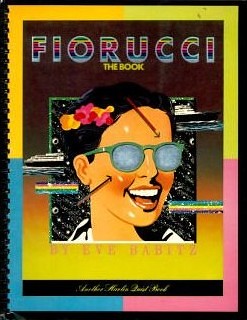
Eve Babitz and Fiorucci

Fiorucci, the book (1980) Eve Babitz

Like the contemporary Italian design movement Memphis, Italian fashion designer Fiorucci helped postmodernism to percolate to mass culture awareness in the early eighties. Sottsass designed some of their shops and their brand was a visual feast.

Eve Babitz is an American writer who gained notoriety by posing nude with Marcel Duchamp in 1963, at the Pasadena Art Museum[Julian Wasser photograph]. She is the author of Eve’s Hollywood, Slow days, fast company and Fiorucci, the book.

Fiorucci, the book is out of print and has become quite a cult item, ranging in price from 200 to 1,000 USD.

Some more Fiorucci advertisments from the eighties:

unidentified Fiorucci campaign
image sourced here.

[A shot from behind from what appears to be a black young woman, from the waist to the knees. She wears nothing but a short (a cut off Jeans), the short is very short. The jeans is full of holes and is patched with pieces of cloth.]

Campaign for Fiorucci (1974) – Oliviero Toscani
image sourced here.

[A young woman sitting on a chrome barstool, shot from the back. She is wearing a striped T-shirt, jeans and striped socks. Her hair is curly.]