David Toop is coming to Brussels next Wednesday

David Toop (born 1949) is one of the more adventurous and intelligent music critics of the late 20th century. He is coming to the Argos center (Werfstraat 13 rue du Chantier) in Brussels next Wednesday at 20:30. I hope I can make it. I’ve never heard him lecture. Here is an excerpt from his intro at Argos.arts.

“Seeing comes before words. The child sees and recognizes before it can speak.” These are the first two sentences of John Berger’s Ways of Seeing. Berger defines sight as the primary human sense and introduces the idea that we find our place in the world through seeing. What this premise ignores is the fact that sound comes before seeing, and the child listens before it looks. In this lecture David Toop will investigate the position of sound in the realm of the senses, the relationship between hearing and seeing, between silence and not seeing. What did Marcel Duchamp mean when he proclaimed “one can look at seeing; one can’t hear hearing”? Are we living in a visual age, as the cliché goes, or rather in an aural world? What can words and images tell us about sonic absences and hauntings? What are the challenges sound artists, who work in the domain of visual arts, are confronted with?” —argosarts.org

Here is Toop interviewing Bjork @ Youtube.

Icons of counterculture #2

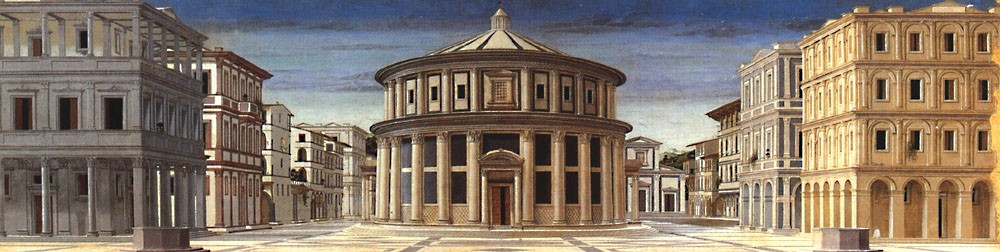
Utopia, United States

Utopia in the United States

Founded by Charles Fourier, died 170 years ago today

François Marie Charles Fourier (April 7, 1772 – October 10, 1837) was a French utopian socialist and philosopher. Fourier coined the word féminisme in 1837; as early as 1808, he had argued that the extension of women’s rights was the general principle of all social progress. Fourier inspired communism, situationism, 1960s countercultures and Hakim Bey. He was the subject of a study by Roland Barthes Sade, Fourier, Loyola (1971), is mentioned in André Breton‘s Anthology of Black Humor (1940) and has a whole convolute dedicated to him in Walter Benjamin‘s Arcades Project.

Previous Icons of Counterculture.

See also: Knots of indecision

Jacques Tati for the ear

Today is Jacques Tati day. He was born 100 years ago.

Instead of watching his films, treat yourself to his music:

Extraits Des Bandes Originales Des Films De Jacques Tati [Amazon.com] [FR] [DE] [UK]

Extraits Des Bandes Originales Des Films De Jacques Tati is an anthology of tracks from several Jacques Tati films: Jour de fête (1949), Les Vacances de Monsieur Hulot (1953), Mon Oncle and Play Time (1967). With music by Jean Yatove, Alain Romans, Franck Barcellini, Francis Lemarque and James Campbell.

Batailleana #1 and 2

Ma Mère by Bataille, cover by publisher domaine francais

Ma Mère by Bataille, cover by publisher 10 | 18

#1) 10/18 is a publisher in France (with a sub collection named domaine français). Their series of Georges Bataille novels are illustrated by Hans Bellmer. One of the nicer book illustrations around. I like the overall feel of the design. Can someone tell me more about the graphic designer over at the 10/18 publishing imprint?

Here is the 10/18 cover of Madame Edwarda.


#2) In 1997 André S. Labarthe produced a documentary on Georges Bataille. The focus was Bataille’s extreme, perverse, surreal story ‘Madame Edwarda‘ where the prostitute reveals that she *is* God (‘je suis DIEU’) – perfectly merging the sacred and profane, a key notion for Bataille … in the final section of the clip, the infamous Chinese torture victim is shown … in his last work, the heavily-illustrated ‘Tears of Eros,’ Bataille said this about these photos:

“What I suddenly saw, and what imprisoned me in anguish-but which at the same time delivered me from it-was the identity of these perfect contraries, divine ecstasy and its opposite, extreme horror.”

posted by hiperf289 (check his other Youtube clips)

Cinematic effects in pre-cinema literature

Karl Friedrich Schinkel

Morning (1813) Karl Friedrich Schinkel

Der letzte Mann

The Last Laugh (1924) – Murnau

The link between these two pictures is The Haunted Screen, 1952 a film history book by Lotte H. Eisner, which I acquired over the weekend, and which holds that “it is reasonable to argue that the German cinema is a development of German Romanticism, and that modern technique [cinematography] merely lends visible form to Romantic fancies.”

A revelation to me were Eisner’s reflections on cinematic effects in pre-cinema literature in such romantic novels as Lucinde, Flegeljahre and Heinrich Von Ofterdingen.

Cherchez la femme #1

Colette Peignot

Unidentified photo of Colette Peignot sourced here.

“I believe in our life together . . . I believe in it the way I believe in everything that brought us together: in the most profound depths of your darkness and of mine. I revealed everything about myself to you. Now that it gives you pleasure to laugh at it, to soil it––this leaves me as far away from anger as it is possible to be. Scatter, spoil, destroy, throw to the dogs all that you want: you will never affect me again. I will never be where you think you find me, where you think you’ve finally caught me in a chokehold that makes you come. . . . As for me I am beyond words, I have seen too much, known too much, experienced too much for appearance to take on form. You can do anything you want, I will not be hurt.” Colette Peignot in a letter to Georges Bataille via Laure: The “True Whore” as Muse by Jason DeBoer

Laure [Colette Peignot] began her affair with Bataille in 1934, and it proved to become one of the more tormented love stories of modern letters. Their correspondence reveals a mutually influential sharing of transgressive ideas: she was the woman of action, and he was the man versed in scholarly knowledge. Her uncompromising, anguished lifestyle proved very inspirational to Bataille, especially Laure’s own infatuation with the sacred and communication, two important ideas in Bataille’s later work. source

Colette was born 104 years ago today.

Book of the month #3

Over at ArtandPopularCulture book of the month is:

AnthologyOfBlackHumor.jpg
Anthology of Black Humor (1940) – André Breton

While I am antipathetic to André Breton as a person – his misogyny, his homophobia, his arrogance, his misguided tyranny – I have learned to appreciate his work of tracing the literary and artistic antecedents of surrealism. In this book he successfully delineates a corpus of writers that have shaped the sensibilities central to cult fiction.

Happy birthday Enki

[Youtube=http://www.youtube.com/watch?v=NtxBXILSY4M]

Enki Bilal mix (background music ID anyone?)

Enki Bilal belongs to the French/European graphic novel tradition (brought to the U. S. via Heavy Metal magazine in the late 1970s) which also holds Jean Giraud, Jacques Tardi, Guido Crepax, Georges Pichard, Milo Manara and Tanino Liberatore‘s ultra-violent RanXerox.

Bilal turns 56 today.