My internet crush Eva Deadbeat has reached a Youtube milestone and celebrates it by posting her own videos, a lovely picture of herself, and a superb punk song: “Oh Bondage, Up Yours!” by X-Ray Spex —
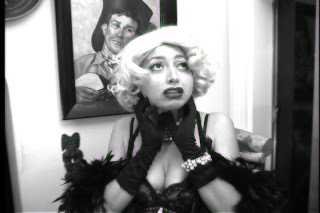
My internet crush Eva Deadbeat has reached a Youtube milestone and celebrates it by posting her own videos, a lovely picture of herself, and a superb punk song: “Oh Bondage, Up Yours!” by X-Ray Spex —

Cinema Paradiso (1989) – Giuseppe Tornatore [FR] [DE] [UK]
Six, five, four, the numbers wind down. And there, on the reel, are all the expurgated scenes from the movies of his childhood: All the censored kisses. All the censored passion. All the censored life. —[1]

Lodewijk van Deyssel (1864-1952)
Excuse us for this Dutch post on Dutch naturalist writer Lodewijk van Deyssel. The excerpt below is from a first ongekuiste (unexpurgated) version of Een Liefde (A Love) (1887).
Fragment uit “Een liefde” (Uit de ongekuiste eerste versie)
pag. 188:
“Zij zag weer Jozefs twee bruine oogen, twee lichtpunten die naar haar toe schitterden, maar oogen van vroeger, de oogen van den doode, die niet óok waren in dien man hier in huis.
Zij ging weer op bed liggen, met haar bonzende hoofd, in haar koorts van wild begeeren. Haar beenen lagen wijd van elkaâr, met opgetrokken knieën. Haar oogen hingen zwaar en heet. Nu zou hij komen, nu zou hij komen, de zachte groote man, al haar vleesch wilde hem, haar heete mond, haar levende geslachtsdeel. Zij was hier, met haar armen, met haar beenen, om hem te ontvangen en hem aan haar vast te klemmen. Waarom kwam hij niet? Zij voelde hem niet in haar bed, zij voelde hem niet in haar lichaam komen. Zij richtte zich op en luisterde, als moest zij hem van ver hooren naderen. Maar alles bleef stil, totdat zij éens Jozef hoorde bewegen en hoesten, die achter den wand in zijn bed lag. Was hij dat, was hij daar? Neen, dat was de andere, het namaaksel van haar man. Dien moest zij niet hebben. En de heelen nacht eilde zij door, in een half-wakenden, half-slapenden toestand, in verschrikkingen, die het bede deden kantelen en de kamer instorten over haar hoofd, in droomen van zware blokken, die over haar lijf vielen, en van een God den Vader, een grijsaard met een langen baard en een kroon op zijn hoofd, die zachtjes tot haar afdaalde, maar dan onvoelbaar werd als een geest en in rook verwolkte om haar heen.”Commentaar:
Een fragment als dit kan naturalistisch genoemd worden door de overmaat aan uiterst precieze beschrijvingen van alle gevoelsnuances, het impressionistische taalgebruik vol neologismen en bijvoeglijke naamwoorden; maar ook door de ongekuiste (voor die tijd dus schokkende) beschrijving van het lichamelijke.
Lodewijk van Deyssel heeft in de tweede uitgaven van zijn boek passages als deze vrijwillig gekuist, omdat er een storm van protest losbarstte. —source
German cover of Marcellus Emants novel Posthumous Confessions. [1]
I am currently teaching romanticism, realism and naturalism in literature. I’ve been studying literature for the last 2 years, but mainly from an anglocentric point of view so I was glad to find somewhat transgressive literature in my mother tongue. Marcellus Emants’s novel, Een Nagelaten Bekentenis (1894) is categorized in Belgium as naturalistic literature, but as is evident from the German translation shown above (Bekenntnisse Eines Dekadenten) it is categorized in Germany as decadent literature. The novel was translated by J. M. Coetzee in 1976. Another transgressive Dutch-language work of fiction to check out is L. P. Boon’s De paradijsvogel (1958), for a good article on Boon, see here.
From the opening:
My wife is dead and buried.
I am alone in the house, alone with the two maids. So I am free again. Yet what good is it to me, this freedom? I am within reach of what I have wanted for the last twenty years (I am thirty-five), but I have not the courage to grasp it, and, besides that, would anyhow no longer enjoy it very much.
I am too frightened of anything that excites me, too frightened of a glass of wine, too frightened of music, too frightened of women; for only in my matter-of-fact morning mood I am in control of myself, sure that I will keep silent about my act.
Yet it is precisely this morning mood that is intolerable. To feel no interest – no interest in any person, any work, even any book – to roam without aim or will through an empty house in which only the indifferent guarded whispering of two maids drifts about like the far-off talk of warders around the cell of a sequestered madman, to be able to think, with the last snatch of desire in an extinct nervous life, about only one thing, and to tremble before that one thing like a squirrel in the hypnotic gaze of a snake – how can I persevere to the end, day in, day out, in such an abominable existence?
Whenever I look in the mirror – still a habit of mine – I am astounded that such a pale, delicate, insignificant little man with dull gaze and weak, slack mouth (a nasty piece of work, some people would say) was able to murder his wife, a wife whom, after all, in his own way, he had loved. —source
This is an updated version of a 2007 post. Hardly anything remains of the original post.
I first came across Jules Michelet by way of Georges Bataille’s Literature and Evil (1957), where Michelet is one of the subjects. This was in the early 2000s, the early days of the internet, when there were still interesting sites and blogs.
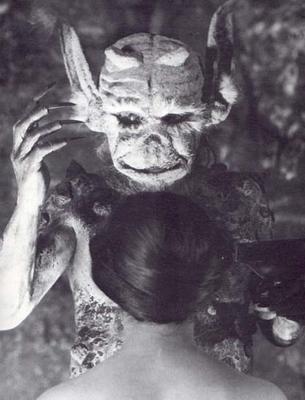
In my original post on Michelet, I gave one of the illustrations by Martin van Maële, some of which can be found here[1]. Van Maele, I wrote, is a student from Felicien Rops.
In that post, I also mentioned Jack Stevenson’s book on Häxan which confirms that the director Christensen was influenced by Jules Michelet’s book.
In that post, I mentioned Georges Bataille who said about Michelet was “one of those who spoke most humanely about evil”, a citation that comes from Literature and Evil.
But did I really?
Is it not equally possible that I discovered Michelet via Häxan (1922), said to be the first exploitation film and both based on Malleus Maleficarum (1487) and La sorcière (1862) by Jules Michelet.
Upon researching this in 2021, 14 years after my original post, it has come to my attention that Jules Michelet’s La sorcière, known in English as Satanism and Witchcraft, a Study in Medieval Superstition, is a work of proto-feminism and anti-clericalism.
“In a tantalizing and increasing tempo, the sex appetite is whetted and lascivious thoughts and lustful desires are intensely stimulated.”

Opening credits to Louis Malle’s 1958 film about adultery: Les Amants. Notice the ‘dangerous river’ (rivière dangereuse) and the ‘indifferent lake’ (lac d’indifférence).

Jeanne Moreau to the left, pictures sourced here.
Les Amants (The Lovers) is a 1958 French film directed by Louis Malle and starring Jeanne Moreau. It was Malle’s second feature film, made when he was 25 years old.
A showing of the film in Cleveland, Ohio resulted in a series of court battles that led to a Supreme Court decision on obscenity issues and judge Potter Stewart’s famous “I know it when I see it” opinion about what the definition of obscenity is. Usually dropped from the quote is the remainder of that sentence, “and the motion picture involved in this case is not that.”
I’ve updated my page on adultery, and especially adultery in literature and happened upon this picture of a 1956 Signet edition of Alberto Moravia’s novel Conjugal Love, which I’ve sort of reviewed here. Signet is an imprint of the American paperback publisher New American Library.
Some comments on the wording on the jacket by antydiluvian:
Note the puffery from 1956: “A daringly frank novel.” This meant that if there was an adulteress in it, she didn’t die at the end. Or if she did it was from something not directly related to sex. What the woman did with her lover(s) was left to the imagination, of course — no “frankness” there. Any book that was translated from the French, Swedish, or (as in this case) Italian might be called “daringly frank” simply because anything written in those languages was automatically regarded as racy. And “complete and unabridged” meant that any scenes of actual European “frankness” in the novel were left intact for its American readers — which wasn’t always the case in those days.
I don’t know if any of you have checked IMDb keyword tool, but for Moravia you get this, which explains why Moravia’s work is classified as naturalistic, and also why I have come to like his work over the years.
Bill Marx writes in Alberto Moravia’s kinky, subversive realism is back in print:
“In the 1940s and ’50s, Italian novelist Alberto Moravia achieved international acclaim as a kinky realist whose Marxist-inspired moralism detailed the paralysis of the middle-class ego in the face of cultural and political collapse. Before and just after World War II, Moravia analyzed the blight of fascism; during the Cold War era he explored the spiritual costs of capitalism. What distinguishes Moravia from most other writers of politically inspired fiction, however, is that he was a popular novelist, his wide appeal rooted in his frank depictions of love and sexuality. Like Ignazio Silone, Moravia bore historical witness to the century’s horrors, but his fiction’s sleek dovetailing of Marx and Freud exposed the West’s inertia through the tortured curbs and caprices of the libido. The marketability of sex made the subversiveness of his critique palatable: Moravia’s books sold more than one million copies in the United States during the buttoned-up 1940s and ’50s.” —source
Incidentally Moravia’s work came to my attention in the early 2000s via Cédric Kahn’s excellent film L’ Ennui (1998). If you read more of Moravia — he is often considered the most popular Italian novelist outside Italy and his novels have been filmed lots of times in cinematic modernism — , you get the impression that there is nothing as exciting as an unfaithful wife, I tend to agree. It reminds me of a quote I read in one of the early issues of Mondo 2000 magazine. It went: “when you come to realize that safe sex is boring sex.”

The Origins of Love and Hate (1910 – 1965) – Ian Dishart Suttie

The White Goddess: A Historical Grammar of Poetic Myth (1948) – Robert Graves
[Amazon.com] [FR] [DE] [UK]
I can’t remember how I happened (oh yes, now I do, search terms used matrist+patrist, see my previous post on the work of Gordon Rattray Taylor) but I found this interesting text by the recently deceased Robert Anton Wilson on the relationship between James Joyce and Eastern philosophy. Some excerpts:
Throughout the long day of Ulysses the thoughts of Stephen Dedalus and Mr. Bloom repeatedly return to the East; and this is not without reason. Ulysses is so profoundly Oriental in mood and conception that Carl Jung has recommended it as a new Bible for the white race. Molly Bloom’s fervent “Yes” mirrors the author’s acceptance of life in its entirety – an acceptance that transcends the dualisms of light and dark, good and evil, beautiful and sordid.
…
Some Sinologists trace this “Eternal Female” back to a Chinese “Urmutter” myth of pre-Chou times, but Lao-Tse was far beyond primitive mythology. He was using this myth as a pointer, to indicate the values that must have been in the society which created the myth. The distinction between Patrist and Matrist cultures made in such books as Ian Suttie’s The Origins of Love and Hate and G. Rattray Taylor’s Sex in History (not to mention Robert Graves’ The White Goddess ) places the Taoists as representatives of a Matrist social-ethical system living in Confucian Patrist China. —cached source
Molly Bloom’s fervent “Yes” from her famous soliloquy:
“…I was a Flower of the mountain yes when I put the rose in my hair like the Andalusian girls used or shall I wear a red yes and how he kissed me under the Moorish wall and I thought well as well him as another and then I asked him with my eyes to ask again yes and then he asked me would I yes to say yes my mountain flower and first I put my arms around him yes and drew him down to me so he could feel my breasts all perfume yes and his heart was going like mad and yes I said yes I will Yes. “
Under construction: trying to align some random thoughts regarding genre theory and how much difference and repetition we need in our lives.
“For the Italian aesthetician Benedetto Croce (1866-1952), an artistic work was always unique and there could be no artistic genres.” quotes Daniel Chandler in his excellent An Introduction to Genre Theory. I’ve always opposed this take on genre theory because I have a hard time with modernist concepts such as authenticity, the cult of originality, the great man theory and the resistance of things to be generalized. I like generalizations. I am a lumper, more than a splitter.
Last week however, I went through a small film experience that was analogous to blind wine tasting, which re-balanced my perception of genre theory. I saw the trailer to David Lynch’s new film INLAND EMPIRE without expecting it because I was in a mainstream cinema. As I thought to myself …. this is something special, I came to realize that this was Lynch. And it dawned on me that Lynch’s work does not belong to a genre but is unique or sui generis (of its own kind).
Other examples of genre-defying artists abound: take someone like mannerist painter Arcimboldo, reggae musician Lee Perry, novelist Céline, filmmaker Jacques Tati and most if not all eccentric artists.
Quotes sustaining the lumper view:
“It can be argued that all novels, no matter how “literary”, also fall within the bounds of one or more genres. Thus Jane Austen’s Pride and Prejudice is a romance; Fyodor Dostoevsky’s Crime and Punishment is a psychological thriller; and James Joyce’s A Portrait of the Artist as a Young Man is a coming-of-age story. These novels would usually be stocked in the general or possibly the classics section of a bookstore. Indeed, many works now regarded as literary classics were originally written as genre novels.”
Quotes sustaining the splitter view:
“There is no great work of art which does not convey a new message to humanity; there is no great artist who fails in this respect. This is the code of honor of all the great in art, and consequently in all great works of the great we will find that newness which never perishes, whether it be of Josquin des Pres, of Bach or Haydn, or of any other great master. Because: Art means New Art” — Arnold Schoenberg
So I’m thinking about this interplay between genre on the one hand and uniqueness on the other. Has David Lynch’s uniqueness inspired a new genre or will his style of filmmaking die with him? What can be said about the cinema of Lynch? Where does one draw the line between the history of art and the sociology of art? Is there any way to develop a genre theory which includes both strains?
I thought of the concepts used by Ken Wilber (derived from Koestler) holon and holarchy and the concepts used by Deleuze difference and repetition. Also, Wittgenstein’s concept of family resemblance and the species problem, an analogy from biology ……………..

Banana Woman

A Kind Devil
Both works by Lucio Bubacco (b. 1957) , an Italian Murano glass artist. His sensual work is steeped in mythology and is erotically flavoured. A distinct series of pieces has slight sadomasochistic iconography. I saw his work today at the Alfabetagaga gallery here in Antwerp. One more link before I go. I love wikis and I love eroticism. Someone’s started a wiki (based on MediaWiki, a CMS I’m looking into for future Jahsonic developments) dedicated to big breasts. The site is called Boobpedia and is nsfw. A clear distinction is made between natural and fake breasts.
Dian Hanson on the big-breast lover:
There’s something very lovable about the big-breast lover. They tend to be open, outgoing, physical, accepting of the flaws of women, happy with the functioning female body. They like the body that gets pregnant. They like the body that gives birth. They like the body that lactates. There wasn’t the picky demand for perfection. They tended to be more rural men. They tended to live in the red states rather than the blue states. They were often slightly less educated. They were the kind of guys who in their personal ads would say, “Fats welcomed! All ages okay!” They loved mom. –Dian Hanson (2005)
Also today on Radio Centraal, Antwerp’s non-commercial independent radio station, a show by Pierre Elitair on the mid eighties revival of mid sixties garage rock with bands such the Swedish Nomads (‘The Way you Touch my Hand’), the Fuzztones, the Belgian Paranoiacs and his favourite: The Lyres (‘I want to help you Ann’).
