Normal love

Normal love

Click for credits

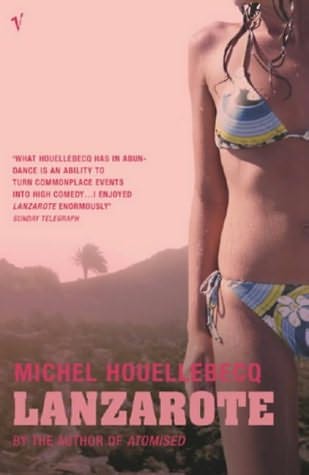
My dear friend Walter gave me Cinema of Obsession[1] as a present.

Cinema of Obsession traces the history of obsessive love and erotic fixation. Seminal works of obsession, The Blue Angel, Peter Ibbetson, and Phantom of the Opera are seen as setting the groundwork for films that follow. The book defines and surveys examples of the explosive nature of amour fou, issues of male control (no matter how tenuous), and the fugitive couple – love on the run – in such films as Romeo and Juliet, Last Tango in Paris, Vertigo, Basic Instinct, and Wild at Heart. Male masochism is explored through film noirs, including Criss Cross, The Killers, Gilda, and The Postman Always Rings Twice. The book shifts gears in its finale and concentrates on the female gaze, films of female obsession: Jane Eyre, The Piano, The Lover, Fatal Attraction, and Vanilla Sky.

The introduction to the book mentions new (to me) theoretical work on love and fetishism. First there is Max Dessoir (pseudonym Ludwig Brunn) and a 1888 essay entitled “The Fetichism of Love,” from which comes this clever quote:

Normal love appears to us as a symphony of tones of all kinds. It is roused by the most varied agencies. It is, so to speak, polytheistic. Fetichism recognises only the tone-colour of a single instrument; it issues forth from a single motive; it is monotheistic.”

“Fetichism of Love” reprises the final two chapters of Alfred Binet‘s “Du Fétichisme dans l’amour” published the previous year, which is generally regarded as the first work on sexual fetishism.

The book also references Denis de Rougemont‘s L’Amour et l’Occident (1939, revised 1972), translated as Love in the Western World as well as the standard work in this category, Georges Bataille‘s Erotism.

From that last book.

eroticism differs from animal sexuality in that human sexuality is limited by taboos and the domain of eroticism is that of the transgression of these taboos.”

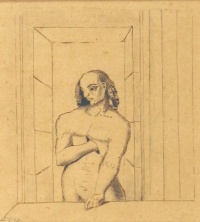
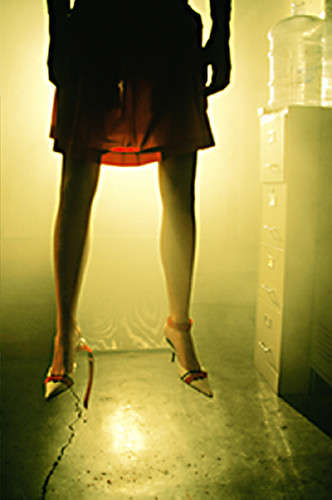
The phrase that inspired this post and above all the photo above is “normal love“.

Goya, Redon, Ensor. Grotesque paintings and drawings

Goya, Redon, Ensor. Grotesque paintings and drawings by you.

Goya, Redon, Ensor. Grotesque paintings and drawings is a current exhibition at the Royal Museum of Fine Arts in Antwerp.

Goya, Redon, Ensor. Grotesque paintings and drawings is an exhibition at the Royal Museum of Fine Arts in Antwerp which runs from March 14 until June 14, 2009

It displays a collection of grotesque paintings, drawings and prints by Goya, Redon and Ensor. The show highlights the similarities as well as the differences between the three masters and features works from Belgian museums and private collections, complemented with loans from, among other museums, MoMA in New York, Musée d’Orsay in Paris, Museo del Prado in Madrid, the National Gallery in London and the Städel Museum in Frankfurt. The exhibition uses KMSKA’s own collection of Ensors, one of the largest in the world as well as a rare series of etchings by Goya.

One of my fave Redons:

The Heart Has Its Reasons (c.1887) by Odilon Redon, a phrase from the Pensées (1669) by Blaise Pascal

The Heart Has Its Reasons (c.1887) by Odilon Redon, a phrase from the Pensées (1669) by Blaise Pascal

One of my fave Goyas:

The Sleep of Reason Produces Monstersis a 1799 print by Goya from the Caprichos series. It is the image the sleeping artist surrounded by the winged ghoulies and beasties unleashed by unreason.

The Sleep of Reason Produces Monstersis a 1799 print by Goya from the Caprichos series. It is the image the sleeping artist surrounded by the winged ghoulies and beasties unleashed by unreason.

Barbie @50

In 1959 the Barbie doll debuts.

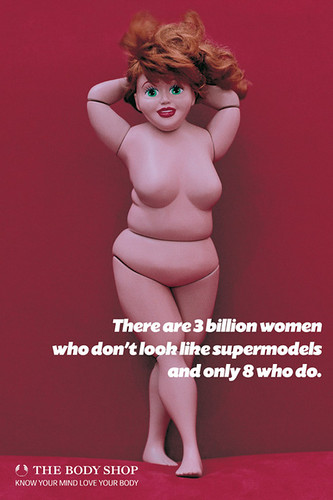
There are 3 billion women who don't look like supermodels and only 8 who do by you.

There are 3 billion women who don’t look like supermodels and only 8 who do

Today, Barbie has come to symbolize any stunningly beautiful, but stupid or shallow young woman (see bimbo and dumb blonde). Likewise her male counterpart Ken symbolizes an American college football jock. They both major in a Mickey Mouse course and are emblematic of American popular culture.

More specifically Barbie has been criticized for promoting a false female body image due to Barbie’s size zero (see heroin chic), perhaps most vociferously at the 2006 Madrid Fashion Week. Commercial appropriations have included The Body Shop‘s “There are 3 billion women who don’t look like supermodels and only 8 who do” campaign; satirical variants include Todd Haynes‘s Superstar: The Karen Carpenter Story. For an innocuous satire check “I’m a Barbie Girl.”

See also: stereotypes of white people and stereotypes of Americans.

Medi Holtrop wins the Grandville grand prize of “l’humour noir”

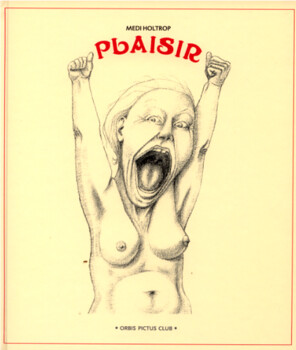
Plaisir by Medi Holtrop by you.

Plaisir (2008)  – Medi Holtrop

In France, Norwegian artist Medi Holtrop and lifelong companion of Bernard Willem Holtrop received the 2009 Grandville grand prize of “l’humour noir.”

Via L’Alamblog[1]

I’ve previously written on the notion of humour noir, which translates into English as black comedy defined as a sub-genre of comedy and satire where topics and events that are usually treated seriously — death, mass murder, suicide, sickness, madness, terror, drug abuse, rape, war, etc. — are treated in a humorous or satirical manner. Synonyms include dark humor, morbid humor, gallows humor and off-color humor.

The French were the first to anthologize the genre in the seminal anthology Anthology of Black Humor (1940) by André Breton. Breton’s anthology not only introduced some until then almost unknown or forgotten writers, it also coined the term “black humor” (as Breton said, until then the term had meant nothing, unless someone imagined jokes about black people ). The term became globally used since then. The choice of authors was done entirely by Breton and according to his taste which he explains in the Foreword (called The Lightning Rod, a term suggested by Lichtenberg), a work of great depth that starts with contemplating Rimbaud´s words “Emanations, explosions.” from Rimbaud´s last poem The barrack-room of night : Dream.

In the United States, black comedy as a literary genre came to prominence in the 1950s and 1960s. Writers such as Terry Southern, Joseph Heller, Thomas Pynchon, Kurt Vonnegut and Harlan Ellison have published novels, stories and plays where profound or horrific events were portrayed in a comic manner. An anthology edited by Bruce Jay Friedman, titled Black Humor: Anthology was published in 1965.

I am currently researching the prevalence of black comedy in other parts of Europe.

International Women’s Day

International Woman's Day We_Can_Do_It!

We Can Do It! poster by J. Howard Miller

Today is International Women’s Day.

Woman is the original other.

All men are jealous of her.

“All men- even … Jesus himself- began as flecks of tissue inside a woman’s womb. Every boy must stagger out of the shadow of a mother goddess, whom he never fully escapes….Women have it. Men want it. What is it? The secret of life…”(Vamps & Tramps p. 32) – Camille Paglia

Pro feminism:

“Because they will try to convince us that we have arrived, that we are already there, that it has happened. Because we need to live in the place where we are truly alive, present, safe, and accounted for. Because we refuse to allow our writing, songs, art, activism, and political histories to be suppressed or stolen. Because we refuse to be embarrassed about the mistakes and faults and choose to move forward with a political agenda bent on the freedom of all.” —Tammy Rae Carland in Tres Bien by Le Tigre.

Contra feminism:

“The feminist agenda is not about equal rights for women. It is about a socialist, anti-family political movement that encourages women to leave their husbands, kill their children, practice witchcraft, destroy capitalism and become lesbians.” Pat Robertson, 1992

RIP Henri Pousseur (1929 – 2009)

RIP Henri Pousseur (1929 – 2009)

[Youtube=http://www.youtube.com/watch?v=QdpzmgtIHr4]

Chevauchée fantastique

The shortest way from Mozart to Pierre Boulez, by the Belgian composer Henri Pousseur (extract from his opera “Your Faust“). La “Chevauchée fantastique[1]

Henri Pousseur was known for such compositions as Chevauchée fantastique. He wrote in the “acousmatic” tradition of 20th century classical music.

Beginning around 1960, Henri Pousseur collaborated with Michel Butor on a number of projects, most notably the opera Votre Faust (1961–68).

Crime scenes fake and true

Crime scenes by Melanie Pullen by you.

“Half Prada” from High Fashion Crime Scenes.
(c) Melanie Pullen (in the public domain as long as the orignal author is credited)

I find Melanie Pullen‘s High Fashion Crime Scenes[1] photo series by E-L-I-S-E. Pullen is a thirtiesh American photographer noted for her series based on the reenactment of true crime scenes.

I decide to investigate.

The first thought that entered my mind is that obviously, Pullen is influenced by the aesthetics of French photographer Guy Bourdin[2], especially his take on the aestheticization of violence.

I continue searching.

A trip to the Tomorrow Museum (searching for Pullen/Jahsonic) brings  Luc Sante‘s Evidence: NYPD Crime Scene Photographs: 1914- 1918.

I hear an echo of Weegee‘s work.

Can Pullen be classified as crime photography?

And then, the work of Ashley Hope![3] Her paintings are based on crime scene photographs of murdered women, exclusively. Transgressive.