Introducing Henri/y Gerbault

Introducing Henri Gerbault

Henri Gerbault

I’m just a jealous guy

Henry Gerbault (June 24, 1863October 19 1930), also spelled Henri Gerbault was a French illustrator and poster artist. He was a student of Henri Gervex. He was the nephew of Sully Prudhomme.
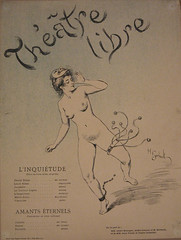
Le théatre libre by Gerbault

Poster for the Théatre Libre

The Théâtre Libre (French, Free Theater) was a theater founded by André Antoine that operated from 1887 to 1896 in Paris, France. Théâtre Libre was also the name of a European theatrical movement which celebrated Naturalist theatre and defied theatre censorship by founding subscription-based theatres. In London there was the Independent Theatre Society, which debuted the plays of George Bernard Shaw; and Germany had the Freie Bühne. Henrik Ibsen‘s Ghosts was the landmark play for all of these theatres.  —Sholem Stein

His œuvre was dedicated to humourist drawings and illustrations. He illustrated authors such as Félicien Champsaur, Charles Perrault and Marcel Prévost.
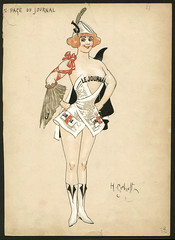
Henry Gerbault

He worked for numerous illustrated journals of the Belle Époque: La Vie Parisienne, Le Journal amusant, Le Rire, L’Amour, where he was noted for his voluptuous women.
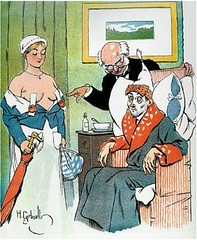
From assiette au beurre

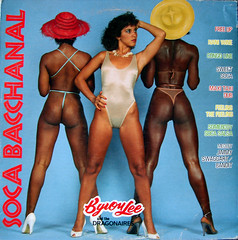
Byron Lee (1935 – 2008)

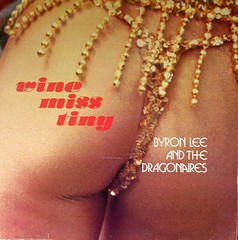
Byron Lee Wine Miss Tiny

Soca Bacchanal

Byron Lee (27 June 19354 November 2008) was a Jamaican musician, record producer, and entrepreneur, best known for his work as leader of Byron Lee and the Dragonaires, who recorded “Jump Up” for the first James Bond film Dr. No, and as the owner of the Dynamic Sounds recording studios.

Along with Randy’s Studio 17, Dynamic Sounds was the recording studio used by Lee Perry for such recordings as Soul Rebels. An interesting selection can be heard on Early Shots At Randy’s & Dynamic Sounds (1968-1972).

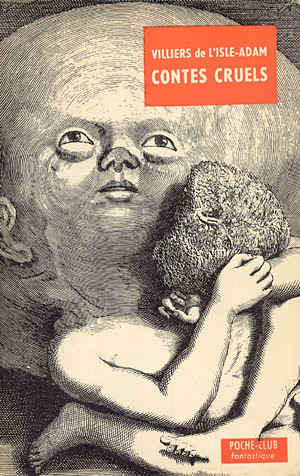
Auguste Villiers de l’Isle-Adam @ 170

Auguste Villiers de l’Isle-Adam @ 170

Villiers by you.

On the cover: Cornelis Huyberts (1669-1712), a plate from “Thesaurus Anatomicus” (1702) by Frederik Ruysch. (1638-1731). (Thanks Paul)

Jean-Marie-Mathias-Philippe-Auguste, comte de Villiers de l’Isle-Adam (November 7, 1838August 19, 1889) was a French symbolist writer. Villiers’ works, in the decadent/romantic style, are often fantastic in plot and filled with mystery and horror. Important among them are the drama Axel, the novel Tomorrow’s Eve, and the short-story collection, Sardonic Tales. He popularized the term “Android” (Andréide in French) in Tomorrow’s Eve and cruel tale in the epynomous collection. He is one of the authors featured in André Breton’s Anthology of Black Humor and is mentioned in The Symbolist Movement in Literature (Symons), The Romantic Agony (Praz), The Book of Fantasy (Borges), Fantastic Tales: Visionary and Everyday (Calvino), The Fantastic: A Structural Approach to a Literary Genre (Todorov), Genealogy of the Cruel Tale (Adair) and the World of The League of Extraordinary Gentlemen (Moore).

Nobrow manifesto #3

A day at De Slegte and I like Stupid ThingsA day at De Slegte and I like Stupid ThingsA day at De Slegte and I like Stupid Things

French Undressing – Naughty Postcards from 1900 to 1920,

L’age d’or de la carte postale and

Kaarten.

I went to De Slegte and found French Undressing by Paul Hammond, along with the previously acquired L’age d’or de la carte postale and Kaarten, a good start for a bibliography regarding postcards, and certainly naughty postcards.

Paul Hammond is a cultural critic on a pair with Colin Wilson, Ado Kyrou and Greil Marcus, to name but a few. He wrote The Shadow and its Shadow (2000) and Marvellous Méliès (1974).

On the first page of French Undressing Hammond quotes from Rimbaud‘s A Season in Hell (“The Alchemy Of The Word“), possibly the earliest defense of popular culture/mass culture. Such a defense always comes from an intellectual, and thus qualifies as a nobrow manifesto, possibly the first of its kind (see prev. once below). I include it here as Nobrow manifesto #3.

“For a long time I boasted that I was master of all possible landscapes– and I thought the great figures of modern painting and poetry were laughable.

What I liked were: absurd paintings, pictures over doorways, stage sets, carnival backdrops, billboards, bright-colored prints, old-fashioned literature, church Latin, erotic books full of misspellings, the kind of novels our grandmothers read, fairy tales, little children’s books, old operas, silly old songs, the naïve rhythms of country rimes.” –Translation Paul Schmidt

[Youtube=http://www.youtube.com/watch?v=RWrFUR_CF6c]

Here is a spoken word version of “The Alchemy Of The Word.”

DSC01912

What else did I buy at De Slegte? A silly volume on Baudrillard (pictured below) and an issue of Le Magazine Littéraire dedicated to drug lit, entitled La littérature et la drogue[1] and The Quincunx (I’ve enjoyed this one while on holiday in Malaysia (Tioman Island) twenty years ago).

A day at De Slegte and I like Stupid ThingsA day at De Slegte and I like Stupid ThingsA day at De Slegte and I like Stupid ThingsA day at De Slegte and I like Stupid Things

I did not buy A Humument, Will Self‘s Tough, Tough Toys for Tough, Tough Boys, Le Fantastique dans l’art Flamand by Paul Fierens, Catalog of Unfindable Objects by Carelman, Dictionary of the Khazars by Milorad Pavic and Eros du dimanche by Anatole Jakovsky.

P. S. Previous nobrow manifestos included Sontag’s The Pornographic Imagination [2] and Fiedler’s “Cross the Border — Close the Gap[3]

On the nature of guilty pleasures

Related: Mondo Cane (1962)Mondo BizarroItalian cinemaGualtiero Jacopetti

Mondo Cane (1962) – Paolo Cavara, Gualtiero Jacopetti, Franco E. Prosperi

Having recently received comments by Lichanos and o. h. about the validity of guilty pleasure as a separate cultural category I show the film above, Mondo Cane (1962), by Gualtiero Jacopetti and his colleague whose name escapes me at this time.

I always feel tempted instead of arguing to cite a collection of words and concepts which will tautologically exlain the concept. I will not resist the temptation now. Here they come:

bad tastecampkitsch“low culture”trashtaboo

I continue:

See also: “body” genres”bread and circuses“low” artlowbrow (American art movement)working class cultureculturefolk culturepopular culture

Related by connotation: artificialbad tastebasic instinctcampcheapcommercialconventionalcommonderivativeentertainingephemeraexploitationformulaiclow budgetluridmassordinarypoppopularproletariatprurientsensationalismscatologyshockingstereotypetrash under-the-counterundergroundvulgar

Contrast: “high” culture

See also: low modernism

In film: B-moviesexploitation filmsgrindhouse filmsparacinematelevisionvideo nastiesviolent films

In print: comicsescapist fictiondime novelsgenre fictionmen’s magazinesparaliteraturepopular fictionpulp fictionyellow journalism

In music: discohousemusic hallpopular musicpop music

In the visual realm: advertisingapplied artscaricaturedecorative artsdesign graffitikitsch

In performing arts: burlesquecircuspeepshowstripteasevaudeville

By genre: adventure“body” genrescarnivalcomedyhorrormelodramapornographyromance

Perhaps one day I will put all of the above words in the right order, divide them into chapters, add adjectives, conjunctions, phrases and clauses and page numbers.

Furthermore, guilty pleasures are marketing categories (see the Foute CD products in the Dutch-speaking region), and marketing categories are the strongest indication of genre identity.

Notice that all links go to Jahsonic.com pages, a project which was from the outset a “guilty pleasure” in nature and purpose.

New Breillat film stars fashion model Naomi Campbell and con artist Christophe Rocancourt

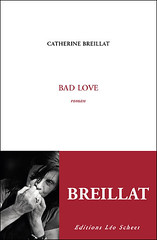
Bad Love (film) by Catherine Breillat

Bad Love by Breillat published bby Léo Scheer

Bad Love (2007) Catherine Breillat

Bad Love is a French film by Catherine Breillat scheduled for 2009, starring fashion model Naomi Campbell and impostor/con artist Christophe Rocancourt, produced by Jean-François Lepetit, based on Breillat’s own novel published by Léo Scheer in 2007.

Bright Lights Film Journal (along with Senses of Cinema[1] and Images Journal[2], the best film site online) has an interview with Jahsonic fave Breillat[3] conducted by Damon Smith.

From Léo Scheer publisher:

“Vivian Parker, une star sublime et hautaine, rencontre Louis lors d’un festival de cinéma. Sans savoir pourquoi, elle lui donne son numéro de téléphone. Commence alors une passion qui réunit deux êtres que tout oppose. Entraînés dans le vertige de leur amour irrationnel, les deux amants vont se découvrir peu à peu, avant de se déchirer. Avec ce roman à deux voix, tour à tour émouvant, sensuel, sombre et cruel, Catherine Breillat met en scène une histoire d’amour tragique, une histoire de dévoration mutuelle.”

So it looks like another story of tainted love, mad love and impossible obsessive love fitting for an entry in Cinema of Obsession: Erotic Obsession and Love Gone Wrong.

Other films expected in 2009:

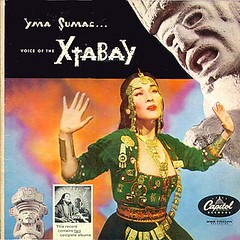
Yma Súmac RIP (1922 – 2008)

Yma Súmac RIP

Voice of the Xtabay

Voice of the Xtabay (1950)[1]

An xtabay is a femme fatale in Mesoamerican mythology.

Sumac was first brought to my attention via Incredibly Strange Music (on outsider music, lounge music and space age pop), but is also listed in David Toop‘s book Exotica: Fabricated Soundscapes in a Real World. Both volumes are recommended.

[Youtube=http://www.youtube.com/watch?v=PeFy9S0MKp4]

Secret of the Incas[2] (1954)

I mentioned her previously here[3].

Is she a World Music Classic or a guilty pleasure?

Thomas Kyd @550

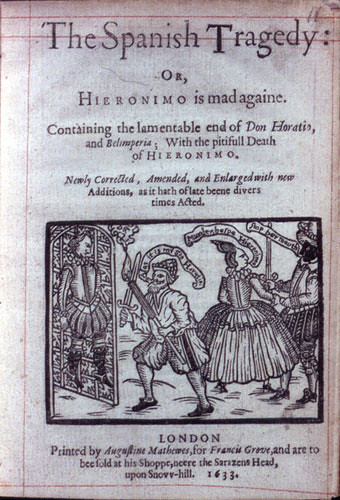
Thomas Kyd, author of The Spanish Tragedy @550

The Spanish Tragedy by Thomas Kyd by you.

The Spanish tragedy: or, Hieronimo is mad againe: Containing the lamentable end of Don Horatio, and Belimperia; with the pitifull death of Hieronimo

Publisher: London : Printed by Augustine Mathewes, for Francis Grove, and are to bee sold at his shoppe, neere the Sarazens Head, upon Snovv-hill, 1633.


When one researches the history of horror[1], one encounters the revenge tragedy in the 16th century, featured because of the genre’s cruelty. In the 1580s, an incredible series of gruesome revenge plays were performed on the stages of England.

An example of the gruesomeness of these plays:

“Enter the empress’s sons with Lavinia, her hands cut off, and her tongue cut out, and ravished.” —stage direction to Shakespeare‘s Titus Andronicus. (Chiron and Demetrius had taken Lavinia away and raped her over her husband’s body. To keep her from revealing what she has seen and endured, they had cut out her tongue and cut off her hands.)

The Spanish Tragedy (d. 1594) by Thomas Kyd is exemplary and one of the earliest items in the history of the revenge play.

The play is also noted for being an early instance of the metatheatre (play-in-play) trope. Aditionally, Thomas Kyd is also an icon in the history of counterculture (he was put on the rack for allegations of heresy).

The history of horror is an interesting subject because of its ontological and temporal issues. It starts with horror fiction and horror art and ends at the commodified terrain of the horror film and gothic fashion.

Most recently the concept of horror was explored by Collapse journal volume 4.

Jean Rollin @70

Happy 70th birthday Jean Rollin.

Franka Mai and Brigitte Lahaie in Fascination image sourced at imagesjournal [1]. [Apr 2005]

Jean Rollin constitutes a decisive chapter in the book Immoral Tales: European Sex & Horror Movies 1956-1984 and discovering him and his universe (which connects to the world of French “low culture”) has been a delight. But do not expect too much of his films. Seeing Jean Rollin films has been an underwhelming experience for Jahsonic. Silly is the best word for the films I’ve seen. And not enough redeeming elements.

However 0

See prev. posts [2]

However 1

cover picture of Fascination

Rollin is a very interesting documentalist (see his work for Jean-Pierre Bouyxou’s Fascination and Eric Losfeld‘s Midi Minuit Fantastique) and connoisseur of Gaston Leroux and all literature of what he calls « second rayon ».

However 2

Calling Rollin connoisseurs.

I am looking for the title of the following excellent short subject by Rollin:

Filmed from the perspective of a painter. Looking at a model. She is a African woman with long and golden nails?. The background music is contemporary classical music. Estimated date of production: late sixties or early seventies.

Anyone?

P. S. If you are new to Rollin check his Google gallery and make sure SafeSearch is off.

Jules Amédée Barbey d’Aurevilly @200

Barbey: catholicism, sadism, mysticism

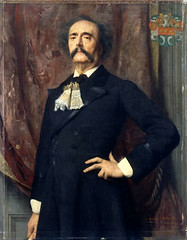
Jules Amédée Barbey d’Aurevilly

Jules Amédée Barbey d’Aurevilly (portrait by Émile Lévy, ca. 1882)


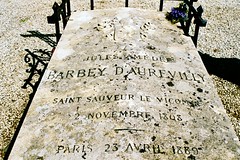
Saint-Sauveur-le_Vicomte_(Château)_Tombe_Barbey_2

Jules Amédée Barbey d’Aurevilly‘s grave.

Jules-Amédée Barbey d’Aurevilly (November 2, 1808April 23, 1889), was a French novelist and short story writer. He specialised in a kind of mysterious tale that examines hidden motivation and hinted evil bordering (but never crossing into) the supernatural. He had a decisive influence on writers such as Auguste Villiers de l’Isle-Adam, Henry James and Proust.

Les Diaboliques (The She-Devils) (1874) – Barbey d’Aurevilly [Amazon.com] [FR] [DE] [UK]

Frontispiece for ‘Les Diaboliques’ by Barbey d’Aurevilly painted by Félicien Rops in 1886

His best-known collection is The She-Devils, which includes the cult classic Happiness in Crime and is still in print from Dedalus Books. Most recently his Une vieille maîtresse (An Elderly Mistress, 1851) was adapted to cinema by French Jahsonic favorite director Catherine Breillat: its English title is The Last Mistress.

He is variously lumped in with the Late French Romantics, The Decadents and the Symbolists and is included in the Genealogy of the Cruel Tale and The Romantic Agony. He is considered a practitioner of the Fantastique, a catholic and a dandy.

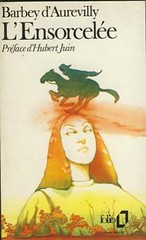
L'Ensorcelé by Barbey

L’ensorcelée (in a Folio edition)

L’Ensorcelée (The Bewitched, 1854) is a tale by French writer Jules Amédée Barbey d’Aurevilly. It concerns an episode of the royalist rising among the Norman peasants against the first republic.

Barbey is favorably  mentioned in Against the Grain (the breviary of decadence) by Joris-Karl Huysmans:

“Deux ouvrages de Barbey d’Aurevilly attisaient spécialement des Esseintes, Le Prêtre marié et Les Diaboliques. D’autres, tels que L’ensorcelé, Le chevalier des touches, Une vieille maîtresse, étaient certainement plus pondérés et plus complets, mais ils laissaient plus froid des Esseintes qui ne s’intéressait réellement qu’aux oeuvres mal portantes, minées et irritées par la fièvre. Avec ces volumes presque sains, Barbey d’Aurevilly avait constamment louvoyé entre ces deux fossés de la religion catholique qui arrivent à se joindre: le mysticisme et le sadisme. — À rebours

“Two works in particular of Barbey d’Aurevilly‘s fired Des Esseintes‘ imagination: the Prêtre marié (“Married Priest”) and the Diabolique. Others, such as l’Ensorcelé (“The Bewitched”), the Chevalier des Touches, Une vieille Maîtresse (“An Old Mistress”), were no doubt better balanced and more complete works, but they appealed less warmly to Des Esseintes, who was genuinely interested only in sickly books with health undermined and exasperated by fever. In these comparatively sane volumes Barbey d’Aurévilly was perpetually tacking to and fro between those two channels of Catholicism which eventually run into one,—mysticism and Sadism.” — Against the Grain, translation by Havelock Ellis