Softly from Paris

While completing my pages on Walerian Borowczyk, I came across the Série rose.

[Youtube=http://www.youtube.com/watch?v=XwHoKL0W_VY]

Trailer for the Série rose, alluding hidden and secret libraries, or, enfers, Giftschränke or remota.

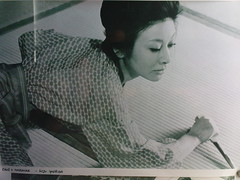
Série rose: Les Chefs d’œuvre de la littérature érotique (literal English: pink series, the masterpieces of erotic literature) is a French television series of 28 episodes of 26 minutes each, produced by Pierre Grimblat and broadcast on French television channel FR3 from November 8 1986 to 1990.

The series consisted of adaptations of libertine fiction from the European literary canon, original authors included Marguerite of Navarre, Comte de Mirabeau, Nicolas Restif de La Bretonne, Anton Chekhov, Chaucer, Guy de Maupassant, Jean de La Fontaine, Théophile Gautier, Daniel Defoe and Aristophanes.

Directors included Belgian director Harry Kumel (Daughters of Darkness), French colleague Michel Boisrond (Cette sacrée gamine) and Polish director Walerian Borowczyk (The Beast). Harry Kumel‘s contributions were separately released as The Secrets Of Love: Three Rakish Tales. Walerian Borowczyk directed four episodes for the series: Almanach des adresses des demoiselles de Paris, Un traitement justifié, Le Lotus d’or, and L’Experte Halima.

Série rose was bought by German and South-American and American television where they were known as Erotisches zur Nacht or Softly from Paris (USA).

Most notable appearance is that of Pedro Almodóvar ensemble cast member Penélope Cruz.

[Youtube=http://www.youtube.com/watch?v=v7dTd2gqijg]

Contact with a beast must not be kept secret at confession

Twenty three years ago, the French film The Beast premiered in France.

Sirpa Lane in
The Beast (La bête) (1975) – Walerian Borowczyk [Amazon.com] [UK]

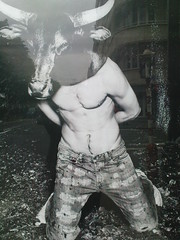
La Bête (Eng: The Beast) is a 1975 film written and directed by Walerian Borowczyk, starring Sirpa Lane, based on Lokis, a story by Prosper Mérimée. The film (originally conceived in 1972 as a film on its own, but then in 1974 as the fifth story in Contes immoraux) belonged to his later work, which was seen by many as a decline in the director’s career after Dzieje grzechu, except in France, where it was hailed by nobrow critics such as Ado Kyrou.

Here is some shaky Youtube footage:

[Youtube=http://www.youtube.com/watch?v=RV0xScJuYXc]

The music consists of harpsichord pieces by Domenico Scarlatti.

Music in Borowczyk films usually draws from the high art canon of classical music, for example, he uses Mendelssohn in The Story of Sin, Handel in Goto, Island of Love and Domenico Scarlatti in La Bête.

Incidentally, the term “classical music” did not appear until the early 19th century, in an attempt to “canonize” the period from Johann Sebastian Bach to Beethoven as a golden age. The earliest reference to “classical music” recorded by the Oxford English Dictionary is from about 1836.

With regards to the title quote and the strange vocabulary of eroticism, Tim Lucas [1] gives the top 10 dialog lines from Massimo Dallamano‘s Venus in Furs (starring Laura Antonelli).

At ten is “I must resign myself to being normal.”

“This groove is out of fashion, these beats are twenty years old”

[Youtube=http://www.youtube.com/watch?v=qu9LhFXymxs]

Strange Overtones” is the first single by David Byrne and Brian Eno from their new album Everything That Happens Will Happen Today.

“This groove is out of fashion, these beats are twenty years old,” state the lyrics and yes indeed, it has been 20 years since the beat has been self-consciously celebrated during late 20th century electronic dance music revolution brought on by Japanese music machines such as the Roland 808.

But the beats (some of them by Robert Wyatt) in this track are actually very intricate and danceable too.

Most of the drumming and programming reminds me of “Riot in Lagos[1], from B2-Unit, Ryuichi Sakamoto second solo album.

Manny Farber (1917 -2008)

Manny Farber is dead, reports the film blog Elusive Lucidity[1].

Negative Space: Manny Farber on the Movies (1971) – Manny Farber [Amazon.com] [FR] [DE] [UK]

Manny Farber (1917, Douglas, Arizona, United StatesAugust 17, 2008) was an American painter and early nobrow film critic. He taught at the University of California San Diego alongside Raymond Durgnat, Jean-Pierre Gorin and Jonathan Rosenbaum.

His film criticism has appeared during stints at The New Republic (late 1940s), Time (1949), The Nation (1949-54), New Leader (1958-59), Cavalier (1966), Artforum (1967-71). He has also contributed to Commentary, Film Culture, Film Comment, and City Magazine. He contributed art criticism to The New Republic and The Nation during the 1940s through 1950s.

His 1957 essay “Underground films: a bit of male truth” coined the term underground film.

In his essay “White Elephant Art vs. Termite Art” originally published in 1962, he eloquently championed B film and under-appreciated auteurs and coined several terms, such as termite art and monsterpieces.

Postwar film critics and theorists of his stature have included Parker Tyler, Edgar Morin, Amos Vogel, Ado Kyrou and Raymond Durgnat while his closest ally in music criticism was the untimely departed Lester Bangs.

Most of Farber’s film writing has been collected in Negative Space: Manny Farber on the Movies (depicted above).

Audrey Vernon, gratuitous nudity and French culture

French eroticism and French culture

[Youtube=http://www.youtube.com/watch?v=KrLge_qkFw8]

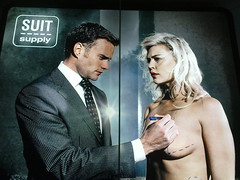
Audrey Vernon at Canal plus Décalé strips nude

The work of Audrey Vernon as an announcer at French channel Canal plus Décalé is stupendous. She is the next big thing after Max Headroom. Above is the notorious announcement where she strips nude, sulkingly claiming that “nobody is watching anyway.” Phil Bloom[1] is her predecessor, this Dutch model showed her naked torso on national Dutch television in 1967.

Comparing Audrey Vernon to Max Headroom[3] reminds me of the eighties with kitsch such as the 1985Moments in Love[4], both previous clips produced by Trevor Horn (more on him later). The eighties was also the time of Double Dutch[5] by McLaren (and btw, when was the similarly-styled “Freestyle“[6] by Bambaataa, a play on Kraftwerk‘s “Numbers“, produced?).

But I digress.

Back to French culture.

Rhétorique et structure narratives de Fantômas par Marc Angenot by you.

Le Roman populaire. Recherches en paralittérature (1975) by Marc Angenot

Above[6] is the elegant book cover to Marc Angenot‘s Le Roman populaire. Recherches en paralittérature, a 1975 work on paraliterature and popular fiction.

Excuse this hodgepodge of a post.

P. S. Click the footnoted numbers to watch.

Genre scenes, trompe-l’œils and occasional dashes of eroticism

Checkers-1803 by Louis-Léopold BoillyUne_loge by Louis-Léopold BoillyLa Toilette intime by Louis-Léopold Boilly

Passer_payez_detail1 by Louis-Léopold BoillySlurping_Oysters_1825 by Louis-Léopold BoillyL'effet_du_mélodrame by Louis-Léopold Boilly

Via Suzanna of Wurzeltod[1] comes the work of French painter Léopold Boilly, whose work ranges from genre scenes to trompe-l’œils and occasional dashes of eroticism.

Before production of the Sade biopic Quills[2] began, costume designer Jacqueline West gave Kate Winslet a copy of Boilly’s “Woman Ironing”[3] to give her a feel for the character, which Winslet said greatly influenced her performance.

[Youtube=http://www.youtube.com/watch?v=lYaiyvJJcWw&]

YouTube mashup of Quills (set to Nine Inch NailsCloser“)

The sadly defunct arts blog Lemateurdart has one more Boilly [5] and Jahsonic previously on Quills[6][7].

Quills is WCC #59. Toilette intime[4] is IoEA #33.

Why this curious and debased love?

Waloli detail by you.

From Waloli, our reporter in Tokyo

Waloli: Today marks the 50th anniversary of the first American over-the-counter publication of Russian-born author Nabokov‘s Lolita. When Nabokov’s “dirty book” hit the streets of the USA, it sold 100,000 copies in three weeks, an immediate success that would allow the 60-year-old scholar and novelist the freedom to resign from teaching.

Pretty much everything about that book has been said, but I think many of you have not seen this interview conducted by Pierre Berton and Lionel Trilling for the Canadian Broadcasting Corporation now at YouTube[1][2].

The interview was filmed on November 26, 1958 at The Rockefeller Center studios in New York City. It was Nabokov’s first television interview. The subject was Lolita, covering some of the questions addressed in Nabokov’s 1958 afterword. Most answers were read from index cards.

Pierre Berton:

“Let´s get out the more specific point: Why did you choose this rather odd, and, something that has never been done before, this curious and debased love?

Nabokov:

“Well, on the whole, it flooded me all kinds of interesting possibilities I am not so much interested in the philosophy of the book, as I am in weaving the thing in a certain way, in those intergradation and interweavings of certain themes and subthemes, for instance the systematic line of Mr. Quilty, whom Humbert will kill, does kill …”

The Lolita or nymphet trope has since entered popular consciousness and never left it, especially in Japan, where it evolved into the Gothic Lolita. Most recently British art critic James Putnam curated “Viva Lolita” which featured work from Turkish artist Nazif Topçuoğlu [3]. Here[4] are three of Topçuoğlu’s photos at Wurzelstock[5].

The Lolita trope, in all its manifestations, from Balthus to Trevor Brown, is IoEA #32.

Thank you Waloli, back to the studio.

Jerry Wexler (1917 – 2008)

[Youtube=http://www.youtube.com/watch?v=3kkgQHcdlZU]

Respect“, a feminist anthem

Aged 91, American music journalist turned music producer Jerry Wexler died last Friday. While at Billboard magazine in 1947 Wexler coined the term “Rhythm and Blues” to replace the tainted term “race music.” He is one of the major record industry players to have marketed 1960s soul music to a white audience.

[Youtube=http://www.youtube.com/watch?v=wJM5K51peVw]

Son of a Preacher Man

He produced such hits as “Respect[1] and “Son of a Preacher Man[2], which are WMC #65 and 66.

Most of the evening was spent on

Most of the evening was spent on researching JRMS interview[1] with Gilbert Alter-Gilbert:

Genealogy of the Cruel Tale by you.

Gilbert Albert-Gilbert’s Genealogy of the Cruel Tale from Bakunin v.6, 1997) [1]

and especially Gilbert‘s intriguing “Genealogy of the Cruel Tale[2] a perfect example of the kind of thematic literary criticism I’m rather fond of. The chart reminds of the aestheticization of violence and cruelty in general, of which Nietzsche said:

“One ought to learn anew about cruelty,” said Nietzsche (Beyond Good and Evil, 229), “and open one’s eyes. Almost everything that we call ‘higher culture‘ is based upon the spiritualizing and intensifying of cruelty….”

For your pleasure, here is the wikified version (information is scarce on the 20th century authors mentioned):

Overview

Genealogy of the Cruel Tale is a chart by American intellectual Gilbert Alter-Gilbert documenting the origins of the cruel tale, which begins etymologically with Auguste Villiers de l’Isle-Adam‘s Contes cruels anthology and has content- and style-wise similarities with cult fiction and horror fiction, Dark Romanticism and the roman frénétique, black humor, transgressive fiction, grotesque literature and folk tales. Sholem Stein says that it is a continuation of the research done by Breton in Anthology of Black Humor. Texts such as Walter Scott‘s On the Supernatural in Fictitious Composition, Lovecraft‘s Supernatural Horror in Literature, Mario Praz‘s Romantic Agony and Todorov’s The Fantastic: A Structural Approach to a Literary Genre also come to mind. Notably absent is Sade.

Taxonomy

Most of the afternoon has been spent on

Charles Nodier. Infernaliana. Ed. Belfond, Coll. Poche-club fantastique n°42, 1966.

Charles Nodier‘s Infernaliana

Most of the afternoon has been spent on literary lunatics and morosophy, inspired by researching Charles Nodier‘s Infernaliana[2], brought to my attention by Au carrefour étrange[3]. One encounters[4] the recently discovered but already inevitable JRMS[5] on the way. Do listen to the latter’s current Studio One muxtape[6].

Les Hétéroclites et les fous littéraires is the subtitle of issue IV of Pauvert's Bizarre (April 1956), is dedicated to literary lunatics.

I’m kind of happy that I managed to dug out the special issue Hétéroclites et fous littéraires[7][8] from Bizarre at L’Alamblog and particularly satisfied with my translation of the French-language Wikipedia article on “literary lunatics“:

Fous littéraires is a French term used to denote outsider writers who have failed to attract any recognition, not by the intellegentiae, not by the public, not by art critics, not by publishers (since they are largely self-published), and which treat subject matter considered – at least by those who qualify these writers as fous littéraires – as offbeat and amusing, without this being the intention of the author. A prime example in this category is Jean-Pierre Brisset, French author of Les dents, la bouche, a poem which is untranslatable due to its reliance on paronymy.

The study of literary fools starts in 1835 with a bibliography compiled by Charles Nodier (Bibliographie des fous : De quelques livres excentriques, published by Techener in 1835) and is continued in 1880 with Gustave Brunet (aka Philomneste Junior) in Les Fous littéraires, essai bibliographique sur la littérature excentrique, les illuminés, visionnaires, etc., published by Gay et Doucé in 1880.

In the 1930s, Raymond Queneau continues the projet by spending years of research at the Bibliothèque nationale de France, fruits of which include Les Enfants du limon[9] (1938) and the posthumously published Aux Confins des Ténèbres, les fous littéraires.

Oulipo's official photo, taken in 1975, Georges Perec occupies the eleventh position from the right (counting the head of André Blavier on the table).

Official Oulipo photo, André Blavier in cardboard cutout on table

In 1982 Henri Veyrier published Les Fous littéraires, a work of Belgian surrealist André Blavier[10], a continuation of his predecessors (and work he had published in Hétéroclites et fous littéraires in Bizarre of April 1956) with an augmentation by Malombra/Roger Langlais estate. This veritable encyclopedia features more than 1000 pages and 3000 reviewed “auteur“s. It features inventors of perpetual motion, theorists who claim the answer to squaring the circle, the inexistence of hell, universal languages, the structure of the universe, medicine, algebra or human sexuality.

In 2007, a group of French-language writers, found the IIREFL (Institut international de recherches et d’explorations sur les fous littéraires, hétéroclites, excentriques, irréguliers, outsiders, tapés, assimilés, sans oublier tous les autres…) or in English: International Institute for Research on Literary Lunatics, Outsiders, Weirdoes, Assimilated, say nothing of the others….

Proving that I do venture outside at times:

DSC00812

after Sherrie Levine, after Edward Weston

Taking photos of photos seems to be my thing. With my new camera, after Sherrie Levine, after Edward Weston, I took a picture of this polaroid[11] by Guy Bourdin (Bourdin used the pola in [12]) yesterday night (which was museum night) at the Antwerp fotomuseum. There are some more of my snapshots of Bourdin’s polaroids[13].

DSC00816

2008 art intervention at MuHKA

My friend and I also had our picture taken[14] at the Guillaume Bijl installation TV Quiz Decor[15]. We were chased away by a museum attendant, but I managed to soothe her saying it was an art intervention.