Last week I visited the neighbouring cemetry from where I teach.
It looks something like this:
… and is rather smallish compared to the huge and worldwide known (to cemetry enthousiasts) Schoonselhof cemetry, the artist’s cemetry of Antwerp.
The pictures are of photos mounted on the graves, usually aureoled by oval frames. I like the washed-out spooky ones. One of the joys of photographing is photographing photographs. After Sherrie Levine: After After Edward Weston.
*Edgar G. Ulmer (1904 –1972) was an Austrian–American film director. He is best remembered for the movies The Black Cat (1934) and Detour (1945). These stylish and eccentric works have achieved cult status, but Ulmer’s other films remain relatively unknown.
After finding out about Bill Landis‘s death last month, I finally ordered his Sleazoid Express and surprisingly almost read it from cover to cover in chronological order.
I’m amazed by the book.
It is very much “spirit of place,” (I should explain, the whole book is divided in chapters that correspond to certain film theatres in the vicinity of 42nd Street, with knowledge of every hot dog stand, every theatre’s audience, the condition and relative safety of the bathrooms etc…).
At times Sleazoid Express reads like a realistic plotless piece of fiction in the manner of the enumerations of consumer goods in American Psycho.
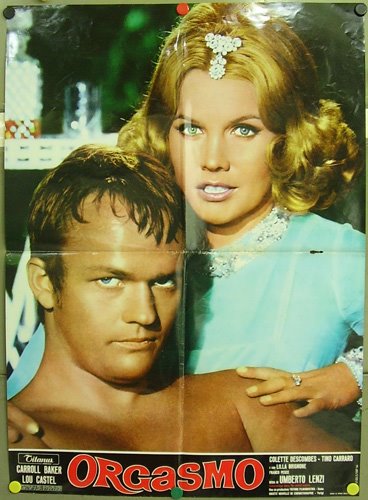
Orgasmo is my first exposure to Umberto Lenzi. It is the story of a rich woman being seduced by a male, who moves in with her but his “sister” comes along. His sister appears to be his lover and their goal is to destabilize the woman with drink and drugs and then kill her. (the plot twist of bringing a “sibling” to the party and destroying their host has been best explored in The Servant (1963) with Dirk Bogarde).
It is my fashion to view people’s careers in terms of their controversies and their influences outside of their own fields.
Darwin’s claim to fame in this context is that he said we are of common descent with “apes.”
Charles Robert Darwin (February 12, 1809 – April 19, 1882) was an eminent English naturalist who achieved lasting fame with his 1859 book On the Origin of Species which established evolution by common descent as the dominant scientific explanation of diversification in nature.
Influence on Naturalism
Writers who belong to the 19th century literary school of Naturalism were influenced by the evolution theory of Charles Darwin. They believed that one’s heredity and social environment decide one’s character. Naturalism attempts to determine “scientifically” the underlying forces (i.e. the environment or heredity) influencing these subjects’ actions. In fact, Zola wrote a long essay in which he mentioned Darwin in relation to contemporary literature. The essay was called The Experimental Novel and described the process of writing a novel as an experiment, in which the writer introduces “characters”, and the outcome is determined by heredity and mileu.
He wrote:
Sans me risquer à formuler des lois, j’estime que la question d’hérédité a une grande influence dans les manifestations intellectuelles et passionnelles de l’homme. Je donne aussi une importance considérable au milieu. Il faudrait sur la méthode aborder les théories de Darwin; mais ceci n’est qu’une étude générale expérimentale appliquée au roman, et je me perdrais, si je voulais entrer dans les détails.
If I remember correctly, Naturalism in literature shares its etymological roots with the Natural Sciences, of which Darwin was a practitioner.
Henri Bergson was highly influenced by biology, particularly Charles Darwin‘s On the Origin of Species, which was released the year of Bergson’s birth. This leads Bergson to discuss the ‘Body’ and ‘Self’ in detail, arguably prompting the fundamental ontological and epistemological questions to be raised later in the twentieth-century French philosophy.
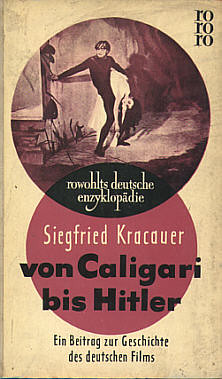
Kracauer analyzed and critiqued the phenomena of modernism‘s mass culture. He built up a general theories based upon dozens of smaller examples. His attention to detail lends itself to an inductive method. He was one of the first to treat the cinemaseriously; in it he saw a mirror of social conditions and desires.
Desiring-production is a term coined by the French thinkers Gilles Deleuze and Félix Guattari in their book Anti-Œdipus (1972). They oppose the Freudian conception of unconsciousness as a “theater“, instead favoring a “factory” model: desire is not an imaginary force based on lack, but a real, productive force. They describe the mechanistic nature of desire as a kind of “Desiring-Machine” that functions as a circuit breaker in a larger “circuit” of various other machines to which it is connected.
I’ ve mentioned this before, that the majority of releases in my cd-collection are anthologies. One of the finest anthology labels since the 1990s is Soul Jazz Records. That British company has just released Fly Girls! (full title Soul Jazz Presents Fly Girls: B Boys Beware – Revenge of the Super Female Rappers), anthology of female rap artists that celebrates the genre’s 30th anniversary. What follows is a wikified version of the liner notes, of which I could not identify the author. Please fill me in on that blank if you own the cd. The liner notes are hyperlinked to Youtube entries.
The compilation is worth its price alone for featuring the below track by Camille Yarborough.
Aside from the singing/rap styles that earlier soul artists such as Aretha Franklin[2], Shirley Ellis[3], Millie Jackson[4] and Laura Lee[5] would occasionally adopt in their songs, female rap (like rap itself) had its antecedents in the groundbreaking black poetry of the 60s and 70s with radical, free-thinking poets such as Nikki Giovanni[6], Camille Yarborough[7] and Sarah Webster Fabio[8] – all of whom are included here – vocalising hitherto unheard expressions of female and black self-determination in their work. These strong, educated, political women not only led the way stylistically but also helped define how a female artist could make their own career path – weaving creativity, politics and family in a way that Missy Elliott[9], Queen Latifah[10] and others have since followed – establishing the boundary-breaking career paths of many female artists in rap. Hip-hop is a culture of which music is only a part; nowadays (and to an extent from the very beginning) the most successful female hip-hop artist is often singer, DJ, actress, manager, political and social agitator and more in multiple combinations.
Hip-hop’s story begins in the tenement blocks and community centres of the South Bronx. In the first three years-or-so history of hip-hop (1976-9) – before the first rap records were made – aspiring female artists could watch onstage the early female MC role models of Sha-Rock (the first female MC in the group Funky Four Plus One[11]) or the Mercedes Ladies[12] (the first female MC and DJ crew). With Tanya and Paulette Winley’s ‘Rappin and Rhymin’ on vinyl by 1979 it would not be until the following year that the first all-female crew made it onto vinyl when The Sequence[13] (featuring a then unknown Angie Stone) was astutely signed, once again, by Sylvia Robinson to Sugarhill Records.
Robinson was not the only woman on the business side of hip-hop. There was Kool Lady Blue who first brought rap out of the Bronx and into downtown NYC at the Roxy nightclub and also later managed The Rocksteady Crew. Monica Lynch who rose to head of A and R and president of Tommy Boy Records, and later vice-president of Warners, comments that because hip-hop was new it did not have the hierarchy of the traditional music industry and women were thus able to move more easily into executive roles. Later, as we shall see, many of the artists moved into the business themselves taking control of their careers and aiding others.
Roxanne Shante is certainly the first female rapper to make a career out of her music. Shante and fellow Queens-resident and producer Marley Marl fought their corner for both their borough (taking on Boogie Down Productions and the Bronx) and anyone else who dared call themselves ‘Roxanne’ in a slanging-match known as The Roxanne Wars[14]. This verbal jousting had its antecedents dating back to the ‘dozens’ of the playground and tower-block (‘Your mother is a …’, ‘No, your mother is a …’) and to the Griot storytellers of Africa. Roxanne Shante, and many others here, effortlessly subverted this – and many other – male-dominated traditions to create and re-write new histories.
“In December 1970, Jonas Mekas was organizing one of his periodic festivals of avant-garde films at the Elgin, a rundown six hundred seat theater, not unlike the Charles, on Eighth Avenue just north of Greenwich Village. Although the program was laden with major avant-garde figures, the most widely attended screenings were those on the three nights devoted to the films of John Lennon and Yoko Ono. The Elgin management took advantage of the hippie crowds to announce an added feature-Alexandro Jodorowsky’s El Topo to be shown at midnight because, as the first ad announced, it was “a film too heavy to be shown any other way.”” —Midnight Movies (1983)
In February 1962 Arrabal, Jodorowsky and Topor settle on the word panique. In September 1962, the word panique is printed for the first time: Arrabal publishes five récits “paniques” in André Breton’s periodical La Brèche.



![Merda d'Artista by Piero Manzoni by [AMC]](http://farm3.static.flickr.com/2364/2318022504_b88e8e8ca4_m.jpg)