Introducing Barry Burman (1943-2001)

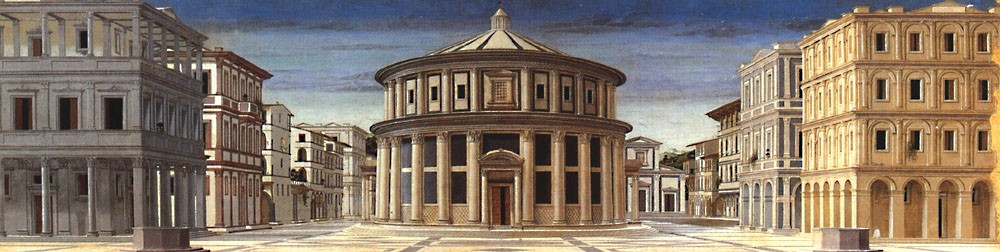
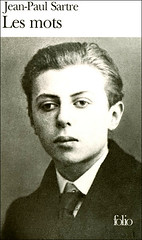
Beham, Hans SebaldTartan_Ribbon, the first colour photographBarry Burman
Which one is Burman? Click.

Salome by British artist Barry Burman (1943-2001)[1] via Trevor Brown[2] . Trevor notes Burman’s work as a personal inspiration after reading Peter Webb‘s The Erotic Arts and makes a comparison to the work of Graham Ovenden. Burman committed suicide in 2001.

Notes of the previous days:

2008 August 1

Valter of Surreal Documents has written the first post in a series devoted to Stefan Jaworzyn‘s exploitation film fanzine Shock Xpress. These posts will present to you YouTube videos of the films featured in the three books which collect the fanzine’s best articles. He starts with biographical information on Jaworzyn.[4]

The previous thematic outing of Valter was centered around Exotica by Toop[5].

2008 August 2

Web 2.0 is slowly becoming a reality. WordPress, Flickr, YouTube, Last.fm, Del.icio.us, LibraryThing and Facebook made me realize that. I need an API-driven platform that can integrate the aforementioned, with my wiki as backbone. Things such as Spinlets which let you create “mashups“. Something as easy to use as the defunct Hypercard, which was my first hypertext experience, in the pre-internet days. It would allow Amazon.com integration for my Wiki too.

2008 August 3

On the difference between nakedness and nudity .


I am sceptical that Leiber and Stoller wrote “Hound Dog“. They probably heard it in an African American Vernacular English version in a juke joint (I heard a version not so long ago which went “you ain’t looking for a woman, you just looking for a ho“), bowdlerized it and released it in a version palatable to the WASP crowd. Cfr. Elvis‘s “One Night (song)” and Cole Porter‘s “I Get a Kick Out of You“. The latter had its drug reference “I get no kick from cocaine,” changed to “I get perfume from Spain,” for radio airplay, the earlier was first titled “One Night of Sin.”


Most therapists have knowledge of psychology but too many of them are at a loss when it comes to philosophy. Most culturati look to philosophy and sociobiology rather than psychology for an answer to “meaning of life.” Contemporary therapists who wish to cater for a sophisticated crowd should watch I Heart Huckabees, read about existential humanism and existential therapy, and study Emmy van Deurzen and others on the Passion Paradox.

See also, Mating in Captivity: Reconciling the Erotic and the Domestic


Saw Demonlover, my second and hopefully last film of Assayas. The previous one was Irma Vep … just as terrible. The only redeeming element Demonlover was the introduction of the concept of Hellfire Club. Even the SY soundtrack is barely audible. Glad I got to see Chloë Sevigny, aka miss Brown Bunny.

2008 August 4

The Fold is a new web-based film series written by husband-and-wife writing team, Ray Sawhill and Polly Frost. It will be viewable at http://www.thefold.tv as from now. It is an erotically-based science fiction series.

Russian author Aleksandr Solzhenitsyn dies

Happy birthday Luigi Colani

The earth is round, all the heavenly bodies are round; they all move on round or elliptical orbits. This same image of circular globe-shaped mini worlds orbiting around each other follows us right down to the microcosmos. We are even aroused by round forms in species propagation related eroticism. Why should I join the straying mass who want to make everything angular? I am going to pursue Galileo Galilei’s philosophy: my world is also round. — Luigi Colani.

Car Styling 23 Luigini Colani special by you.

[Amazon.com]
[FR] [DE] [UK]

There is one available now at Amazon.de, 69 EUR.

European designer Luigi Colani turns eighty today.

I can’t remember the first time Colani came upon my radar, but it must have been in the various design books I read in my twenties, this was in the 1985-1995 period. He – and his celebration of curvilinearity (one of the faultlines in 20th century art) – remain paramount in my design canon.

Modern and contemporary designers in this tradition include Friedensreich Hundertwasser, Isamu Noguchi, Carlo Mollino and Marc Newson.

Connecting keywords are non-Euclidean geometry, ferrocement, organic design. [I must look into this non-Euclidean geometry thing, some interesting connections are bound to appear]

Also of interest is the survey of Eric Hunting, ‘The Classic Rock Realm of Ferro-Cement’[1].

Around that same period I bought a monograph of Colani’s work, a special issue of Japanaese Car Styling magazine, #23. Personally, I prefer his non-car styling designs and the issue of Car Styling aforementioned features some rare works of eroticism (ceramics, photography, drawings) and sanitary ware by Villeroy and Boch.

The cover of that magazine is noticeable for its Böcklin typeface.

Previously on Jahsonic: Lost and found: biomorphism

Disney’s self-disneyfication

Does he not remind you of The Tramp?

WALL-E[1] is an American satire of polluted environments, human obesity, and retail corporate domination.

In a future world, people have been Cocacolonized, Disneyficated, McDonaldized and Walmarted. Robots come to their help. Reverse dystopia comes to mind.

The film is very benevolent, it’s Disney after all. But it’s a treat, a real treat. Watch out for the 2001 allusion. Also, hints of Silent Running[2].

Plants in space.

WALL-E is World Cinema Classic #55, Silent Running #56

Staying with corporate domination and consumerism, “(I Can’t Get No) Satisfaction[3] (Devo‘s version here, slightly more danceable) is World Music Classic # 58.

The golden age of television

[Youtube=http://www.youtube.com/watch?v=OdX9IcpG8wg]

27 years ago today was the day of the first video clip every broadcast on MTV. The clip was “Video Killed the Radio Star,” directed by Russell Mulcahy, and it marked the debut of the channel on 1 August 1981, at 12:10 A.M. The single, a Trevor Horn (Frankie Goes to Hollywood) production, was already two years old, released in September 1979. The song celebrated the golden days of radio, talking of a singer whose career is cut short by television. Group member Trevor Horn has said that his lyrics were inspired by the J.G. Ballard short story The Sound-Sweep, in which the title character, a mute boy vacuuming up stray music in a world without it, comes upon an opera singer hiding in a sewer.

Up until today, MTV remains my favorite television station, along with Arte.

See Golden Age of Television and Ode to MTV and the contemporary grotesque

Possibilities of Michel

[Youtube=http://www.youtube.com/watch?v=YrxtoKAvtWI&]

Trailer to Possibility of an Island

On September 10 France will get the chance to see Michel Houellebecq‘s own film adaptation of The Possibility of an Island[1]. It was rumored that Rem Koolhaas would design the decors, but in the end he did not, I believe. Fernando Arrabal was prominently present at the film’s recording.

Houellebecq is a contemporary French writer and everyone’s current cult favourite.

He has his detractors however … he was disparagingly compared to Thomas Bernhard by a friend “with infallible judgement” of litblogger Stephen Mitchelmore in 2005[2] and English novelist Will Self, commonly called the French counterpart (see equivalents and synchronicity) of Houellebecq, described his equivalent as “just a little guy who can’t get enough sex” (The Trouble with Michel).

I’ve yet to read Bernhard and Self. Since I haven’t read The Possibility of an Island, I’ll try to catch the film, but … after seeing Eichinger’s botched adaptation of The Elementary Particles … I fear for the worst. The only film adaptation of Houellebecq I can vouch for is Extension du domaine de la lutte by Philippe Harel. That was an excellent film. From the trailer of Possibility, I can only say that the film feels like another Jahsonic fave: Christophe Honoré‘s 2004 My Mother, probably due to the shared Ibiza scenery.

Staying with French literature, Anglophone litblog A journey round my skull celebrates Maurice Blanchot‘s “The Madness of the Day“. [3][ notes].

Post scriptum: I didn’t publish yesterday‘s notes. If you wish to follow my daily note-taking, visit my bliki.

Previously at Jahsonic: Carnivalesque damsels

Elsewhere #12

Australian blogger Gary Sauer-Thompson on hauntology[1]. Thompson, relatively new to the hauntology arena, concludes that hauntology is the counterpart to the ‘nostalgia mode’ of Fredric Jameson (the supposed cultural homogeneity of late capitalism) as described in Postmodernism: The Cultural Logic of Late Capitalism. So hauntology is the new avant-garde? Read a wikified version of Thompson on hauntology here.

Excuse my focus on hauntology, but basically the word is a neologism, the struggle of which to enter the real world (it was only accepted at Wikipedia in August 2007) I am recording.


French publisher Léo Scheer has issues[2] regarding Wikipedia notability, after his dismay that his neologism rétropublication (reverse publishing) did not get passed Wikipedia notability criteria.[3]. He has high hopes for Knol. (I don’t) Here [4] Scheer can be seen at the Prix Sade 2007, from Alex Jestaire‘s YouTube channel. With music by Jahsonic fave Miss Kitten. I wonder what Prix Sade 2008 has in store.


Robert Hughes had a verbal exchange with Albert Speer in the late 1970s in which Speer said that architecture was certainly one way to unite a people, but that if the Nazis had had television, there would have been no stopping them. NYT, 2005


A friend came back from Denmark, where he visited the Museum Erotica and bought the DVD of Ole Ege Pornography film, with a soundtrack by Dexter Gordon (recorded at the Jazzhus Montmartre)… they call it a musical …, but on that same DVD came A Summer Day, that most infamous film of the sexual revolution in Scandinavia. That last film is set to the tune of Beethoven’s Sixth Symphony, the film itself is silent. Bodil Joensen has the gaze of a ghost-ancestor of Nina Hagen or Lene Lovich.


New Byrne and Eno imminent: Everything That Happens Will Happen Today. —John Coulthart

Happy birthday Robert Hughes

The Shock of the New by Robert Hughes by you.

Australian writer and art critic Robert Hughes turns 70 today. Congrats Robert, and thanks for The Fatal Shore (the history book on Australia) and The Shock of the New, a well-reputed modern art history book I only managed to be lukewarm about, when I read it some time in 2006. Too much attention for Cezanne (I’ve never taken to him, from my “dilettante” perspective), and Hughes fails to mention the influence of photography and illustrated newspapers on Impressionism.

To give you an idea of Hughes’s art criticism, here are his insights on Equivalent VIII, a work by Carl Andre:

“The essential difference between a sculpture like Andre‘s Equivalent VIII[1], 1978, and any that had existed before in the past is that Andre’s array of bricks depends not just partly, but entirely, on the museum for its context. A Rodin in a parking lot is still a misplaced Rodin; Andre’s bricks in the same place can only be a pile of bricks.”–The Shock of the New, Robert Hughes.

The future will be boring

J. G. Ballard. Autopsy of the new millennium by you.

John Coulthart announces[1] J. G. Ballard. Autopsy of the new millennium, an exhibition on the work of British writer and cult favorite J. G. Ballard at the Centre de Cultura Contemporània de Barcelona curated by Jordi Costa.

The exhibition runs from from 22 July to 2 November 2008.

Its poster features an abandoned and rusty car wreck in desert Tunisia, Chott el Jerid (a location used for filming Star Wars) by Sami Sarkis.

I am not a bibliophile

On intertextuality and litblogging


[Amazon.com]
[FR] [DE] [UK]

When I wrote a couple of months ago, echoing Grillet, that I am not a cinephile[2], I meant that I am interested in more than films, but more on the lookout for certain sensibilities which also steer my publication bias. By the same token, I am not a bibliophile. But I love books, and books is mainly what I’ve bought the last couple of years. By books I do not necessarily mean fiction (have you ever noticed how reading has come to equal reading fiction?), I only read fiction when on holiday. When I do read fiction, I love metafiction, which can consist of a number of varieties. One particular variety is fiction steeped in the history of literature. The first one I consciously read of this type was probably Erica Jong‘s Fear of Flying in the summer of 2006.

A book of pure intertextuality has recently been brought to my attention: Montano’s Malady by Spanish novelist Enrique Vila-Matas. On the book’s intertextuality Scott Esposito at Conversational Reading notes that Enrique Vila-Matas is a writer “who entertains the notion that contemporary literature amounts to scribbling in the margins of the great works.”[3] and Melissa McClements in the Financial Times adds:

“Some of the other writers and literary thinkers referred to in just the first 25 pages [of Montano’s Malady by Enrique Vila-Matas] include Spanish poet Justo Navarro, Argentine novelist Ricardo Piglia, Mexican writer Sergio Pitol, French surrealist Jacques Vaché, Italian humorist Achille Campanile, Marxist literary critic Walter Benjamin, New York literary critic Harold Bloom, Chilean poet Gonzalo Rojas, French poet Arthur Rimbaud, Czech writer Franz Kafka, American poet Ezra Pound and, most tellingly, Jorge Luis Borges, the giant of 20th-century Latin American literature, famous for his self-reflexive, labyrinthine fiction.” —Melissa McClements in the Financial Times via This Space[4]

Books such as Montano’s Malady teach you about literature (what I usually expect of non-fiction) while still manage to entertain.

A great way to learn about literature today is to read litblogs (please note how the list of litblogs[5] has defied Wikipedia’s notability criteria). The first litblog I started to frequent was The Reading Experience in May 2006 (when I was researching literary realism).

Other litblogs friendly to Jahsonic (or vice versa) are The Existence Machine [6], This Space[7], The Reading Experience[8], Tales from the Reading Room[9], and the Spanish Portuguese and Spanish language blogs Livros de Areia [10], Pimenta negra[11] and Moleskine Literario[12].

But the blog which informs me most consistently of literature, and in my own tongue, is De Papieren Man[13].

Please forgive me if I’ve left out fellow-traveling litblogs.

Stanley Kubrick @ 80

Kubrick For Look

Stanley Kubrick would have been 80 today if he hadn’t died in 1999, aged 70. So today marks the 10th anniversary of his death.

[Youtube=http://www.youtube.com/watch?v=jBT__4ldjAs&]

The dark tower monolith scene, sound: Requiem by György Ligeti

I’ve previously mentioned[1] my disenchantment with Kubrick and “modernist film” in general (an exception needs to be made for its deviant siblings). His work is of course incontournable, as the French say, but 2001 is one of the most boring films I’ve ever seen and only comes close in tediousness to Citizen Kane.

Nevertheless, as all flawed products, 2001 has one or two redeeming elements:

2001′s soundtrack did much to introduce the modern classical composer György Ligeti to a wider public, using extracts from his Requiem (the Kyrie), Atmosphères, Lux Aeterna and (in an altered form) Aventures (though without his permission).

To conclude: a good YouTumentary the significance of 2001[4] by Collective Learning by Rob Ager