Eye candy #4


The Witch by Salvator Rosa, 1640 - 1649

The Witch (1640 – 1649) by Salvator Rosa
As I’ve mentioned before, I am currently reading Umberto Eco’s On Ugliness, the above Grien-esque image is from chapter 8, Witchcraft, satanism and sadism.

Surprising about the book, is that it is as much about literature than about visual culture. A big disappointment is that two times Eco says that “decency forbids us to reproduce such and such excerpt,” a childish remark. New authors and works discovered so far is Teofilo Folengo‘s Baldus (1517), of who Eco says that it was an important source of inspiration for Rabelais and Hieronymus Bosch.

In the beginning of the book, Eco makes a feeble attempt to come to a three-fold aesthetics of the ugly, but he never returns to his framework.

Actually, his thematics are not really the ugly, but the aestheticization of the ugly, a concept we know better as the grotesque, and which has been treated by such authors as Wolfgang Kayser in his The Grotesque in Art and Literature (which I have yet to read).

For those of you unfamiliar with the work of Salvator Rosa:

Salvator Rosa (1615March 15, 1673) was an Italian painter, poet and printmaker best known as an “unorthodox and extravagant” and a “perpetual rebel” proto-Romantic. His life and writings were equally colorful. Some sources claim he spent time living with roving bandits. Ann Radcliffe was greatly influenced by the Italian landscape painter and his dramatic landscapes peopled with peasants and banditti. Radcliffe managed to translate Rosa’s visual feeling of awe and the sublime to the Gothic novel popular in the 18th and 19th centuries.

Rosa is canonical to me despite of Huxley’s negative criticism:

“Another more celebrated fantasist was Salvator Rosa — a man who, for reasons which are now entirely incomprehensible, was regarded by the critics of four and five generations ago as a great artist. But Salvator Rosa’s romanticism is pretty cheap and obvious. He is a melodramatist who never penetrates below the surface. If he were alive today, he would be known most probably as the indefatigable author of one of the more bloodthirsty and adventurous comic strips.” —Aldous Huxley, Prisons (1949)

Previously on Eye Candy.

Farewell Woebot (2003 -2008)

RIP Woebot (2003 – 2008) [1].

Sad, after Giornale Nuovo quit last year, musical blog Woebot decided to do the same. He will be sorely missed. If you are new to his writing just check his penultimate entry on jazz.

Questions have been raised (by John Coulthart amongst others, though I can’t find his post) on what will happen to the archives of the writing of these wonderful blogs. Other than books, which are disseminated, web content is stored in a centralized fashion. If a source disappears,  it’s usually gone forever. Services such as the Wayback machine may help. Check the archives for Woebot there.

RIP Ettore Sottsass (1917 – 2007)

Unidentified photograph of Ettore Sottsass

Carlton Cabinet (1981) – Ettore Sottsass

Invitation to the first Memphis presentation, Sept 18 1981,

graphics by Luciano Paccagnella.
image sourced here

Ettore Sottsass Olivetti Valentine, first released on Valentine’s Day 1969.

Ettore Sottsass (14 September 1917 – 31 December 2007) was an Innsbruck-born Italian architect and designer of the late 20th century. He founded the Memphis Group and was a member briefly flirted with the Situationist International for a (very) short time. He was also connected to the radical design movement. His best-known product is the 1969 Olivetti Valentine typewriter. His 1981 “Carlton Cabinet” was to many people their first de facto exposure to postmodernism.

Sottsass founded the Memphis Group, an influential postmodern Italian design and architecture movement of the 1980s. Memphis explored a visual language outside of the limiting canons of “good taste,” blurring the boundaries between “high culture” and mass-produced “ordinary” consumer goods.

Radical design developed in Italy in the late 1960s and early 1970s. It continued the tradition of using new materials and bold colours that began with Pop Art but also drew on historical styles such as Art Deco, Kitsch, and Surrealism. The main exponents of Radical Design were small groups of architects and designers who questioned Modernism and rejected mass-consumer culture. Key groups and designers of the Radical style include Superstudio, Archizoom Associati, UFO, Gruppo Strum, and Ettore Sottsass.

World cinema classics #30

[Youtube=http://www.youtube.com/watch?v=id4593hoT2E]

Lina: I love you!

Le Far West is a 1973 film directed by Jacques Brel. The film was co-written by Paul Andréota and Brel. It has the dubious honor of a 4.0/10 rating on IMDb. As with so many films, it was my father who pointed it out to me when it was shown on television in my early teens. If I remember the plot correctly, a band of drop-outs decides to create a new “far west” in a abandoned mine. Very funny.

Previous “World Cinema Classics” and in the Wiki format here.

Icons of erotic art #10

As we have learnt from the first nine issues in this series, in the nebulous realm of erotic art, uneroticism runs rampant. Not with the photos I am about to present. NSFW, previously unpublished online, here is Unica Zürn photographed by Hans Bellmer [1].

Previous entries in Icons of Erotic Art here, and in a Wiki format here.

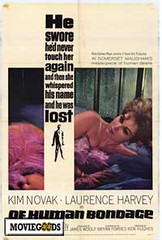
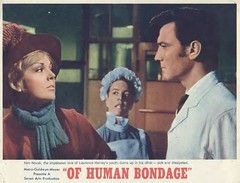
Spinoza and bondage (“He swore he’d never touch her again”)

Of Human Bondage He Swore

“He swore he’d never touch her again and then she whispered his name and he was lost” -film tagline

Of Human Bondage 1964

“When a man is prey to his emotions, he is not his own master, but lies at the mercy of fortune: so much so, that he is often compelled, while seeing that which is better for him, to follow that which is worse. ” —Ethics of Human Bondage or the Strength of the Emotions, Spinoza

I believe my first exposure to radical Dutch enlightenment philosopher Spinoza was via Gilles Deleuze or via the “perishable monuments” of Thomas Hirschhorn which I discovered in Germany at documenta in 2002.

Via Guy de Maupassant and William Somerset Maugham‘s Of Human Bondage I discovered this bit on human bondage.

In the 1660s, the Dutch philosopher Spinoza writes, in his Ethics of Human Bondage or the Strength of the Emotions (a part of his Ethics), that the term “bondage” relates to the human infirmity in moderating and checking the emotions.

Icons of erotic art #9

Princess X, used here on the cover of Peter Webb’s The Erotic Arts (1975).

Constantin Brâncuşi‘s Princess X (1916) [1] is a representation of a phallus, although the artist – similar to a ploy used by Magritte in The Treachery Of Images when he said: “Ceci n’est pas une pipe” – himself always contended that it depicted the “eternal feminine”. Brancusi’s contribution to the Paris Salon des Indépendants of 1920, it provoked a quite a furor and had to be withdrawn following the intervention of the police.

Please excuse the uneroticism of this work, it seems the realm of “erotic art” is littered with unerotics. To make it up to you, let me give you some new Yoshifumi Hayashi from the excellent blog Banana Hole (this NSFW post is ambiguously amusing/disturbing), and a previously published one of the same artist by the ever reliable @mateurdart.

Lastly, some eye candy by Hajime Sawatari here from this series by this blog.

Erotic (un)possibilities in an Antioch world

Over the past few days I’ve been mulling over Siri Hustvedt title essay A Plea for Eros which is a rumination on the effability and ineffability of sex in connection with the Antioch Ruling. Since January 1, 2006, the Antioch College in Ohio, United States, requires students to gain consent at each stage of a sexual encounter.

Hustvedt’s essay on the unreliability and ambiguity of language in relation to sexual ethics reminded me of Georges Bataille when he said that “sex begins where speech [or words] ends”, a statement I tend to agree with.

[Youtube=http://youtube.com/watch?v=q7SNOX9W3WY]

Emotionally charged scene in A History of Violence (French version)

Which brings me to Cronenberg penultimate film A History of Violence, the Straw Dogs of the 2000s. It is the story of Tom Stall, his wife Edie and their two children. Tom is a good-hearted impostor with organized crime roots. After his family finds out his true identity they initially reject him. He is finally accepted in a superb silent scene which is a celebration of the nuclear family; but not until after an emotionally charged fight between Tom and Edie followed by rough sex on the stairs. Notice the absence of adherence to the Antioch Ruling.

However, as Hustvedt points out at the beginning of her essay, an Antioch world can be full of erotic possibilities.

Imagine asking a female love interest “May I touch your left breast?”; patiently and eagerly waiting for the answer.

Dutch director Warmerdam’s cult film Little Tony predates Hustdvedt’s sentiments by 8 years. In this tragicomedy the erotic possibilities of explicitness in sexual encounters is illustrated by a key scene in which Brand, the protagonist illiterate farmer asks Lena, the school teacher who has been hired by Brand’s wife, “May I see your left breast?“. After a putative “Why?” by Lena, Brand answers: “So I can remain curious about the right one.”

History of Violence flotsam: Steven Shaviro gives a roundup of cinerati such as k-punk, girish twice, Chuck, Jodi — followed by k-punk’s reply and Jodi’s counter-replyJonathan Rosenbaum and his own view here.