| Egyptian hieroglyph `ir | Proto-Semitic O | Phoenician O | Etruscan O | Greek Omicron | ||
|---|---|---|---|---|---|---|
|
 |
 |
 |
 |


Brought to you by Waloli, our reporter in Tokyo
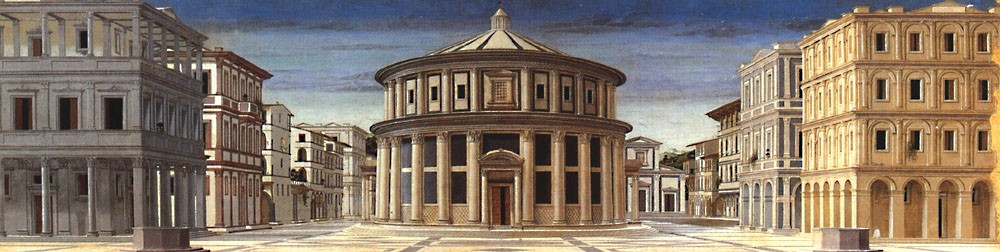
RIP Jim Cawthorn (1929 – 2008) (via John Coulthart [1])
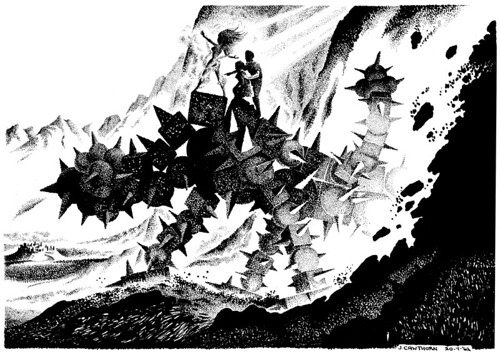
The Metal Monster (1962) by Jim Cawthorn
Jim Cawthorn (1929 – 2008) was a British illustrator, comics artist and fantasy historian. Cawthorn was the first illustrator employed by Savoy Books in the early 1980s. Cawthorn was Michael Moorcock’s illustrator of choice for many years and was involved with the Moorcock-edited run of New Worlds right from the start with his cover illustrating J. G. Ballard’s “Equinox” story. He also provided reviews for New Worlds, and edited Fantasy: The 100 Best Books[1] with Moorcock.
[Youtube=http://www.youtube.com/watch?v=n9s2Gy9lydk&]
“Sometimes I Feel Like a Motherless Child“
Odetta Holmes, (December 31, 1930 – December 2 2008), known as Odetta, was an African-American singer, actress, guitarist, songwriter, and a human rights activist, often referred to as “The Voice of the Civil Rights Movement.” Her musical repertoire consists largely of American folk music, blues, jazz, and spirituals. An important figure in the American folk music revival of the 1950s and ’60s, she was a formative influence on dozens of artists, including Bob Dylan, Joan Baez, and Janis Joplin.
She was known for her renditions of songs such as “Sometimes I Feel Like a Motherless Child“[1] and “Pastures of Plenty“.
[Youtube=http://jp.youtube.com/watch?v=k7VzWitgeU4]
Diesel ad “Pete the Meat Puppet“
Since very young, I have been an advertising junkie. So much creativity can be found in the medium, and it is not hampered by the egos and pretentions usually found in the art or music worlds. That is probably why I focused on the applied arts between my twenties and thirties.
I’ve featured Diesel previously twice on this blog. A ‘minotaur‘ street ad here[1] and very fun film SFW porn film from earlier this year here[2].
The unkown artist is probably a fan of Zappa and The Residents.

Charles Jourdan ad, 1976
French fashion and advertising photographer Guy Bourdin (1928 – 1991) would have celebrated his 80th birthday today had he not died of cancer 17 years ago.
Perhaps it was pHinn who introduced me to the imagery of Bourdin, perhaps this happened in the pre-internet world, by way of the Dutch-language magazine Avenue, which my parents bought during the seventies. It was The Netherlands’ and Flander’s first glossy, and ran from 1965 until 2002. I seem to remember the Charles Jourdan shoe photo-ads Bourdin produced during that era.
Candace Bushnell (born December 1 1958) is an American author and columnist based in New York City. She is best known for writing a sex column that was turned into a book, Sex and the City, which became the basis of the TV series, Sex and the City.
Set in New York City, the show’s focus is on four female characters, stereotypcally defined as Carrie the shopaholic, Miranda the cynic workaholic, Charlotte the hopeless romantic and Samantha the sexaholic. John Big, the male lead is the emotionally unavailable male afraid of commitment.
The show tackled socially relevant issues, often specifically dealing with well-to-do professional women in society in the late 1990s, and how changing roles and definitions for women affected the characters.
Well-to-do professional women constitute the trope of strong and independent women, connected to third-wave feminism. If one considers strong and independent women in history one arrives at Lilith, Joan of Arc, Catherine the Great, courtesans and George Sand. To encompass it all are women’s rights throughout history and in the 20th century: feminism. In the late 20th century there are Riot Grrrls and Girl Power.
On The Simpsons, Sex and the City was parodied as “Nookie in New York” with Marge’s sister saying “It’s a show about four straight women who act like gay men”.
[Youtube=http://www.youtube.com/watch?v=bXu-8tXKWjU]
Le Jardin des délices de Jérôme Bosch
Jean Eustache (November 30, 1938 – November 3, 1981) was a French filmmaker best known for his 1973 film The Mother and the Whore and his various short subjects such as Le Jardin des délices de Jérôme Bosch[1]. Jean Eustache directed just two feature films he would make before committing suicide in 1981.
The Mother and the Whore[2] is one the last typical Nouvelle Vague films and an extended essay on male angst, the war of the sexes and the Madonna-whore complex. Clocking in at over 3½ hours, this film has a style seemingly borrowed from cinéma vérité and it tries to capture real life in post-May 1968 France. A typical scene is one where Marie comes home, puts a record on the turntable and listens to it in real time.
[Youtube=http://www.youtube.com/watch?v=C08pv_YZE70]
Andrea Palladio (November 30, 1508 – August 19, 1580), was an Italian architect. The Palladian style, named after him, adhered to Roman architecture principles and a search for classical perfection. The Palladian villa format was easily adapted for a democratic worldview, as can be seen in Thomas Jefferson‘s commissioned buildings. Palladian motifs made a comeback during the postmodern era, the American architect Philip Johnson frequently used them in his doorways.
Peter Woditsch (1953, Germany) is a German-born filmmaker best known for his documentary film on the erotic furniture of Catherine the Great, and for his work on Musées secrets, secret museums, for the art television channel Arte.
Peter Woditsch was born in Stuttgart, Germany, but works and lives in Brussels. He studied philosophy in Paris and Brussels, film and animation in various places in Europe.
His debut feature Hey Stranger stars Hanna Schygulla.
His documentary film Musées secrets is an investigation of secret museums, first published in 2008 on the art television channel Arte.
Woditsch visits the Louvre, Orsay, British Library, the legendary Vatican collection and private collectors such as Gerard Nordmann.
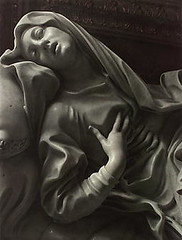
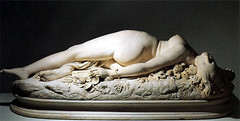
In this documentary are the sculptures Beata Ludovica Albertoni[1], a marble by Italian sculptor Gian Lorenzo Bernini and Woman Bitten by a Snake[2], a marble by French sculptor Auguste Clésinger, both works show the intimate connection between sex and death.
Claude Lévi-Strauss @100
[Youtube=http://www.youtube.com/watch?v=qjaXikDp5ZI]
Luciano Berio‘s Sinfonia[1] uses text of The Raw and the Cooked (1964)
The following articlette (it such a pity the English language does not have diminutive) on the 100th birthday of Claude Lévi-Strauss (born November 28, 1908) approaches the work and person of Claude Lévi-Strauss from the angle of structure, anthropologica, trivia and taboo.
The stucture angle leads to structuralism, a French intellectual movement internationally fashionable during the 1960s and 1970s, based on Russian Formalism, Prague school of structuralism and the teachings of Ferdinand de Saussure.
That Claude Lévi-Strauss sought to investigate structures became apparent with the publication of his debut work The Elementary Structures of Kinship (1949). The word structure in its title betrays its conceptual affiliations to what was later to be called structuralism.
In a way, this is a bit facile since structure is a fundamental notion covering the whole of science; from a child’s verbal description of a snowflake, to the detailed scientific analysis of the properties of botany, the concept of structure is an essential foundation of nearly every mode of inquiry and discovery in science, philosophy, and art.
I think the new approach heralded by structuralism was the move a way from dogmatism, great man theory and other subjective “methods” to a more genre theoretic approach in the social sciences.
My next angle is the angle of anthropologica and taboo. The interest in anthropologica, my neoglogism for sexual anthropology started with Margaret Mead also deserve mention here as well as The Sexual Life of Savages in North-Western Melanesia. Strauss’s work The Elementary Structures of Kinship dealt with such notions as alliance theory, the incest taboo and yes, the exchange of women, what we would call swinging or wife swapping in contemporary society. These subjects gave Strauss his place in the awakening sexual revolution.
Luciano Berio‘s Sinfonia[1] uses text of the The Raw and the Cooked, and the The Raw and the Cooked (1964) is also the title of an album by the Fine Young Cannibals.
Strauss’s Structural Anthropology (1958) reminds me of American social critic and folklorist Gershon Legman‘s Rationale of the Dirty Joke: (An Analysis of Sexual Humor) (1968), a tour de force of erotic folklore and his planned volume the motif-index of erotic humor.
About his memoirs Tristes tropiques (1955) I can say that it is a travelogue that was well-received on its publication. The organizers of the Prix Goncourt lamented that they were not able to award Lévi-Strauss the prize because Tristes Tropiques was technically non-fiction . Georges Bataille wrote a favourable review (Critique, n°105, février 1956) and Susan Sontag classed it as one of the 20th century‘s ‘great books‘.
His most controversial works are:
See also:
This post should have successfully connected Strauss and Legman.
![[1]](http://www.fantasticfiction.co.uk/images/x0/x2893.jpg)