The “pin-up girl” of the French Surrealists

Augustine, Charcot's star patient at Salpêtrière by you.

Charcot‘s Louise Augustine, later dubbed the “pin-up girl” of the French Surrealists, attempted many escapes. The hospital’s last entry concerning Augustine, dated September 9, 1880, notes that she “escaped from the Salpetriere, disguised as a man.”  [2]

Surprisingly, Les démoniaques dans l’art – Charcot et Richer[3], a book I acquired over the summer, does not feature the photograph depicted above, nor others from this set[4].

British writer Helen Kitson has written a fictionalized account of the Charcot/Augustine history here[5].

An excerpt:

‘I have named her Augustine.’
‘Named a lunatic after a saint! Well, perhaps they are much the same. The idiot, the mystic…’
‘She is not an idiot.’
She listens at the door, biting her fingernails. She needs to know what they want from her so that she can perform when asked. She has to know how mad she’s supposed to be. Satisfied, she goes back to her room where she dreams of blood and fire. Faces hidden behind shrouds. Dead men.

Visual postscript:

illustration du livre Hystéro-épilepsie de Paul Richer 1881

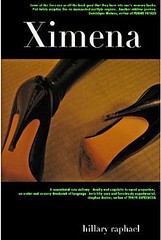
“You tease, she thought, you wicked tease”

For lovers of erotic literature.

Tale of the Tub

American author Evie Byrne found the origins of an engraving with a tub[1] and wrote her own version of this Decameron tale (seventh day, second story) which was taken from Apuleius’s The Golden Ass.

When her husband comes home, Peronella hides her lover in a tub and tricks her husband in believing that the lover is a purchaser who is inspecting the tub’s soundness and cleanness. The husband then crawls under the tub and starts cleaning it, the lover takes his mistress “like a Parthian mare,” and the cuckolded husband carries the tub to the lover’s home afterwards.

Or in an early English translation:

“Peronella hideth a lover of hers in a vat, upon her husband’s unlooked for return, and hearing from the latter that he hath sold the vat, avoucheth herself to have sold it to one who is presently therewithin, to see if it be sound; whereupon the gallant, jumping out of the vat, causeth the husband scrape it out for him and after carry it home to his house ”

On from Evie’s excellent version:

You tease, she thought, you wicked tease, but she tipped her rear end up, inviting more caresses. Beneath her belly, her husband began to use the rasp, sending deep vibrations through the wood. Giannello snaked his hand beneath her skirts and she widened her stance so he could feel that she was wet and hot as the mouth of hell. Even with her husband beneath her, because no matter where they were, or what they did, she was ready to take Giannello. It was that simple.”

According to “The Daily Blague”[2] Ravel’s one-act opera L’heure espagnole was based on this tale.

Stories of cuckoldry are always highly erotic, just why is that?

Pink Floyd member dies

Rick Wright (1943 – 2008) of Pink Floyd is dead. See this clip[1] from “Us and Them” and this one from “Paintbox,”[2]; both have writing credits by Wright.

I’m not much of a Pink Floyd fan, their art rock was just too arty, or not arty enough, I can’t explain. The only intensive listening I have done is to their debut album The Piper at the Gates of Dawn, which I thought was brilliant. And the band member of Floyd that elicited most of my sympathy was Syd Barrett.

Sitting on a bench in Antwerp

My copy of Of Human Bondage, sitting on a bench in Antwerp

My copy of “Of Human Bondage,” sitting on a bench in Antwerp.

I was recently very irked by a series of posts[1] over at the Anglophone blog Gatochy (known for its excellent image juxtapositions). The posts were about sexual masochism and she painted a ridiculously malinformed picture of the sexual masochist as a person suffering from a mental disorder. When I reacted by guiding her gently towards Zizek‘s Enjoy Your Symptom! she graciously acknowledged to never having heard of him. After an exchange of about 3 comments she proposed to never speak to me again, to which I proposed to oblige, but first pointing her to and quoting from the relevant Wikipedia article which shows that masochism, just like homosexuality is no longer considered a mental disorder.

The results of newer studies have led to calls to abolish sadism and masochism as disease categories completely, arguing that the truly pathological forms are adequately covered by other diagnoses. The sadomasochistic subculture added a political dimension to this drive with claims of discrimination and by pointing to the precedent of removing of homosexuality from the list of mental disorders.

In response, the American Psychiatric Association modified the criteria for sadism and masochism in the Diagnostic and Statistical Manual of Mental Disorders (DSM IV) in 1994 so that consensual sadomasochistic behavior alone is not considered a sexual disorder anymore. In the DSM-IV TR, published in 2000, sadomasochistic behavior can be diagnosed if the patient “has acted on these urges with a non-consenting person” or “the urges, sexual fantasies, or behaviors cause marked distress or interpersonal difficulty,” so consensual sadomasochism can no longer be considered a disease unless it causes severe discomfort. In 1995, Denmark became the first country to completely remove sadomasochism from its classification of diseases.

Our entire conversation – and the comment above – was promptly erased by the author Marianna and I was doubly annoyed. I thought I had done her a favor by showing her the errors of her ways. I dedicate the photograph above to her. May she soon awaken from her obstinate ignorance.


[Amazon.com]
[FR] [DE] [UK]

RIPs

Jamaican reggae singer and producer Bertram Brown died. So did American writer David Foster Wallace. Suicide by hanging for the latter.

[Youtube=http://www.youtube.com/watch?v=O7CbVugPWWM]

The dub of Lot’s wife by King Tubby & Soul Syndicate

Bertram Brown (1950 – September 8th 2008 ) ran Freedom Sounds and worked with Prince Alla, Earl Zero, Rod Taylor, and Philip Frazer. Some of his best work was compiled on Steve Barrow‘s  “Freedom Sounds In Dub” on Blood & Fire.

On a happier note, it’s Amy Winehouse 35th birthday today.

World Music Classics: the first 100

World Music Classic is a series I started on this blog in 2007. Below are the first 100 entries in a project that will eventually include 1001 postmodern world music classics. Most of the entries have YouTube links at the top of the page. Feel free to add missing YouTube connections. The series’ future entries will mainly be posted to my FaceBook account and on my wiki. So it’s a goodbye here as far as regular WordPress/WMC entries go, WordPress/WMC will be reserved for longer articles on particular musical compositions. Hope to see you on FaceBook, for all of you who have yet resisted, I can assure you that FaceBook is an amazingly elegant platform and very suitable to quick and responsive writing.

9

A

B

C

D

E

F

G

H

I

I cont.

J

K

L

M

N

O

P

R

S

S cont.

T

W

Y

Z

The 50th anniversary of the integrated circuit: a love song to the computer

In search of computer love.

“In 1959, Texas Instruments’ Jack Kilby files the first patent for an integrated circuit. (Texas racists later run him out of town, crying “segregation forever!”)”

Today, 2008 September 2, is the 50th anniversary of the integrated circuit, and invention that lead to electronic music, Japanese music machines, personal computers, the internet, bitpop and YouTube, to name but a disparate yet connected few.

Much of what we now call the origins of postmodernity coincides with the “microchip revolution or digital revolution,” aptly described by techno-utopian writer Alvin Toffler in Future Shock (1970) and The Third Wave (1980) .

With “Computer Love” (1981), Kraftwerk became the first German musical ensemble to hit No. 1 on the U.K. music charts and the first band to reach an audience with a love song to the computer.

Zapp and Roger also professed their love for man’s best friend in “Computer Love”[3] (1985).

Computer love can lead to computer addiction. By the mid eighties most traditional orchestration was replaced by “Japanese music machines” in Western music. Marvin Gaye’s single “Sexual Healing” lead the way.

An outright celebration of the electronic aesthetic came with electronic disco (“I Feel Love,” “Do You Wanna Funk”), electro funk (“Planet Rock”), techno (“Techno City”) and house music(“Your Love”); while previously non-electronic genres such as reggae also took up the aesthetic (Sleng Teng), but nowhere was this man/machine love affair so strong as in acid house (“I Got a Big Dick”).

Several of these compositions are WMCs.

See also: The Electronic Revolution.

I wasn’t going to write about this

A moment of silence…

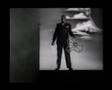
I wasn’t going to write about this, but then John from Uncertain Times posted the picture shown to the left, possibly the most haunting photo since this one. It is so easy to get caught up in the rhetorics of the Situationist spectacle when discussing 9/11, that one tends to forget these “little” tragedies, such as the man jumping on the photo, whose last two seconds of life are worth a novel in itself. 9/11, that titanical and hyperreal event, has shaped us all and I really feel sorry for all concerned. But we will never be forgiven if – at the same time – we do not think about thousands dying every day of famine.

See also:

9/11: The Falling Man