Life imitating art: the model to copy

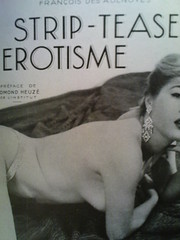
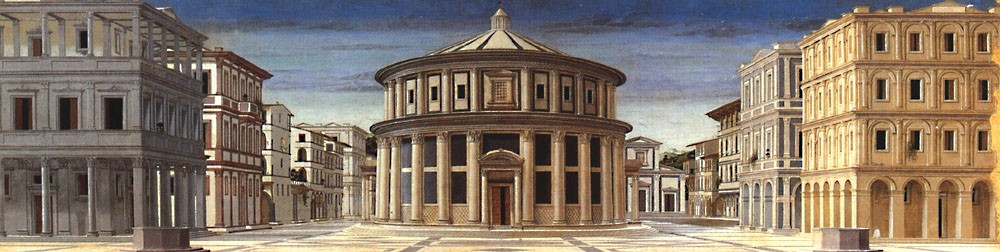
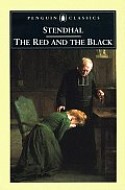
Red and the Black Stendhal, which painting by Jahsonic.

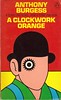
Penguin Classics cover: from which painting?

I started reading The Red and the Black by Stendhal. Chapter 7 is entitled Les affinités électives, possibly a reference to Elective Affinities, published by Goethe 21 years earlier. This passage perfectly illustrates life imitating art:

“À Paris, la position de Julien envers Mme de Rênal eût été bien vite simplifiée ; mais à Paris, l’amour est fils des romans. Le jeune précepteur et sa timide maîtresse auraient retrouvé dans trois ou quatre romans et jusque dans les couplets du Gymnase, l’éclaircissement de leur position. Les romans leur auraient tracé le rôle à jouer, montré le modèle à imiter ; et ce modèle, tôt ou tard, et quoique sans nul plaisir, et peut-être en rechignant, la vanité eût forcé Julien à le suivre.”[1]

“In Paris, Julien’s position with regard to Madame de Renal would very soon have been simplified; but in Paris love is the child of the novels. The young tutor and his timid mistress would have found in three or four novels, and even in the lyrics of the Gymnase*, a clear statement of their situation. The novels would have outlined for them the part to be played, shown them the model to copy; and this model, sooner or later, albeit without the slightest pleasure, and perhaps with reluctance, vanity would have compelled Julien to follow.” –translation by C. K. Scott-Moncrieff (18891930)

The first literary example of life imitating art was Don Quixote in which Alonso Quixano has been driven crazy by reading too many mediaeval knight-errantry romances such Amadis of Gaul, the pulp fiction of the day.

The Red and the Black is an exceedingly accomplished novel.

*My excellent Dutch translation by Hans van Pinxteren (Pandora Pockets, Uitgeverij Contact, p.45) translates Gymnase as cabaret (liedjes in het cabaret). Gymnase probably refers to the Théâtre du Gymnase Marie Bell, rather than a gymnasium.

Happy 80th birthday Oswalt Kolle

[Youtube=http://www.youtube.com/watch?v=-pE6FA2UwKs]

German documentary on the occasion of his birthday.

Germany’s sexual liberator and educator Oswalt Kolle turns 80 today. He was an equivalent of Phyllis and Eberhard Kronhausen in the U. S. and Torgny Wickman in Scandinavia. He was pivotal in the 1960s sexual revolution. I wouldn’t known who his other European counterparts were. The cinematic genre he spawned is known by cult film aficionados as white coaters, or in its home country as Aufklärungsfilme. The genre is related to the sex report films.

Kolle’s detractors came from the catholic corner (see sexual repression and Christianity and sexuality) and called him “Schweinehund” in the documentary above.

Kolle broke another taboo in 2000, when he assisted his wife’s euthanasia.

Visuals?

Check these:


Introducing Keith Schofield

1970s porn

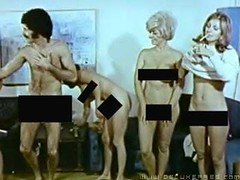
Last month, I discovered “Toe Jam,”[1] a song by David Byrne, Dizzee Rascal and Norman Cook, a dance tune with soca and Balkan influences. Its video, directed by Keith Schofield is a humorous take on 1970s porn, using censor bars as devices to produce images and sounds.

[Youtube=http://www.youtube.com/watch?v=-_wR22jTyyY]

“Toe Jam”

Three days ago, Schofield released a promotional clip for Diesel, Diesel SFW XXX[2], yet another send-up of film censorship, this time using models to enact “sexual acts,” superimposed by animation bits that hide the action and seemlingly give it an innocent appearance. SFW is an acronym denoting “safe for work,” i.e not NSFW.

[Youtube=http://www.youtube.com/watch?v=vna0HojUUqA&]

“Diesel SFW XXX”

Another use of the censor rectangles

Perversion for Profit (1965)

[Youtube=http://www.youtube.com/watch?v=95O5P4DTOEE]

Top ten disco tracks for Scott Carpenter

Our musical correspondent Scott Carpenter asked me to make this.

You may have read Scott’s comments on this blog:

“I am an acolyte of jahsonic, mudd up![1], Mutant Sounds[2] and Analog Africa[3]. … for the disco, cosmic, Balearic sounds you cannot go wrong with Another Night on Earth[4] and alainfinkielkrautrock [5]. —Scott Carpenter via “[6]

Here we go.

If we assume disco started with “Soul Makossa” by Manu Dibango in 1972 we can make a top ten of disco tracks by moving chronologically from 1972 to 1981, and moving from proto-disco, to disco and touching the beginnings of post-disco.

Looking at this list after making it, I can’t fail to notice that I have not included enough of the gay thing in this list. Only “Free Man“and “There but for the Grace of God Go I” fit that bill.

Making top tens is difficult.

Marc Moulin (1942 – 2008)

Placebo (Marc Moulin)

Cover of the first Placebo album

Francophone Belgian producer Marc Moulin (1942 – 2008) died last Friday. He was 66.

His mid-eighties work with Telex is still influential to the electroclash scene; the track, “Moscow Diskow[1], was a staple for DJs Frankie Knuckles and Ron Hardy on the dance floors of late 1980s Chicago clubs that were instrumental in the development of Chicago house music, and house music as such. What is to be appreciated is that Telex had a great sense of humor – for example – one of their compositions was called “Temporary Chicken.”

[Youtube=http://www.youtube.com/watch?v=9RaeUN20sDE&]

“Humpty Dumpty”

[Youtube=http://www.youtube.com/watch?v=eHgY9Lq1Wig&]

“Balek”

Just the other day, in my hometown record store, my brother overheard Quiet Village member Joel Martin ask: “Did you find me any Placebo yet?”. Placebo’s records (three were released between 1971 and 1974) are highly collectable and priced about €125 each when I last inquired.

Serial killing was a rare phenomenon before 1900

Jack the Ripper / Der Dirnenmörder von London (1976) – Jess Franco

120 years ago today, in 1888, Jack the Ripper kills his third and fourth victims Elizabeth Stride[1] and Catherine Eddowes[2]. Footnotes NSFW.

Jack the ripper was only the 16th serial killer before 1900, serial killing had been a rare phenomenon until then.

It was probably the first case where all the victims were photographed.

Jack was never apprehended.

[Youtube=http://www.youtube.com/watch?v=z_EuCSEnuKg]

Der Dirnenmörder von London

Jack was at one time played by Klaus Kinski in Der Dirnenmörder von London. Here is the trailer [3] to that film.

Not fluffy clouds

DSC01318DSC01316DSC01317

From left to right: 16:58, 16:58, 16:59.

Antwerp, from South to North

Totally unrelated, outside of a storm cloud soundbite on the same record this track came from (actually I meant the Party Time album by The Heptones) is “To Be a Lover” by George Faith,

[Youtube=http://www.youtube.com/watch?v=Q7rgNM0IwzI]

in a Lee Perry production but a cover of William Bell‘s U.S. hit record …

[Youtube=http://www.youtube.com/watch?v=TkHO7OngDiY]

..”I Forgot To Be Your Lover[1] (1968).

Perry’s version was probably recorded on a TEAC 3340[2] in the Black Ark studio.

George Faith’s album seems to have been different from the contemporary Perry productions: no broken glass, ghastly sighs and screeches, crying babies, and mooing cows here.


Introducing Quiet Village


[Amazon.com]
[FR] [DE] [UK]

Quiet Village is a UK-based band, who released their debut album Silent Movie in May of this year. The album reminded me of the compilation work of Andy Votel on Vertigo Mixed, one of my favorite records of the 2000s.

[Youtube=http://www.youtube.com/watch?v=ZLkhKrEoo7U&]

Circus Of Horror” (2008) Quiet Village

Their band name was taken from the 1952 Les Baxter musical composition “Quiet Village,” first released on the album Ritual of the Savage.

Ritual of the Savage

Ritual of the Savage by Uh … Bob

Silent Movie is definitely crate digging music but not “retro“, which I’ve come to see as a derogatory term. Just like Andy Votel’s Vertigo Mixed it celebrated the art of record collecting, one of my favorite pastimes between 1996 and 2002.

[Youtube=http://www.youtube.com/watch?v=Ta4AWh-AfzI&]

Gorillaz-Kids With Guns (Quiet Village Remix), hear the Burundi beats?

Silent Movie is bound to end up high on year-end-lists of people who known their music.