Eric Weissberg was an American musician best-known for his arrangement of “Dueling Banjos” in 1972 for the film Deliverance.
RIP Suzy Delair (1917 – 2020)
Suzy Delair was a French actress with a long and fruitful career.
I choose to represent her with one film, Atoll K (1951), the final film of Stan Laurel and Oliver Hardy in which she is a marooned cabaret singer.
The film is strangely relevant today in its goofy discussion of statelessness and open borders.
There is one scene where this all comes together when they wish to establish their island as a new republic, with Hardy as president and Laurel as “the people.”
They write a constitution declaring their atoll will have no laws, no taxes, and no immigration controls.
Oliver asks:
Now, what kind of government do we want?
Very little government would be good, I think.
– Without too many laws.
– And no passports.
No passports.
– And no prisons.
– No prisons.
What?
– No taxes.
– No taxes.
This is getting to be a perfect government.
And I will add…
No laws and no money.
—Atoll K, 1:02:00
RIP William Levy (1939 – 2019)
William Levy was a maverick of post-war underground press and counterculture. He was involved with IT and founded Suck.
The documentary, Beyond Criticsm (2013) by Malcolm Hart, gives a good overview of his life and work.
RIP Stanley Long (1933 – 2012)
Sometimes a death escapes my attention.
This particular death escaped my attention for eight years.
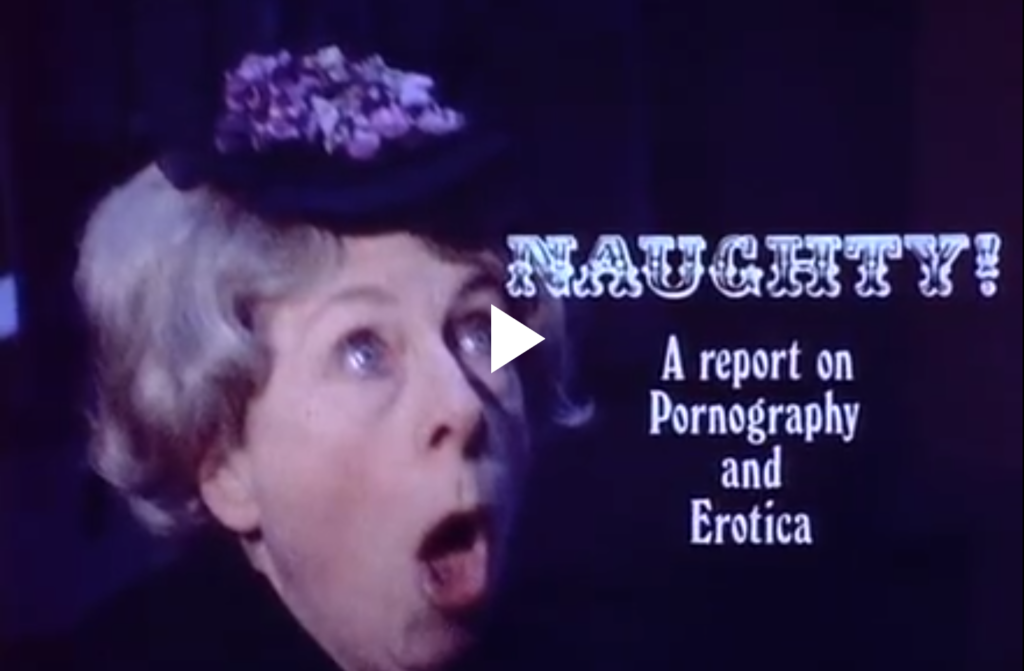
Stanley Long was a British filmmaker active in what is known as exploitation cinema.
An untypical work, Naughty! (1971) is recommended for including scenes of the Wet Dream Film Festival (1970).
The film is a laudable attempt to fictionalize the history of erotica and is appears to be based on The Other Victorians (1964) which was the first book to revert the received idea of Victorian prudishness. It’s similar to way worse movies such as Sexual Freedom in Denmark (1970).
You can watch Naughty as I just did by following site:https://www.eroticage.net “naughty”. That ‘eroticage.net’ site seems interesting because it has lots of vintage erotica films from the golden age of porn.
P.S. While researching Naughty! I found out that William Levy passed away in 2019.
RIP Kenny Rogers (1938 – 2020)
Kenny Rogers was an American singer mainly known for his work in country music.
Since I have but a flimsy a connection with that genre, my lemma on Mr. Rogers is satisfyingly brief.
However, early in his career, Kenny put out two quirky and interesting records.
The first is “Just Dropped In (To See What Condition My Condition Was In)“, a song that reflects the LSD experience and captures the short-lived psychedelic era of the late 1960s.
Then there is “Ruby, Don’t Take Your Love to Town“, a song about the male angst of a paralyzed Vietnam war veteran and his wife who goes to town to find a lover.
The “Ruby” song concludes with the darkly ominous words “If I could move I’d get my gun and put her in the ground.” Bit of nasty femicide threat there for ya.
RIP Genesis P-Orridge (1950 – 2020)
Genesis P-Orridge was and English musician and founding member of Throbbing Gristle and Psychic TV.
I first learned of P-Orridge in the late 1980s during the acid house period. I remember some of their Psychic TV material from the radio shows by Luc Janssen. However, I can’t seem to find the tracks that I heard at the time.
Where to begin? There is so much. Let’s start with the exceptional single “United/Zyklon B Zombie” (1978).
And let us add the album 20 Jazz Funk Greats (1979) also by Throbbing Gristle.
There was a time when I actually thought that these were jazz-funk tracks.
New listener, do not fear, it’s very experimental but actually not that hard on the irritation scale.
RIP Vittorio Gregotti (1927 – 2020)
And the first covid-19 victims start to come in.
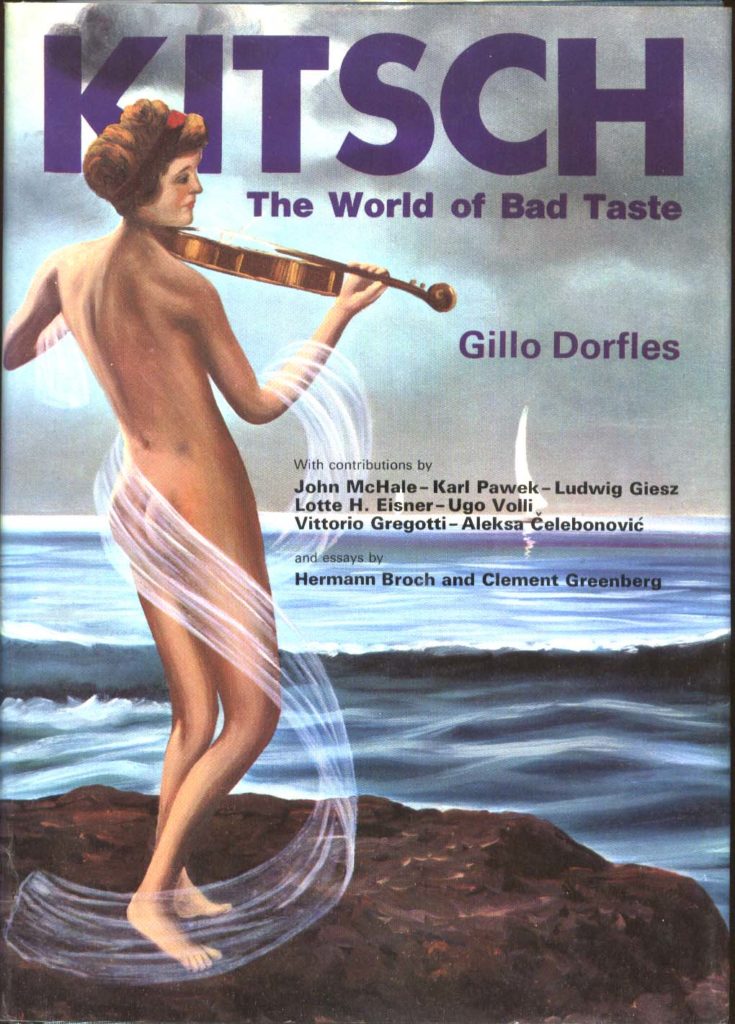
Vittorio Gregotti was an Italian architect. He contributed the essay “Kitsch and Architecture” to Kitsch: The World of Bad Taste (1968) by Gillo Dorfles.
While the essay references Googie architecture and the kitsch of the roadside attraction, it fails to cite God’s Own Junkyard (1964).
It also fails to foreshadow the positive view of kitsch in Learning from Las Vegas (1972).
RIP Michael de Benedictus (1951 – 2019)
This happened on October 17, 2019, but I only found out yesterday.
Michael de Benedictus co-founded the Peech Boys who released several twelve inches and one album: Life Is Something Special (1983).
De Benedictus was part of the New York dance music scene which was centered around two discotheques: the Paradise Garage and the Loft. I leave out Studio 54 on purpose.
I believe I told this story before, but for many years I hunted Antwerp flea markets for vinyl. My prey were records played by DJ Larry Levan at the New York discotheque Paradise Garage.
I was assisted in my hunt by a internet list of records I had found in 1996. You can find that list of 1100+ records here. I printed it and tried to learn the names by heart and started hunting.
At the time, I was already a fan of house music. I listened to radio shows by Pierre Elitair and the guys behind Liaisons Dangereuses. But now, finally, I found the antecedents of that kind of hedonistic nightlife music.
I gradually delved deeper, learning which labels to buy (Salsoul, West End, Prelude), which producers to focus on (Patrick Adams) and which artists to follow (Arthur Russell).
Where had this fascination with dance music come from?
I don’t know.
I remember when I was in my early twenties, walking along the Meir, hearing “Rotation” by Herb Alperts, and being intrigued by this music which could not be heard on the radio.
This world continues to fascinate me.
Michael de Benedictus role in that world was short and modest but large enough for me to document his legacy during a couple of hours on a lost coronavirus afternoon.
RIP Charles Wuorinen (1938 – 2020)
Charles Wuorinen was an American composer.
He is best-known for Time’s Encomium (1969), his electronic piece.
RIP Mal Sharpe (1936 – 2020)
Mal Sharpe was an American humorist.
His most notable work was done as part of the duo Coyle and Sharpe. They were active as street interviewers in the early 1960s and were simply hilarious.
The filmed sequence of “The Warbler” is hilarious. Sadly, it appears to be offline at the moment.
I give you “Maniacs In Living Hell”, collected on the album The Insane (But Hilarious) Minds Of Coyle & Sharpe (1964).