I just finished watching At Midnight I’ll Take Your Soul (1964) and it’s actually quite good. I especially like the atheist bits, his materialist world view, his Nietzschean take on things.
For example, Coffin Joe eats meat on Holy Friday, just to taunt his catholic fellow townspeople.
And consider the opening oration of Coffin Joe:
“What is life? It is the beggining of death. What is death? It is the end of life! What is the existence? It is the continuity of blood. What is blood? It is the reason of the existence!”
All this blasphemous discourse makes you wonder how this went down in Brasil. After all, it was 1964, another four years for 1968 to happen … and … did that even ‘happen’ in Brasil, the sexual revolution?
See atheism in Brazil, the sexual revolution in Brazil.
In that film Flavio Bucci sports thick glasses and plays the part of a nerdy sociologist who takes notes of the audience’s reactions during the screening of the film.
Afterwards he is interrogated by the police. Has he seen anything which can solve the murder of a man in the audience by a gun man IN the film?
You can see Mr. Bucci from 27:20 onwards.
Mr. Bucci also played in the sex comedy Gegè Bellavita (1978) which can be found in full on YouTube.
An episode of Wim Kayzer‘s ‘Of Beauty and Consolation’ (2000) [the introduction is Dutch only, the rest of the interview is in English]
George Steiner was a Franco-American literary critic and essayist.
His anti-pornography essay “Night Words” (1965) was the first of his writings which came to my attention in my capacity as pornosopher in the early 2000s.
Although I did not agree with them, his points were well-written and intellectually interesting.
Consider:
“My true quarrel with the Olympia Reader and the genre it embodies is not that so much of the stuff should be boring and abjectly written. It is that these books leave a man less free, less himself, than they found him; that they leave language poorer, less endowed with a capacity for fresh discrimination and excitement. It is not a new freedom that they bring, but a new servitude. In the name of human privacy, enough!”
But then again, he also found the pearls and showed an appreciation for Diderot, Crebillon fils, Verlaine, Swinburne and Apollinaire. Pornography as such is just not very interesting, it is only interesting where it intersects with other genres or with other domains of interest in meaningful ways. In that sense, it is very similar to other art forms.
I happened to read In Bluebeard’s Castle (1971) during last summer. I had discovered the work when researching the notion of Western guilt. The book features the much quoted dictum:
“And it is true also that the very posture of self-indictment, of remorse in which much of educated Western sensibility now finds itself is again a culturally specific phenomenon. What other races have turned in penitence to those whom they once enslaved, what other civilizations have morally indicted the brilliance of their own past? The reflex of self-scrutiny in the name of ethical absolutes is, once more, a characteristically Western, post-Voltairian act.”
In that film she is baroness Frankenstein, wife and sister of baron Frankenstein (Udo Kier). The film’s pretty awful but the gore is marked by high production values and it features Van Vooren nude in a duo with Joe Dallesandro with some ridiculously loud armpit slurping.
The Poughkeepsie Shuffle: Tracing ‘The French Connection’ (2000)
Sonny Grosso was a New York City police detective turned movie and television producer, noted for his role in the “French Connection” heroin bust immortalized in the The French Connection (1971), directed by William Friedkin.
The BBC documentary The Poughkeepsie Shuffle: Tracing ‘The French Connection’ (2000) [above] features him extensively.
After being an adviser on The French Connection, Grosso went on to play a part in the film Cruising (1980), also directed by William Friedkin.
The History of Cruising (2007),
This film is also the subject of a documentary (above).
John Karlen was an American actor. Outside of the United States, he was primarily known for his lead in the Belgian film Daughters of Darkness (1971), a lesbian vampire exploitation chic vehicle.
Like most Gen X melomaniacs who grew up with vinyl but switched to CDs (the musical fraud of the century), I discovered Mr. Heath on the Soul Jazz Love Strata-East (1994) compilation.
At the same time as reporting Natalini’s death, we need to report the death of co-founder Cristiano Toraldo di Francia (1941 – 2019) who apparently died over the summer.
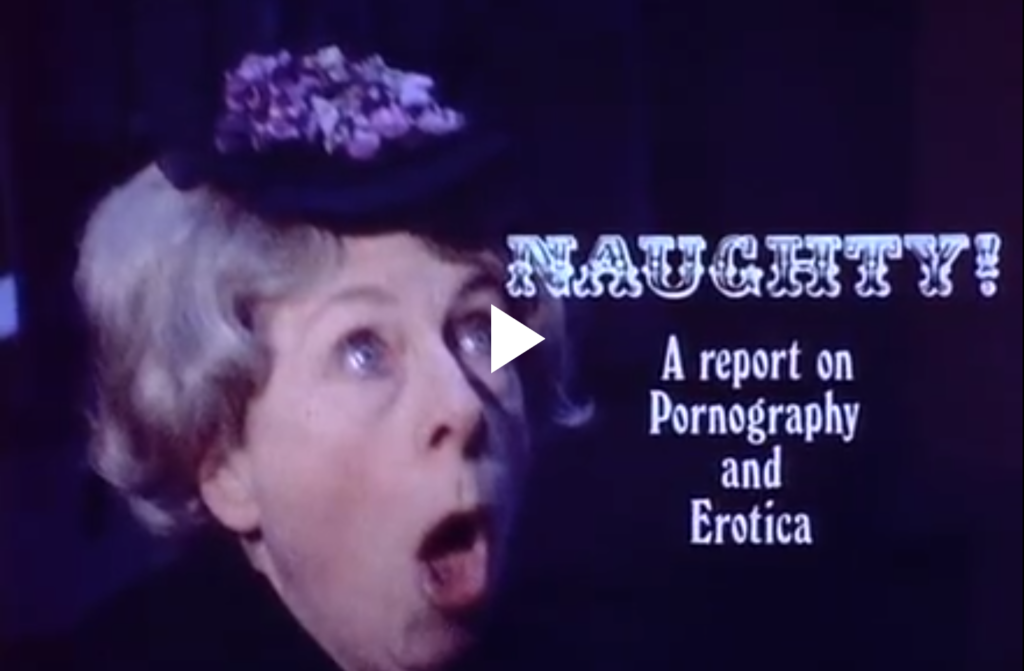
Terry Jones will be best-remembered for playing Maria in Life of Brian (1979) in which she proclaims indignantly that her son is “not the messiah, but a very naughty boy.”
Every death being an encounter, I was surprised to learn that Jones was also a popular historian.
https://www.youtube.com/watch?v=iO7YZr1U6jU
In ‘The Knight’ episode of Terry Jones’ Medieval Lives (2004) Jones explains how the English word knight stems from the Germanic word knecht, two words which have since then have become to denote opposite things. In Dutch, the ‘knecht’ (also the name for a farmhand now) is the one who helps the knight, a page boy really.