[Youtube=http://www.youtube.com/watch?v=beTsOONfVNk]
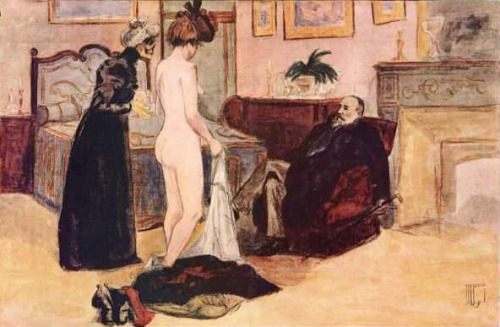
“Stained Sheets” (1979) Lydia Lunch
“Stained Sheets” is World Music Classic #325
[Youtube=http://www.youtube.com/watch?v=beTsOONfVNk]
“Stained Sheets” (1979) Lydia Lunch
“Stained Sheets” is World Music Classic #325
Introducing Le Comte de Gabalis

Title page
I’ve just spent a good deal of hours researching Comte de Gabalis, a quest prompted by a new release on Creation Books’ Creation Oneiros imprint and the reference I found there to occult fiction. Wikipedia has no entry on occult fiction but Googling them did bring up Gabalis.
I am not that a big a fan of occultism except when I find it represented in fiction, such as supernatural horror or le fantastique.
A recap of what I found:
The Comte De Gabalis is a 17th century grimoire (posing as a novel of ideas) by French writer Abbé N. de Montfaucon de Villars, first published anonymously in 1670. The book is dedicated to Rosicrucianis and Cabalism and based on Paracelsus’s four elementals: Gnomes, earth elementals; Undines; water elementals, Sylphs, air elementals and Salamanders, fire elementals. It is composed of five discourses given by a Count or spiritual master to the student or aspirant. The Encyclopedia of Occultism and Parapsychology by the Gale Group notes that the work may be a satire of the writings of la Calprenède, a popular French writer of the 17th century.
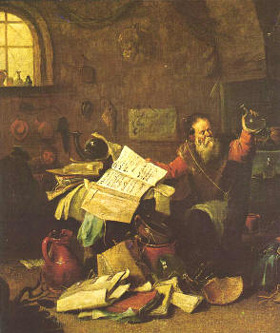
The Alchemist by David Teniers the Younger
The most interesting aspect of The Comte De Gabalis is the sexual union of gods and mortals. I like half creatures and I like the sexual part of it. It was the work of the minor British publisher of anthropologica Robert H. Fryar who most clearly brought this link to my attention by reprinting in the late 19th century the Comte de Gabalis with its tale of the immortalization of elementals through sexual intercourse with men and supplementing the work with long citations from the recently discovered Demoniality Or Incubi and Succubi, an eighteenth-century work by Father Sinistrari on the dangers of incubi and succubi.
![Hi B. Note to reader: B. contacted me yesterday with the following question: “Hi. I come here daily, but this is the first time I’ve commented. I was wondering if you could help me out. I’m trying to figure out the name of this artist/band to whom this video belongs?” By an incredible coincidence, the title of the track you have been looking for is “B” My long-time fellow traveler Erkki Rautio came up with the following. “the track is “B” by Colin Newman (of The Wire fame), released as a 7” and on his album “A-Z” in 1980. [1][2][3]](http://18.media.tumblr.com/Y3KxdEiQuo6phcckZ1ipbiygo1_400.jpg)
“B” by Colin Newman
Hi B.
Note to reader: B. contacted me yesterday[1] with the following question:
“Hi. I come here daily, but this is the first time I’ve commented. I was wondering if you could help me out. I’m trying to figure out the name of this artist/band to whom this video belongs?”
By an incredible coincidence, the title of the track you have been looking for is “B.”
[Youtube=http://www.youtube.com/watch?v=jZxgHDRcGdM]
“B” by Colin Newman
My long-time fellow traveler Erkki Rautio came up with the following.
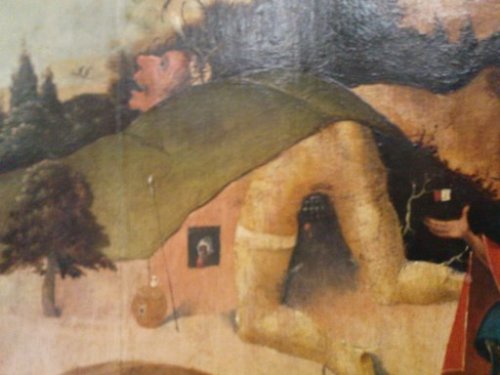
Bosch (from the Triptych of The Temptation of St. Anthony)
On my latest visit[1] to the KMSKB, I took some detailed photos of Bosch‘s The Temptation of St. Anthony (Bosch). The one shown above is from the left panel. I’ve chosen the rather bawdy depiction of a woman seated on all fours, with here belly and genital area being a whole in a hill. Depicting women as landscapes has been celebrated in several somatopia.
Somatopia is a term coined by Darby Lewes to denote texts composed of, or designed for the human body. Example include Merryland (1740) and Erotopolis: The Present State of Bettyland (1684).
An early novel, A New Description of Merryland. Containing a Topographical, Geographical and Natural History of that Country[2] (1740), “a fruitful and delicious country,” by Thomas Stretzer, depicted the female body as a landscape that men explore, till, and plow. For example, he writes: “Her valleys are like Eden, her hills like Lebanon, she is a paradise of pleasure and a garden of delight.” Sometimes, the metaphor of female form = landscape changes, but the objectification of the female body remains intact; only the image is changed, as when, for example, in another passage, the novel’s narrator, Roger Pheuquewell, describes the uterus (“Utrs,” as the author simply contracts vowels without graphical indication) as resembling “one of our common pint bottles, with the neck downwards.” It is remarkable, he says, for expanding infinitely, the more it is filled, and contracting when there is no crop to hold. Similarly, in Charles Cotton‘s Erotopolis: The Present State of Bettyland (1684), the female body is an island farmed by men.
Bosch’s “hill woman” shown above, and the genre of sexual somatopia is icon of erotic art #45.
Mort Abrahams (born 1916 – died 28 May, 2009) was an American film and television producer.
Among his credits are nine episodes of spy series The Man from U.N.C.L.E. and, as associate producer, Doctor Dolittle (1967), Planet of the Apes (1968), Goodbye, Mr. Chips (1969), Beneath the Planet of the Apes (1970), co-writing the story of the latter.
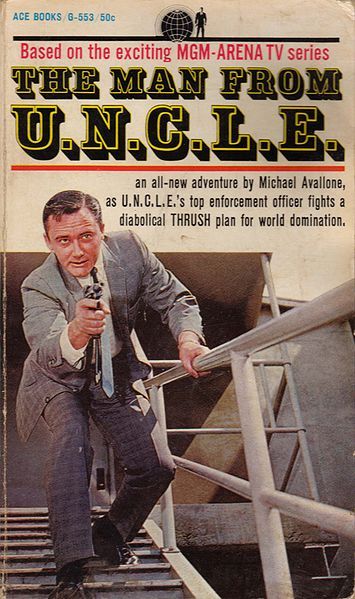
The Man from U.N.C.L.E. theme[1] by Space Age Popper Hugo Montenegro
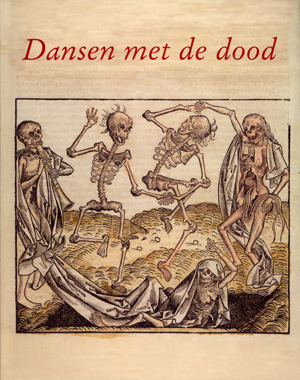
A friend lent me her copy of the book above, an excellent compendium of visuals of the perennial favourite dance of death theme. Dansen met de Dood is a Dutch language book on the iconography of dance of death by Johan De Soete, Harry Van Royen and Dirk Vanclooster. Dance of Death, also variously called Danse Macabre (French), Danza Macabra (Italian) or Totentanz (German), is a late-medieval allegory on the universality of death: no matter one’s station in life, the dance of death unites all. La Danse Macabre consists of the personified death leading a row of dancing figures from all walks of life to the grave—typically with an emperor, king, pope, monk, youngster, beautiful girl, all skeletal. They were produced to remind people of how fragile their lives were and how vain the glories of earthly life were. Its origins are postulated from illustrated sermon texts; the earliest artistic examples are in a cemetery (Cimetière des Innocents) in Paris from 1424.
The book was based on a 2008 exhibition in the Flemish city of Koksijde. It featured manuscripts of the Great Seminary in Bruges and the Catharijne convent in Utrecht, objects and graphic work by Wim Delvoye, Pierre Alechinsky, Paul Delvaux, Frans Masereel, James Ensor, Käthe Kollwitz, Félicien Rops and Hans Holbein.
The images below were new to me.

Walter Draesner Ein Totentanz, nach Scherenschnitten von Walter Draesner mit Geleitwort von Max von Boehn(1922). With a preface by Max von Boehn

Election time is upon us in Belgium. Today I tore off some extreme right election posters (see photo). An old and ugly supporter (they all are) of the particular party whose posters I was vandalizing shouted from a distance, inquiring why I was doing it. Reductive militantism, is what I decided to coin it.
For years I did not vote in a country where voting is compulsory. Since I started to vote in my mid-thirties I’ve consistently voted for immigrant women candidates, supporting two minorities at once.
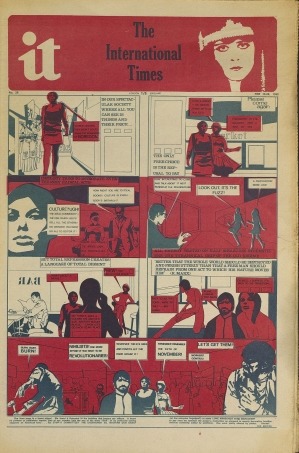
Via « boredom is always counter-revolutionary
The full run of the International Times has been archived online[1].
The International Times (it or IT) was an underground paper started in 1966 in the UK, based in central London. Editors and writers included founders John Hopkins (Hoppy), Barry Miles and Jim Haynes. ITs first editor was the recently deceased playwright Tom McGrath. Singer of the Deviants Mick Farren, Jack Moore and avant-garde writer Bill Levy were closely involved. The name International Times was changed to just “it” for a time after objections from The Times newspaper. However, it was anyway generally referred to by the letters “I-T”.
Previously at Jahsonic[2].
RIP Stanley Chapman (1925 – 2009)[1]
via www.tate.org.uk
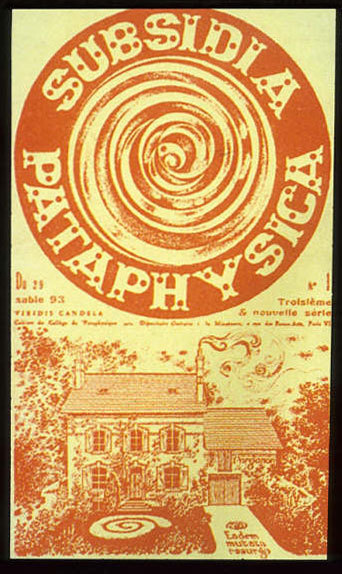
Cover illustration for Subsidia Pataphysica, no.1, 19 December 1965
Stanley Chapman (1925 – 2009) was a British architect, designer, translator and writer. His interests included theatre and pataphysics. He was involved with founding the National Theatre of London, was a member of Oulipo of the year 1960, founder of the Outrapo and a member also of the French Collège de ‘Pataphysique, president the London Institute of ‘Pataphysics and the Lewis Carroll Society. His English translation of Hundred Thousand Billion Poems was received with “admiring stupefaction” by Raymond Queneau.
RIP Christopher Gray (1942 – 2009)

Leaving the 20th Century: The Incomplete Work of the Situationist International (1974) – Christopher Gray [Amazon.com] [FR] [DE] [UK]
Christopher Gray is a British writer and activist, editor of Leaving the 20th Century: The Incomplete Work of the Situationist International (1974). He was a member of the British SI and of King Mob.
Leaving the 20th Century: The Incomplete Work of the Situationist International (1974) is an anthology of Situationist texts edited by British activist Christopher Gray. The original edition was designed by Jamie Reid.