Alberto Grimaldi was an Italian film producer known for producing The Good, the Bad and the Ugly and Last Tango in Paris, but more importantly for us, Salò, or the 120 Days of Sodom by Pasolini.
That Sodom film you don’t need to see to form an opinion about. It’s better just to read about it and let it lead you to the manuscript by Sade on which it was based.
That book has the lines:
“How many times, damn it, have I not desired that one could attack the sun, deprive the universe of it, or use it to set fire to the world”.
“Le Serpent” is a sibling to “Jingo” (1959) by Candido Camero, “New Bell” (1972) by Manu Dibango and “Road Close” (1984) by Tony Allen, who all died last year.
Larry King was an American talk show host iconic in the 1990s. He was called the father of talk show democracy and was instrumental in the development of infotainment.
His whole era is captured by the superb documentary Spin.
In that documentary, he can be seen talking to G. W. Bush on the merits of the drug Halcion at 5:40.
This is the excerpt of Phil Spector: He’s a Rebel where Albert Goldman completely destroys the Wall of Sound production of Spector
Phil Spector was an American musician and record producer known for his Wall of Sound sound production.
The Wall of Sound was a very dense sound with little room for details of individual instruments, exemplified in recordings such as “Da Doo Ron Ron” “Be My Baby” or “Baby, I Love You”, all released in 1963.
There is, Phil Spector: He’s a Rebel, a documentary from 1982 on Phil Spector, without his cooperation , in which Albert Goldman is recorded as saying:
“Rock ‘n’ roll is basically institutionalized adolescence. And the bottom line of rock ‘n’ roll is that it’s a baby food industry and Phil found a new formula for baby food.”
The Up Series is a series of documentary films that have followed the lives of fourteen British children since 1964, when they were seven years old.
So far the documentary has had eight episodes spanning 49 years (one episode every seven years).
The children were selected to represent the range of socio-economic backgrounds in Britain at that time, with the explicit assumption that each child’s social class predetermines their future.
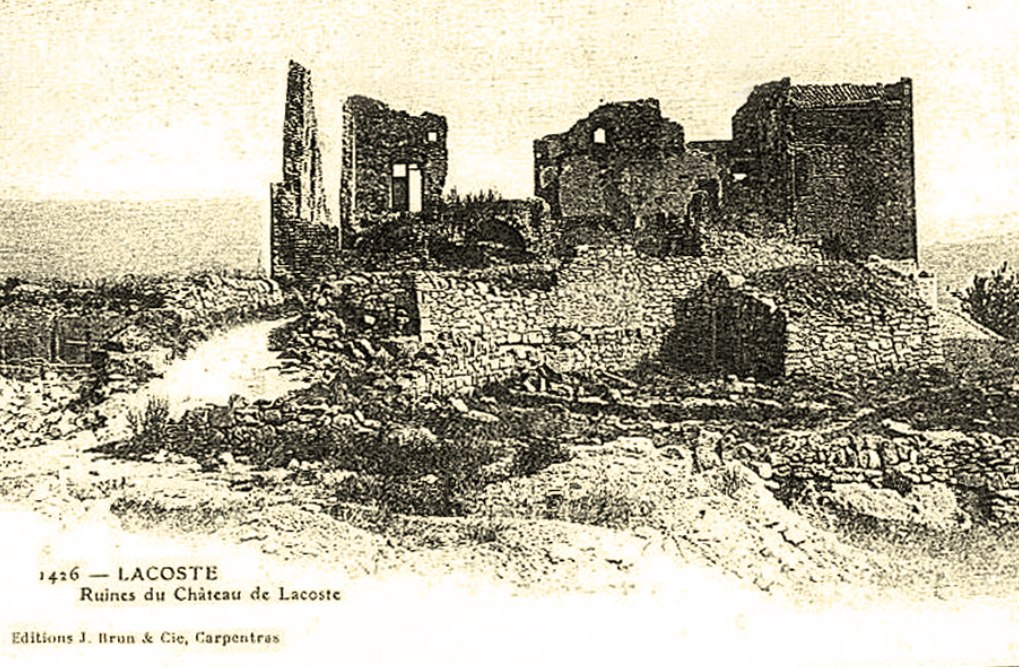
Pierre Cardin was a French fashion designer, but for the moment all I can say of him is that from 2001 to 2020 he was the owner of the castle of Marquis de Sade depicted above.
Stanley Cowell (1941 – 2020) was an American jazz pianist and co-founder of Strata-East Records.
Strata-East Records first gained notoriety outside the world of jazz after the British label Soul Jazz Records put out three anthologies of their recordings in the 1994-1997 period.
I give you “Travelin’ Man” (1974) in its first version.
Has anyone besides me noticed the likeness to “Seven Nation Army” by The White Stripes?
Such was the case with John le Carré (1931 –2020). At first I thought he was just another spy fiction writer and that my relationship to him was probably nothing.
I found the opening lines of The Spy Who Came in From the Cold and found them appealing, put them on my encyclopedia but I still did not know what to post on my blog.
Then I read that the recurring Smiley character was a sort of anti-hero but most of all an anti-James Bond, badly dressed, bald, overweight, bespectacled, unattractive. With a wife that cheats on him more than once. Also with a Russian spy.
And then today, in my local press, I read Marc Reynebeau (born 1956):
“If the setting of Le Carré’s work changed after the Cold War, his theme remained. This is anchored in a pronounced skepticism about institutions and the corrupting effect that is inherent in every institutional dynamic.”
Two things.
One.
The corruption. “Power tends to corrupt, and absolute power corrupts absolutely” said John Emerich Edward Dalberg-Acton. There is no escaping the corrupting power of power.
Two.
Skepticism about institutions. I recently read Paul Collier and he put me on to this. It’s fairly obvious, but somebody needed to point it out. There are two kinds of societies. Societies with high level of trust and societies with low level of trust.
The former develop.
The latter stall. For example, Collier says in Exodus: How Migration Is Changing Our World (2013):
“It is not possible for Nigerians to get life insurance. This is because, given the opportunism of the relevant professions, a death certificate can be purchased without the inconvenience of dying.”
And then, diggin deeper still, one founds an interview of le Carré which shows him critical of consumerism that makes you wonder whether Michel Clouscard was awareof it:
“I dislike Bond. I’m not sure that Bond is a spy. I think that it’s a great mistake if one’s talking about espionage literature to include Bond in this category at all. It seems to me he’s more some kind of international gangster with, as it is said, a license to kill… He’s a man entirely out of the political context. It’s of no interest to Bond who, for instance, is president of the United States or of the Union of Soviet Republics. It’s the consumer goods ethic, really, that everything around you, all the dull things of life, are suddenly animated, by this wonderful cachet of espionage. With the things on our desk that could explode, our ties that could suddenly take photographs. These give a drab and materialistic existence a kind of magic.”–John le Carré interviewed by Malcolm Muggeridge, first broadcast on February 8, 1966, 16:45